Public domain · via Wikimedia Commons ↗
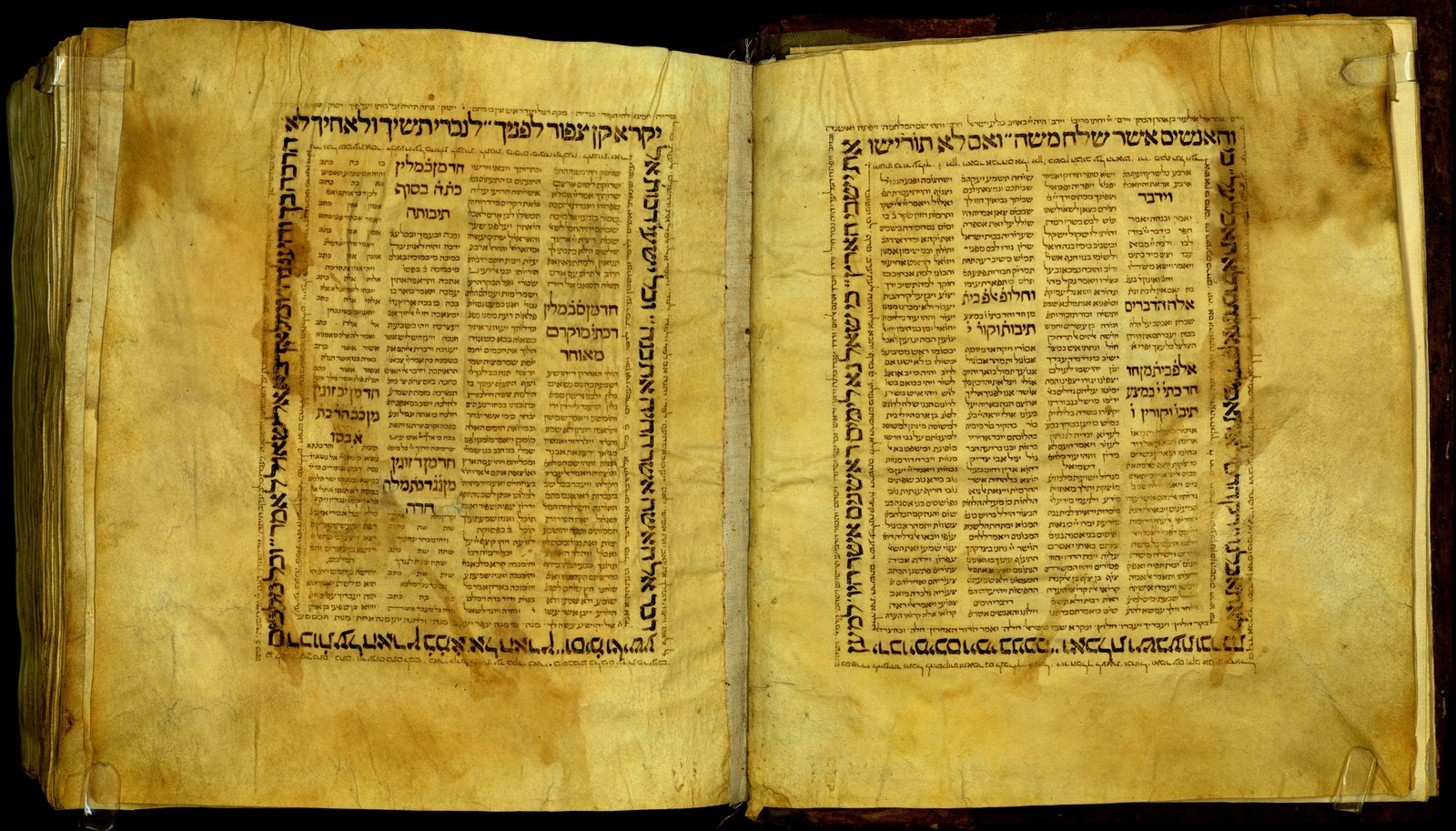
The Damascus Pentateuch
Also called Sassoon 507, MS Heb. 4° 5702.
Reflection
The Aleppo Codex lost most of its Torah in the 1947 fire. The Leningrad Codex was completed in 1008. Between those two facts is a gap that the Damascus Pentateuch fills. It is the earliest complete copy of the Five Books of Moses in the Tiberian Masoretic tradition — Genesis through Deuteronomy, every word, every vowel, every cantillation mark, copied in the 10th century and still legible today.
What this codex witnesses is the fierce care that surrounded the Pentateuch in particular. The Torah was not just scripture to the Masoretes — it was the foundational document of their nation, the instrument God used to set Israel apart. To copy it was an act of worship. The scribe of the Damascus Pentateuch laid out three columns per page, vocalized every word, marked the Masorah magna in the margins, and decorated the carpet pages with gold geometric ornament — not because the Torah needed decoration, but because the Torah deserved it. When 1QPaleoLev (a Qumran fragment of Leviticus) is laid alongside the Damascus Pentateuch, the consonants line up across more than a thousand years. The same Genesis. The same Decalogue. The same blessing of Aaron in Numbers 6.
For the believer today, the Damascus Pentateuch is a witness to the part of scripture that Jesus quoted most. Every time he said "It is written," he was citing this Torah. Every time Paul opened the law and showed how Christ fulfilled it, he was reading these books. The text the apostles preached from is the text in this codex. The text in this codex is the text in your Bible. From Tiberias in the 10th century to your kitchen table this morning, the same Torah. The Word stands.
Why this manuscript matters
- Earliest complete Pentateuch
- Tiberian Masoretic tradition
- Decorative micrography