Public domain · via Wikimedia Commons ↗
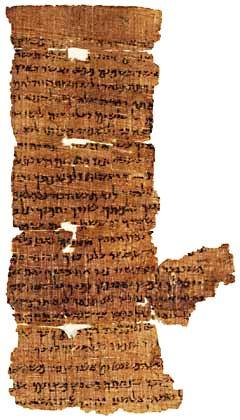
The Nash Papyrus
Also called Cambridge MS Or.233.
Reflection
Before 1947, this single sheet of papyrus from Egypt was the oldest known Hebrew biblical manuscript on earth. It is dated to the 2nd century BC — older than the Maccabean revolt, older than most of Daniel, older than every Hebrew Bible the church had held in its hands. The Nash Papyrus contains the Ten Commandments and the Shema, the daily prayer of Israel: "Hear, O Israel: the LORD our God, the LORD is one. You shall love the LORD your God with all your heart, and with all your soul, and with all your might."
What the Nash Papyrus witnesses is the heartbeat of Israelite worship. This is not a complete biblical book. This is a liturgical sheet — the Decalogue and the Shema, side by side, the way an observant Jew in 2nd-century BC Egypt would recite them every morning and every evening. When Jesus stood in Galilee and was asked which commandment was greatest, he answered with the words on this sheet: "Hear, O Israel" — Deuteronomy 6:4–5. When Paul wrote to the Corinthians that there is one God, he was citing this prayer. When the Lord himself spoke from Sinai and gave the Ten Words, he gave the words copied here.
The Nash Papyrus also testifies to a textual fact: the order of commandments matches the Septuagint and Deuteronomy 5 rather than Exodus 20 — adultery, murder, theft, instead of murder, adultery, theft. That same order surfaces at Qumran and in the Gospel of Mark when Jesus lists them (Mark 10:19). For the believer today, the Nash Papyrus is a witness that the words your children memorize in Sunday school — the Ten Commandments, the Shema — are the same words an unknown Jewish family in Egypt prayed over their bread two centuries before Christ. The prayer is older than the temple's destruction. The Word stands.
Why this manuscript matters
- Oldest Hebrew biblical text before Qumran
- Liturgical Decalogue + Shema
- Pre-Christian witness