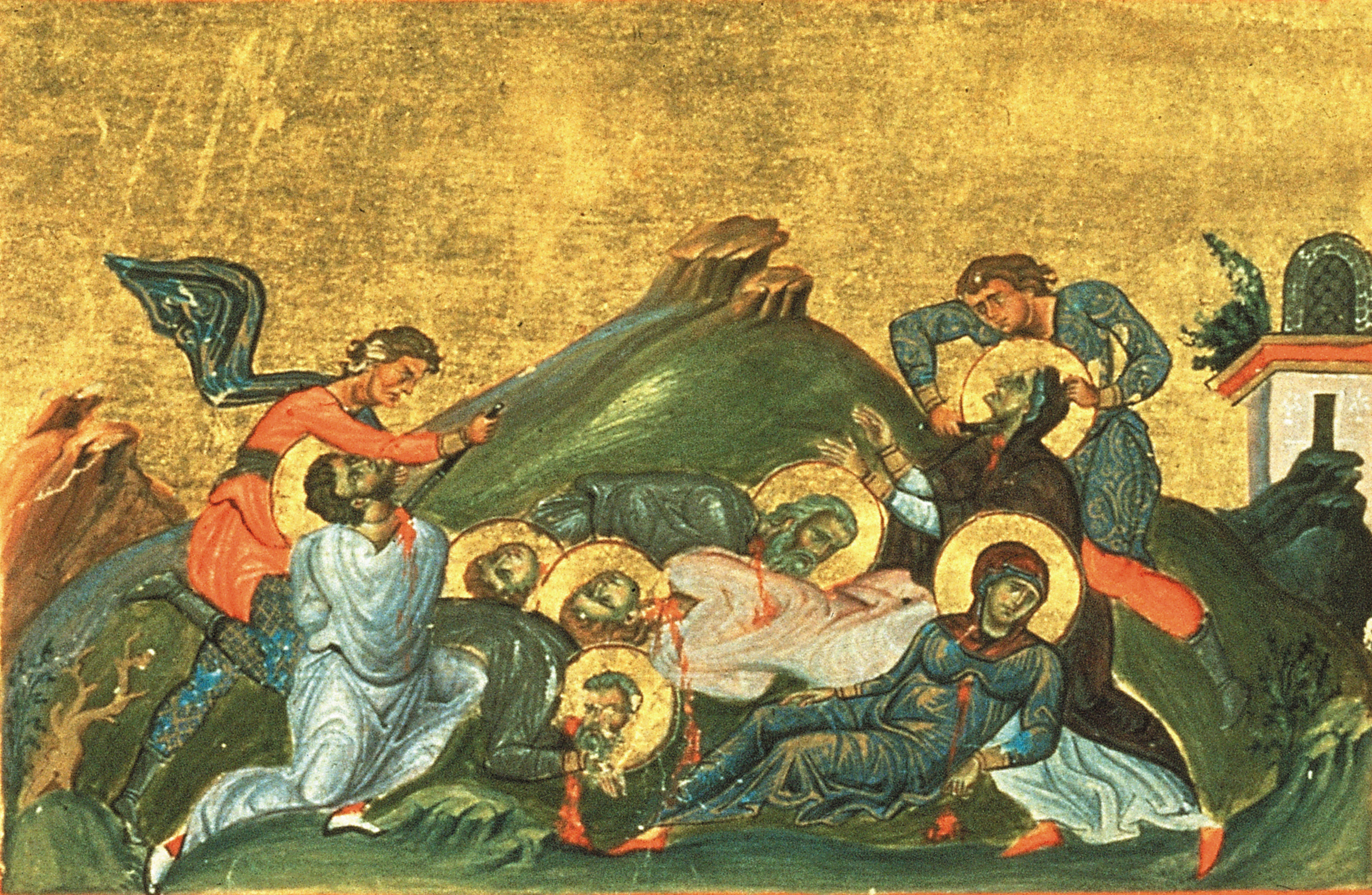
Perpetua and Felicity
Vibia Perpetua and Felicitas
Life and Ministry
Perpetua was a young Roman matron of Carthage, well-born and well-educated, with an infant son still nursing when she was arrested. Felicity, her companion, was a slave woman, eight months pregnant. They were among a small group of catechumens — not yet baptized — who refused to recant during the persecution under Septimius Severus. Perpetua's prison diary, written in her own hand, is one of the earliest known writings by a Christian woman in any language, and the only first-person martyr's account from the early church. She describes her father's repeated pleadings to spare her family the disgrace, the agony of nursing her child through prison bars, and the visions God granted her in the cell.
Circumstances of Death
Felicity gave birth in prison three days before the games. The infant was placed with Christians of the city. On the day of execution — the birthday celebration of the emperor's son — the prisoners were sent into the arena. Perpetua and Felicity were stripped, scourged, and exposed to a wild heifer, but the crowd recoiled at the sight of the bleeding women, and they were brought back. After embracing one another in the kiss of peace, they were finally killed by the sword. Perpetua, when the gladiator's hand trembled, is said to have guided his blade to her own throat. Her diary breaks off the day before her death; an editor — perhaps Tertullian — appended the closing scenes.
Legacy
The Passion of Perpetua and Felicity was read aloud in North African churches for centuries on the anniversary of the martyrdom and remains one of the most studied texts of early Christianity. The pairing of a noblewoman and a slave, dying together on equal footing, has been read since the third century as a living embodiment of Galatians 3:28. Augustine preached on them four times in Hippo. Their story shaped North African Christian identity in ways that endured until the Arab conquest — a witness whose echo outlasted the church that produced it.
Sources
The Passion of Perpetua and Felicity (eyewitness, including Perpetua's own diary, c. AD 203); Augustine, Sermons 280–282; Joyce E. Salisbury, Perpetua's Passion: The Death and Memory of a Young Roman Woman (Routledge, 1997).