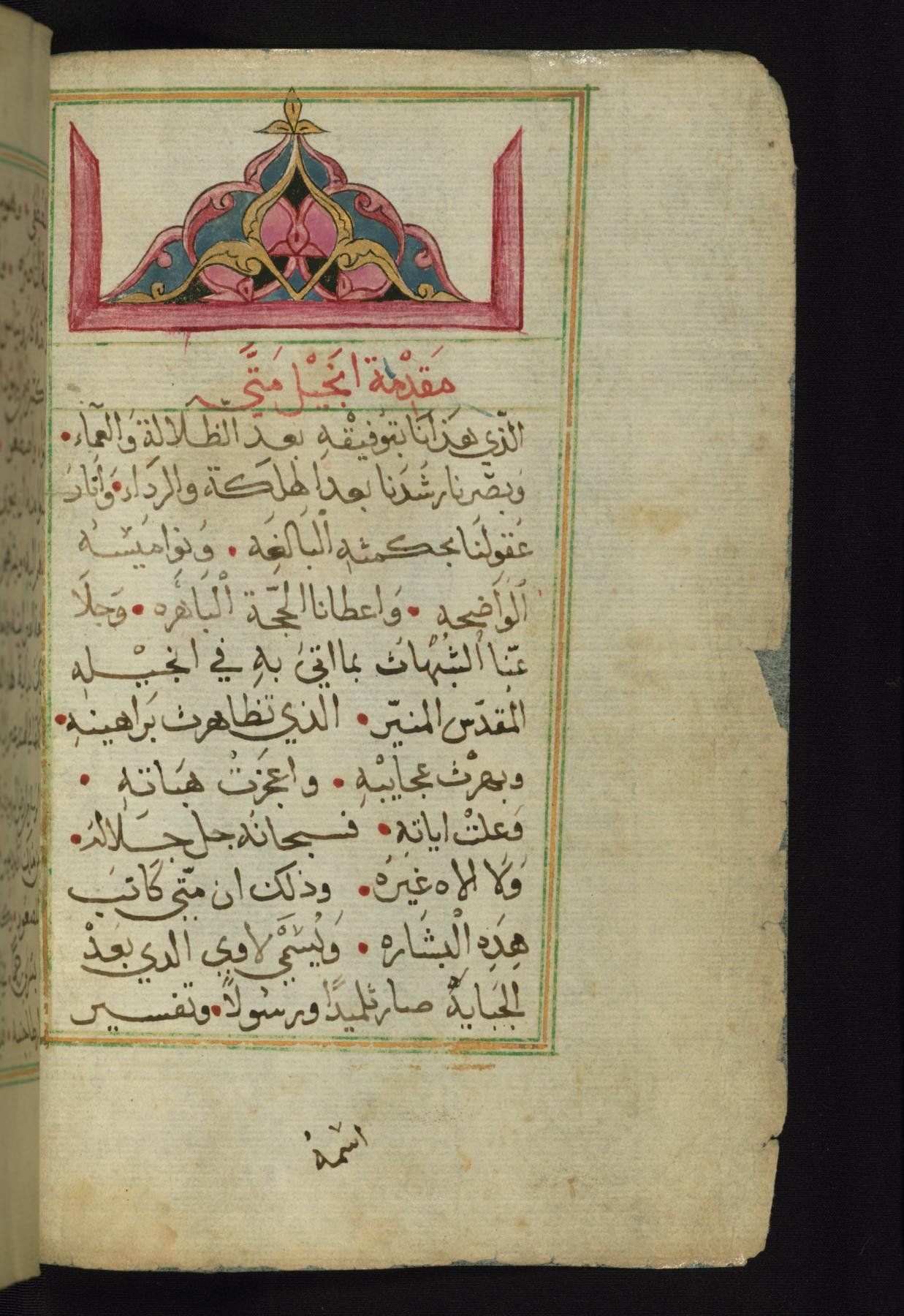
Public domain · via Wikimedia Commons ↗
Bohairic Coptic New Testament
Also called Bohairic NT.
Reflection
The Bohairic dialect of Coptic — spoken in the Nile Delta around Alexandria — eventually became the standard liturgical language of the Coptic Orthodox Church, replacing the older southern Sahidic dialect by the late medieval period. The Bohairic New Testament has been the everyday Bible of Egyptian Coptic Christianity for more than a thousand years and remains so today. When a Coptic priest opens the gospels in liturgy on a Sunday morning in Cairo or Asyut, the text he reads is the Bohairic.
What the Bohairic NT witnesses is a continuous, living transmission of scripture in a Christian community that has never stopped existing. The Coptic Orthodox Church is the direct descendant of the church of Alexandria — the church of Athanasius, the church that defined the doctrine of Christ's divinity at Nicaea, the church that produced Cyril and the formula of hypostatic union. That same church has read the same Bohairic gospels in the same liturgy for over a millennium. The text-type is Alexandrian, allied with Sinaiticus and Vaticanus, and serves modern textual criticism as an independent witness alongside the Sahidic version.
The Bohairic translation is more polished than the Sahidic in many places, with smoother idiom and more consistent technical theological vocabulary — natural for a translation tradition that grew up in proximity to the Greek-speaking ecclesiastical center at Alexandria. Where the Sahidic preserves earlier and rougher translation choices, the Bohairic preserves the refined liturgical text the Coptic church wanted for its public reading.
For the believer today, the Bohairic New Testament is a witness that there are churches that have never stopped — that have endured Roman persecution, the Arian crisis, Chalcedonian schism, Islamic conquest, modern terrorism, and a thousand other waves — and that have kept reading the same gospels in the same language, century after century, without losing the thread. The Egyptian church has paid for the Word in blood. They have not let it go. The Word stands.
Why this manuscript matters
- Liturgical Bible of the Coptic Orthodox Church
- Alexandrian text witness
- Living scriptural tradition