CC BY-SA 4.0 · via Wikimedia Commons ↗
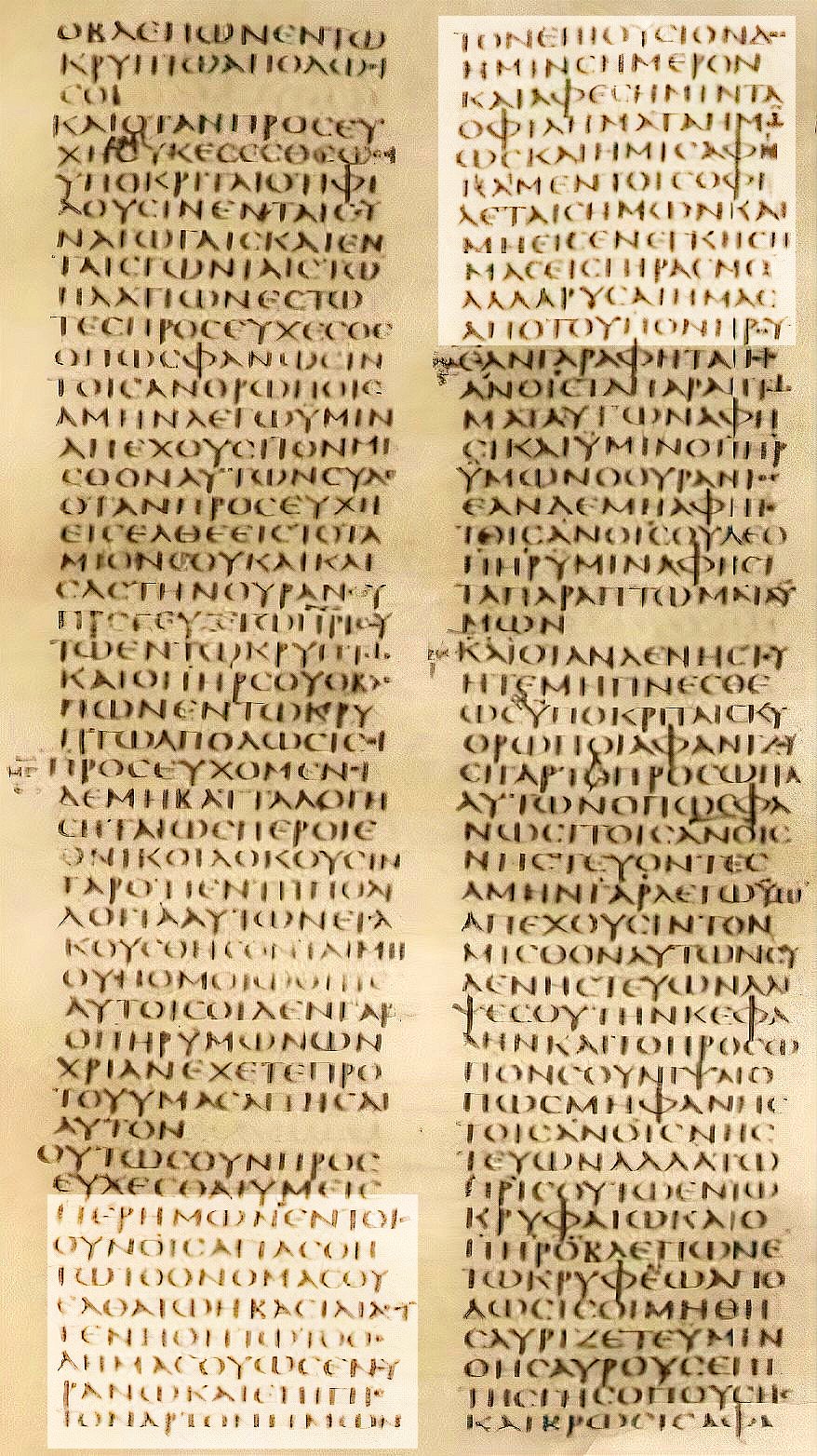
Codex Sinaiticus
Also called ℵ, Aleph, 01, Sinaiticus.
Reflection
It is the oldest complete copy of the New Testament on earth. Genesis through Revelation, plus the Epistle of Barnabas and the Shepherd of Hermas — early Christian texts that some communities still considered scripture in the 4th century — bound into a single massive codex of vellum, copied around AD 350 under the patronage of Constantine or his successor. The story of how it reached us is its own miracle.
In 1844, the German scholar Constantin von Tischendorf was visiting Saint Catherine's Monastery at the foot of Mount Sinai. He noticed leaves of an ancient Greek manuscript in a basket, headed for the fire. He recognized the script. Over the next two decades — through three trips and intense diplomatic effort — he secured most of the codex for European libraries. Today the leaves are scattered across four institutions, but every page has been digitized and brought together at codexsinaiticus.org. Anyone can read the manuscript online.
What Sinaiticus witnesses is the form of the Christian Bible at the moment when the canon was being settled. The New Testament list is essentially the modern one — four gospels, Acts, Pauline letters, the catholic epistles, Revelation. The Old Testament includes the Septuagint plus the deuterocanonical books that some Christian traditions still treat as canonical and that the Protestant tradition does not. (Sinaiticus does not endorse them as canonical for Protestants today; it witnesses that they were included in some Christian collections in the 4th century — a historical fact, not a doctrinal claim.) The text-type is Alexandrian, closely related to Vaticanus and 𝔓75, representing the disciplined textual stream that modern critical editions take as primary.
For the believer today, Codex Sinaiticus is the proof that within three centuries of the apostles, the church had a Bible. Not a guess. Not a draft. A bound, copied, read, corrected, preserved Bible, recognizably the one in your hands. The Word stands.
Why this manuscript matters
- Oldest complete New Testament
- Primary Alexandrian witness
- Includes Barnabas and Shepherd of Hermas
- Tischendorf rescue from Saint Catherine's