CC BY-SA 4.0 · via Wikimedia Commons ↗
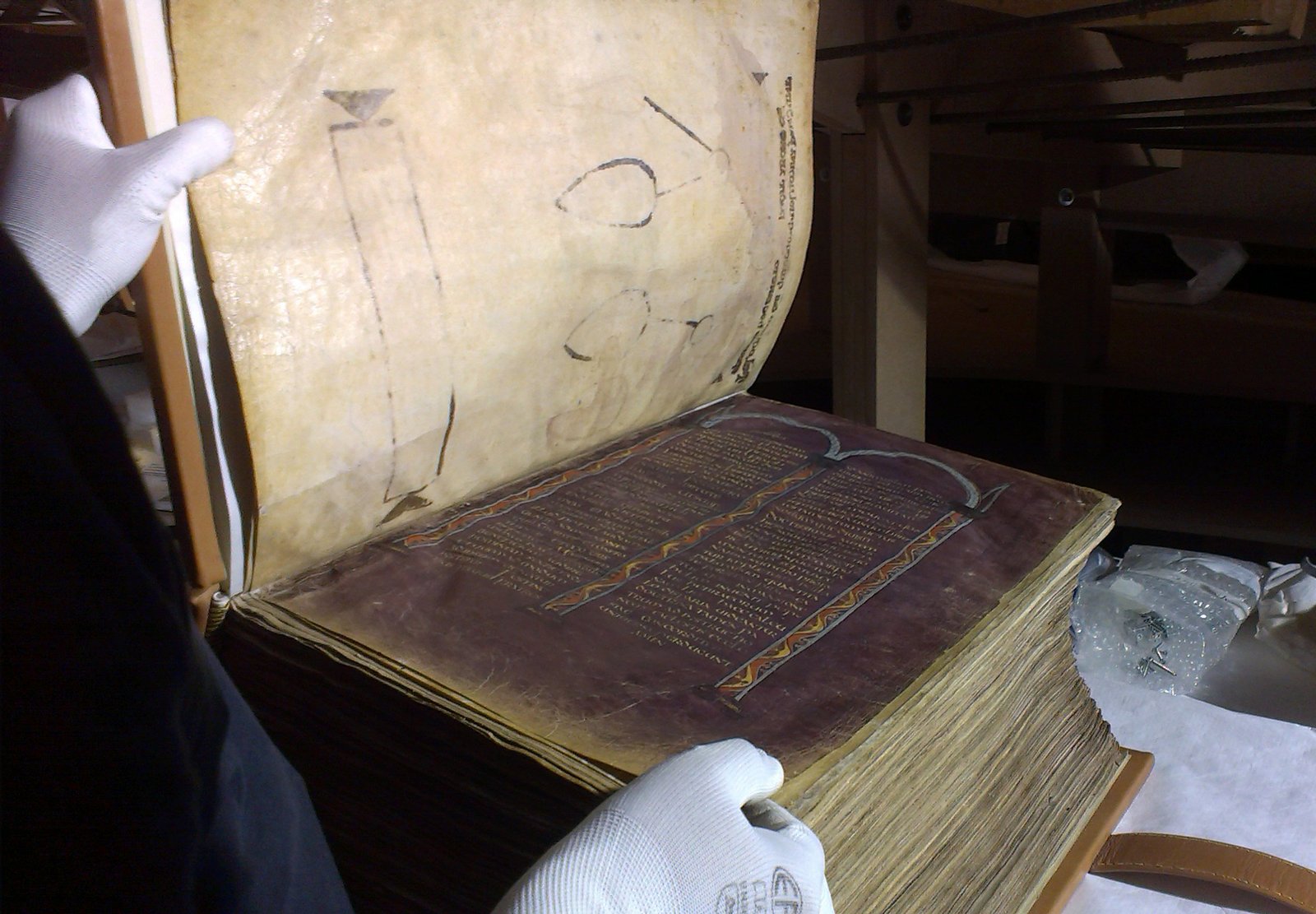
Codex Amiatinus
Also called Amiatinus, Laur. Amiat. 1.
Reflection
Three monks left a monastery in northeast England in AD 716, carrying with them the largest, most magnificent book ever produced in early medieval Britain. They were headed for Rome, with a one-volume Latin Bible — over a thousand leaves, weighing more than seventy-five pounds, requiring the skins of more than five hundred calves — to present as a gift to Pope Gregory II. The leader of the delegation, Abbot Ceolfrith of Wearmouth-Jarrow, died on the journey at Langres in France. His monks carried the Bible the rest of the way. Today it is called Codex Amiatinus, and it is the oldest complete copy of the Latin Vulgate Bible in existence.
What Amiatinus witnesses is the highest achievement of the Northumbrian Renaissance — the period when Anglo-Saxon Christianity, only a century after the conversion of Northumbria, produced scholarship and craftsmanship that rivaled anything in Christendom. The same monastery that produced Amiatinus produced Bede, the great Anglo-Saxon historian and biblical scholar. The Bible Bede taught from was the same Vulgate text Codex Amiatinus preserves. Jerome's translation, made in the late 4th century, reached this 8th-century English manuscript with extraordinary fidelity — better, in fact, than any other surviving witness. Modern critical editions of the Vulgate take Amiatinus as their primary base.
The codex includes the deuterocanonical books — Tobit, Judith, Wisdom, Sirach, Baruch, and the Greek additions to Daniel and Esther — placed within the Old Testament as Jerome arranged them. The Protestant canon, finalized in the 16th-century Reformation, did not include those books. Their presence in Amiatinus witnesses 8th-century Western Christian usage, not a binding canonical claim today.
For the believer today, Codex Amiatinus is a witness that within a century of the conversion of England, English monks were producing Bibles that the Pope of Rome wanted to receive as a gift. The gospel went forth. The gospel produced books. The books carried the gospel onward. The Word stands.
Why this manuscript matters
- Oldest complete Latin Vulgate
- Northumbrian masterpiece
- Bede's monastery