Public domain · via Wikimedia Commons ↗
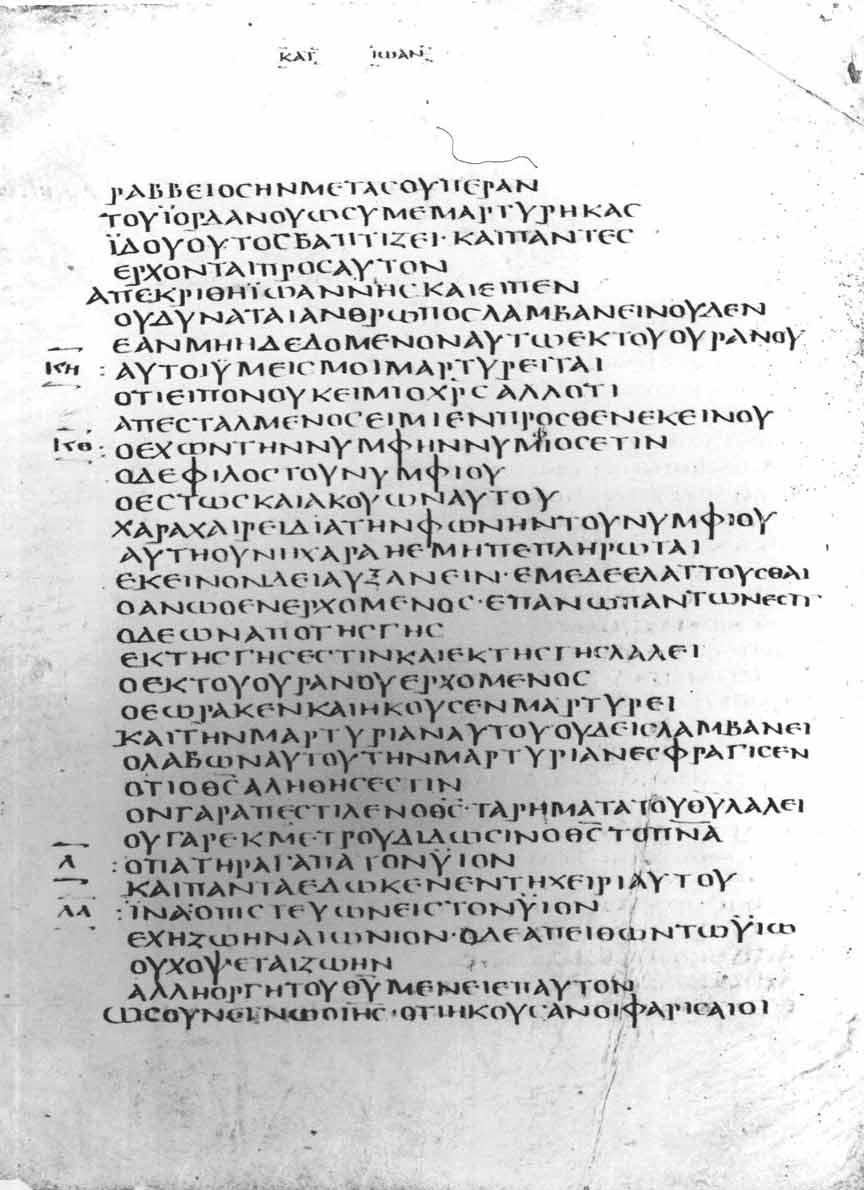
Codex Bezae Cantabrigiensis
Also called D, 05, Bezae.
Reflection
Codex Bezae is the strangest of the great uncial codices, and it is irreplaceable. Where Sinaiticus and Vaticanus carry the disciplined Alexandrian text, Bezae carries the Western text — a stream of transmission with longer readings, expanded narratives, and scribal interpretations that the Alexandrian tradition trims. In Acts, Bezae's text is roughly 8% longer than the standard text. It tells the story of the early church with extra detail at almost every turn — names of converts, additions to apostolic speeches, expanded geographic notes about Paul's travels.
Is the Western text more original or less? Scholars have argued it both ways for two centuries. The most likely answer is that the Western text reflects an early stream — perhaps as early as the 2nd century — that was freer in handling the apostolic narrative, smoothing over awkwardness and adding clarifications without intent to deceive. The Alexandrian tradition guarded the shorter, harder text. The Western tradition guarded the same gospel with more pastoral hands. Both traditions agree on every doctrine. They differ on phrasing and detail.
The codex is also a Greek-Latin diglot, with Greek on the left page and Latin on the right — built for a community where both languages were used in worship and instruction. The gospel order is Matthew, John, Luke, Mark — the Western order, putting the apostle-evangelists first and the disciples-of-apostles second. Theodore Beza, the Reformer who succeeded Calvin in Geneva, acquired the manuscript from a French monastery during the Wars of Religion and donated it to Cambridge in 1581.
For the believer today, Codex Bezae is a witness that the early church was not monolithic in its scribal traditions but was unified in its gospel. Different communities, different streams, different scribal habits — all converging on the same Christ, the same cross, the same empty tomb, the same apostolic preaching. The variants do not undermine the gospel. They demonstrate that the gospel was strong enough to survive multiple traditions of its transmission. The Word stands.
Why this manuscript matters
- Primary Western text witness
- Greek-Latin diglot
- Distinctive Acts readings
- Sense-line scribal layout