CC BY-SA 4.0 · via Wikimedia Commons ↗
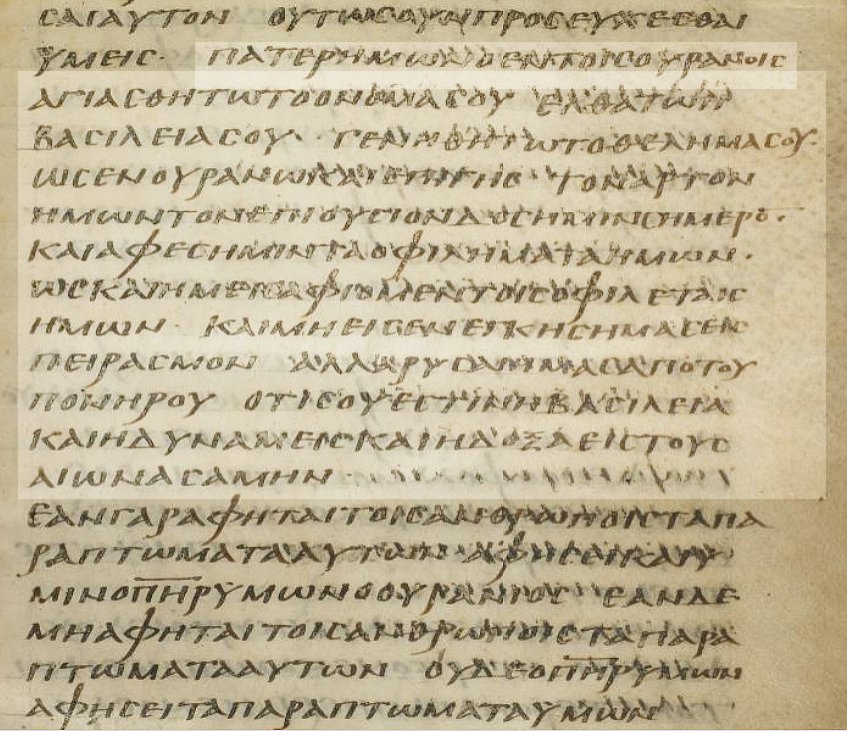
Codex Washingtonianus
Also called W, 032, Freer Gospels.
Reflection
Charles Lang Freer purchased the codex in 1906 in Cairo from a dealer who had obtained it from monks at the White Monastery in Sohag. He brought it to America, where it has remained — the only major uncial Greek New Testament codex housed permanently in the United States. It is now displayed at the Freer Gallery of the Smithsonian.
What Codex W demonstrates, more clearly than any other manuscript, is that the four gospels were transmitted independently and bound together later. The text-type changes from gospel to gospel, sometimes within a single book. Matthew is Byzantine. Mark begins Western, switches to Caesarean halfway through, and finishes mixed. Luke is Alexandrian. John starts mixed and resolves toward Alexandrian by the end. The scribe was not careless. The scribe was working from multiple exemplars — copying Matthew from one parent manuscript, Mark from a different one, Luke from a third — and binding them into a single codex. The seams are visible because the work is honest.
Codex W also preserves a unique reading. In Mark 16:14, between the longer ending's account of Jesus rebuking the disciples for their unbelief and his commissioning of them to go into all the world, Codex W contains an additional passage — the so-called Freer Logion — in which the apostles answer Jesus and Jesus speaks again about the limits of Satan's power. The passage appears in no other manuscript. Jerome had heard of it. Codex W is the only direct witness. Most editors treat it as an early addition rather than original to Mark.
For the believer today, Codex Washingtonianus is the witness that the gospels were carried on multiple independent streams before they converged. Matthew came from one community, Mark from another, Luke from a third, John from a fourth — and yet the church received them as one fourfold gospel, one Christ, one cross. The streams were different. The Word was the same. The Word stands.
Why this manuscript matters
- Patchwork of text-types within one codex
- Freer Logion in Mark
- Discovered 1906 in Egypt