Public domain · via Wikimedia Commons ↗
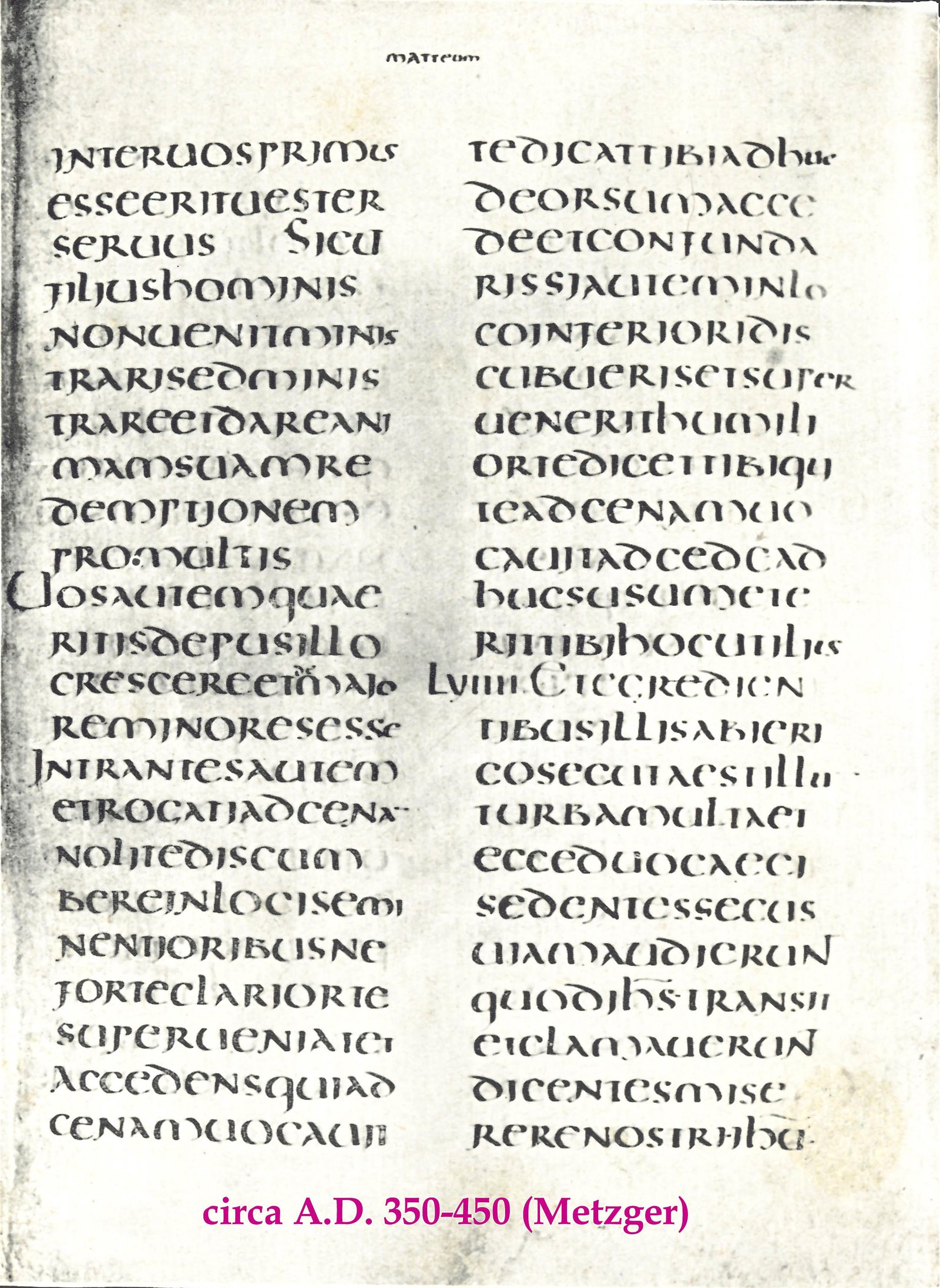
Codex Claromontanus
Also called Dp, 06, Claromontanus.
Reflection
If Codex Bezae is the Western witness for the gospels and Acts, Codex Claromontanus is the Western witness for Paul. Together they form the Western pair: Bezae for the narrative books, Claromontanus for the epistles. Both are Greek-Latin diglots. Both came through the hands of Theodore Beza in the late 16th century. Both preserve a stream of transmission distinct from the Alexandrian and Byzantine traditions and irreplaceable for textual criticism.
The Pauline text in Claromontanus runs from Romans through Hebrews, with Hebrews placed at the end of the corpus rather than after Romans (where 𝔓46 placed it). The text-type is Western — slightly fuller than the Alexandrian, with occasional explanatory expansions, reflecting the same scribal sensibility that shaped Bezae's Acts. Where Claromontanus differs from Vaticanus or 𝔓46, modern editions weigh both witnesses; where Claromontanus agrees with the Alexandrians, the agreement strengthens both. It is one of the indispensable comparison points for every critical edition of the Pauline epistles.
The codex also carries an unexpected gift between Philemon and Hebrews: a stichometric list, an early Latin canon catalogue ranking biblical books by their line-length and listing what one early Christian community received as scripture. The list is interesting both for what it includes and what it omits — Philippians and 1–2 Thessalonians appear to be missing from this particular list, almost certainly by accident; Barnabas, Hermas, and the Acts of Paul appear among the noted books, witnessing the same diversity we see in Sinaiticus and Alexandrinus.
For the believer today, Codex Claromontanus is the witness that Paul's letters reached the Western Mediterranean in their fullness, were read in two languages, and were studied in communities that took the boundaries of the canon seriously enough to write them down. The Pauline gospel — justification by faith, the body of Christ, the call to holiness, the hope of resurrection — was already established as scripture in southern Europe in the 6th century. The Word stands.
Why this manuscript matters
- Primary Western witness for Paul
- Greek-Latin diglot
- Includes early stichometric canon list