Public domain · via Wikimedia Commons ↗
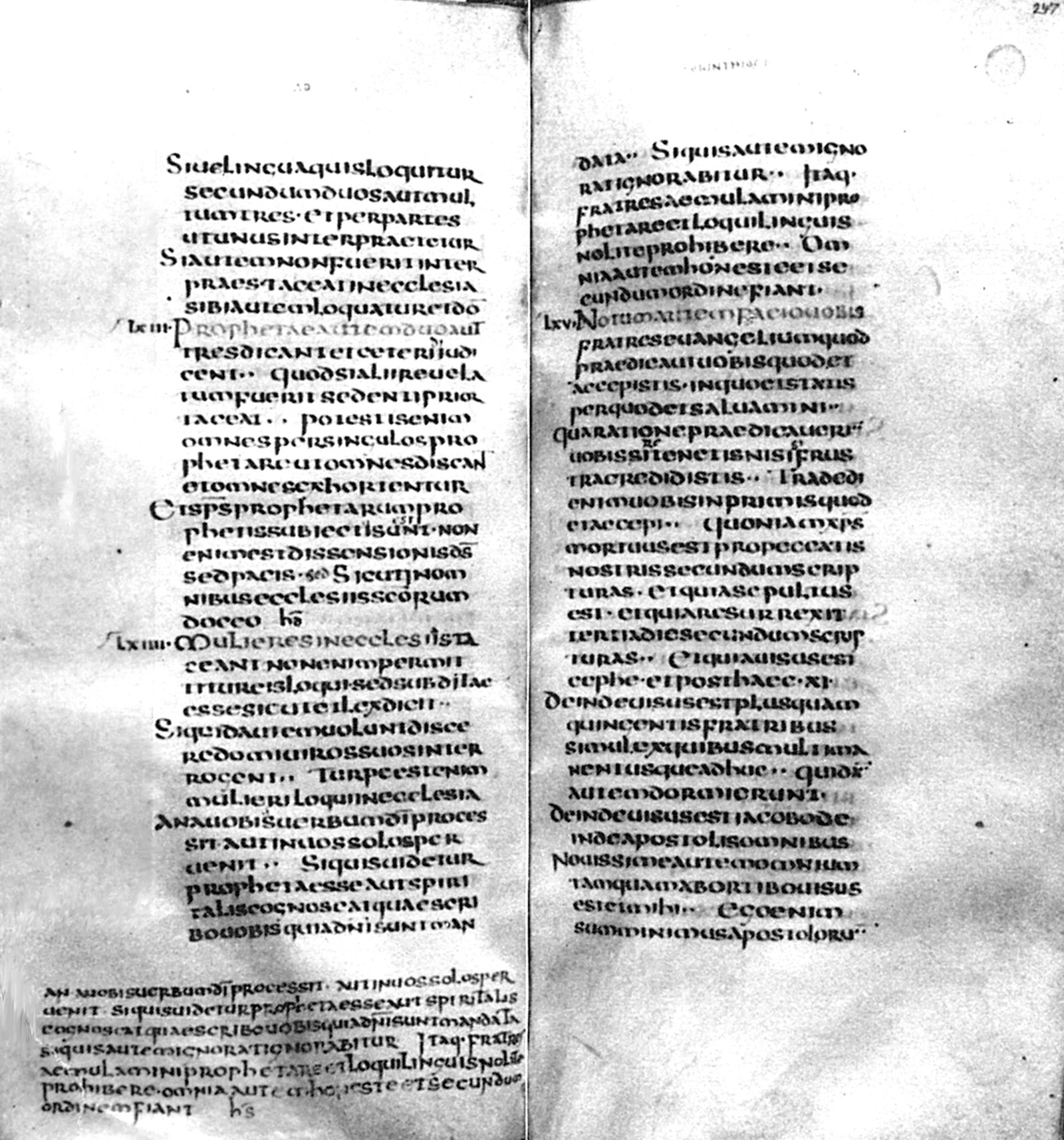
Codex Fuldensis
Also called F, Fulda Cod. Bonifatianus 1.
Reflection
In AD 546, Bishop Victor of Capua finished a personal copy of the New Testament in Latin. He had a problem with the gospel section. He had heard of Tatian's Diatessaron — the famous 2nd-century single-narrative weaving of all four gospels into one continuous story — but he could not find a complete Greek copy. So he had a Latin Diatessaron prepared, using the Vulgate text Jerome had translated, weaving Matthew, Mark, Luke, and John together in the Diatessaronic order. Then he attached Acts, the Pauline Epistles, the Catholic Epistles, and Revelation. He signed and dated his finished manuscript. It is the oldest dated copy of the Latin Vulgate New Testament that exists.
The codex took an extraordinary journey. In the early 8th century, the missionary Boniface — Anglo-Saxon by birth, sent by the Pope to evangelize the Germans — carried this manuscript with him into the forests of Frisia and Hesse. He used it for personal study and for teaching. When he was martyred in AD 754 by pagan raiders at Dokkum, the manuscript was reportedly with him. The dark stains on certain pages are traditionally identified as the saint's blood. The manuscript was preserved at the monastery of Fulda, which Boniface had founded, and remains there today.
What Fuldensis witnesses is the gospel reaching the German tribes. The same gospels that 𝔓52 had carried in 2nd-century Egypt reached the pagan north in the 8th-century Boniface mission, in the form Bishop Victor of Capua had prepared two centuries earlier. The chain of transmission is unbroken. From John in Ephesus to a missionary's saddlebag in the German forest, the same Christ.
For the believer today, Codex Fuldensis is the witness that scripture moved with the gospel mission — that books are part of evangelism, that translation is part of preaching, and that the men who brought Christ to new peoples brought Christ in a book. Where Boniface went, the Bible went. Where the Bible goes, Christ goes. The Word stands.
Why this manuscript matters
- Oldest dated Vulgate New Testament
- Latin Diatessaron
- Saint Boniface association