Public domain · via Wikimedia Commons ↗
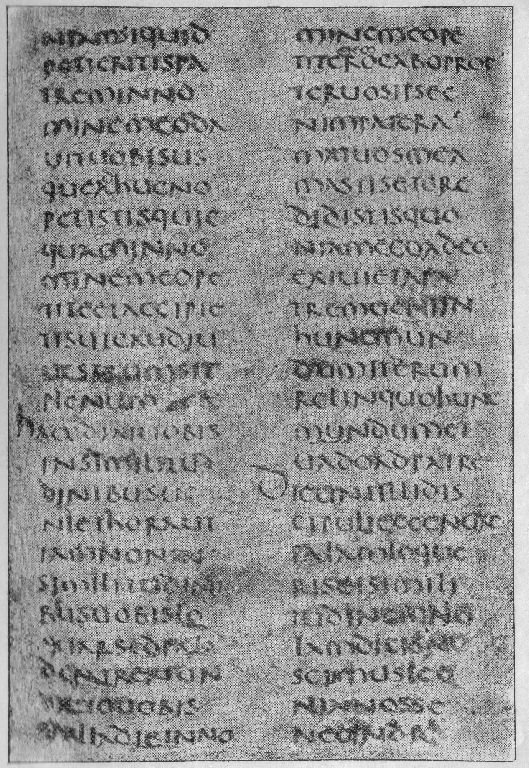
Codex Vercellensis
Also called a, VL 3.
Reflection
Before Jerome translated the Latin Vulgate at the end of the 4th century, the Western church already had Latin Bibles. They are called the Vetus Latina, the Old Latin, and they survive only in scattered manuscripts — most fragmentary, most later copies of older translations. The oldest gospel manuscript of the Old Latin tradition is Codex Vercellensis, copied in northern Italy around the middle of the 4th century, and tradition associates its production with Eusebius of Vercelli — the Italian bishop who suffered exile under the Arian-leaning Emperor Constantius for his defense of the orthodox faith.
What Vercellensis witnesses is what the Latin gospels looked like before Jerome. The text type is Western — fuller, freer, with longer readings than the Greek Alexandrian tradition. The gospel order is Matthew, John, Luke, Mark — the Western order, with the apostle-evangelists first. The Latin is rough by Vulgate standards, more literal in its tracking of the underlying Greek and less polished in its idiom. This is the gospel preached and taught in Italy before Jerome's revision. Augustine, just a generation later, would still know and use both Old Latin and Vulgate texts side by side, sometimes complaining about Jerome's changes.
The physical object is a luxury. The vellum was dyed purple — the imperial color — and the text was written in silver ink, a production technique reserved for the most prestigious manuscripts. This was not a working Bible. This was a cathedral Bible, made to be displayed and read in the great moments of liturgy, witnessing the dignity the Italian church accorded the gospels in the century when Christianity moved from persecution to imperial patronage.
For the believer today, Codex Vercellensis is a witness that the Latin tradition of scripture did not begin with Jerome. The gospels were preached in Latin, copied in Latin, and treasured in silver-and-purple manuscripts in Italy long before the Vulgate was finished. The Word came to the Latin West. The Word stands.
Why this manuscript matters
- Oldest Old Latin gospel manuscript
- Silver-on-purple luxury production
- Pre-Vulgate Latin gospels