Public domain · via Wikimedia Commons ↗
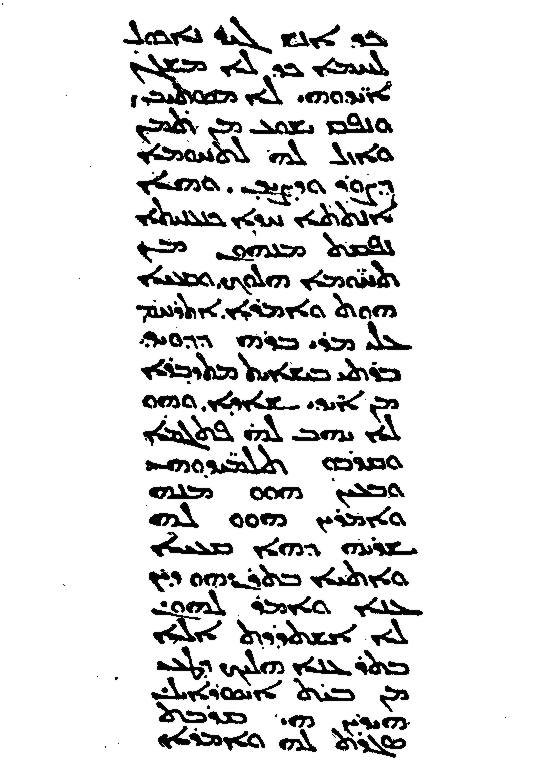
The Curetonian Gospels
Also called Syrc, Old Syriac Curetonian, BL Add MS 14451.
Reflection
The Old Syriac translation of the four gospels survives in two main manuscripts: the Sinaitic Palimpsest at Saint Catherine's Monastery, and the Curetonian Gospels in the British Library. They were copied in different communities, in different centuries, from different exemplars — and where both manuscripts survive the same passages, their texts substantially agree. The agreement matters. Two independent witnesses to a 4th-century Syriac translation, surviving by accident through medieval libraries and 19th-century recoveries, confirm that the Old Syriac gospel tradition was a real, stable, widely-used text — not a one-off curiosity.
The Curetonian Gospels were brought to England in the 1840s as part of the great recovery of Syriac manuscripts from the Nitrian Desert monasteries of Egypt — a series of acquisitions by the British Museum that transformed the study of Eastern Christianity. William Cureton, an Assyrian-cuneiform scholar at the museum, identified the gospel text within the collection and published it in 1858, setting the manuscript's name in the field. Where the Curetonian survives — Matthew, Mark, John, and parts of Luke — it gives us a 5th-century copy of a 4th-century translation, with the same independent character that the Sinaitic Palimpsest carries.
The two manuscripts together preserve the gospel as it was first translated for the Aramaic-Syriac-speaking churches before the Peshitta replaced the Old Syriac and became the standard. Together they let modern scholars trace how the gospels were translated, transmitted, and revised in Syriac for two centuries before the standardized text settled.
For the believer today, the Curetonian Gospels are a witness that the gospel reached the East not as a translation of a translation, but as a careful, scholarly rendering by men who knew Greek and Aramaic both — and who took the words of Christ seriously enough to weigh every Syriac word for accuracy. The Old Syriac translators are anonymous. The gospel they preserved is not. The Word stands.
Why this manuscript matters
- Second major Old Syriac witness
- Pre-Peshitta gospel translation
- Nitrian Desert recovery