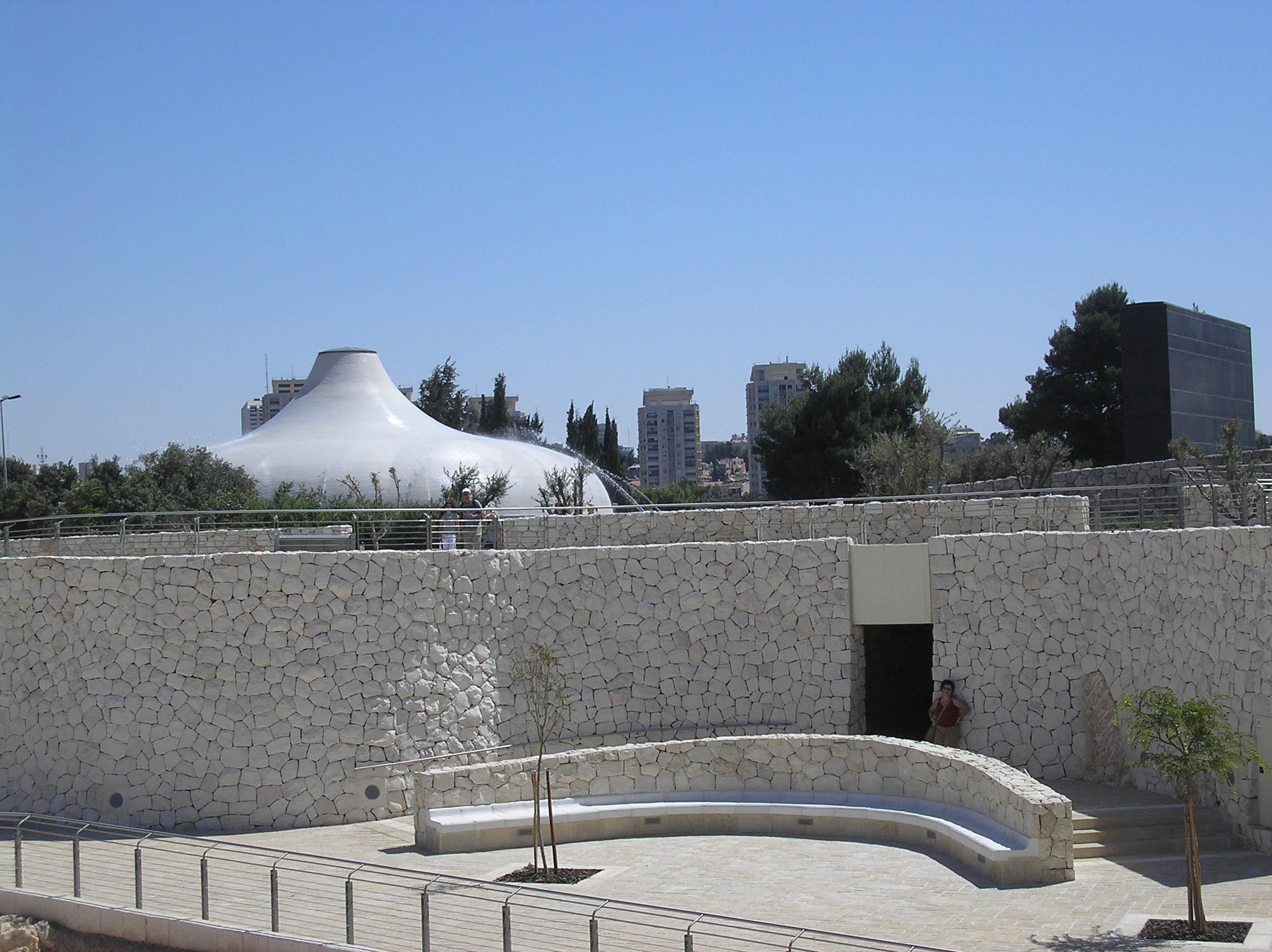
1QSb was recovered from Cave 1 at Khirbet Qumran near the Dead Sea in 1947, part of the initial cache of seven major scrolls discovered by Bedouin shepherds and subsequently acquired and studied through the efforts of scholars including Eleazar Sukenik of the Hebrew University and later published formally by Jacob Licht and Józef Milik. The manuscript was designated columns appended to the same leather scroll complex as 1QS (the Community Rule) and 1QSa (the Rule of the Congregation). Fragments are currently housed under the care of the Israel Antiquities Authority and displayed in part at the Shrine of the Book at the Israel Museum, Jerusalem. The scroll is written in a Herodian-era formal script on leather, paleographically dated to approximately 100–50 BC, and comprises five poorly preserved columns of Hebrew text. It contains a series of distinct blessings: one for the general congregation, one for the high priest, one for the priests (sons of Zadok), and a concluding blessing for the eschatological 'Prince of the Congregation' (nasi ha-edah). The blessing for the Prince draws heavily on Isaiah 11:1–5 and Numbers 6:24–26, closely paraphrasing the Aaronic benediction and applying royal-warrior imagery to a future Davidic figure. Deuteronomy 33:8–11 informs the Zadokite priestly blessing. For biblical scholarship, 1QSb documents how late Second Temple communities interpreted and liturgically activated prophetic texts from Isaiah, Numbers, and Deuteronomy in articulating distinct messianic offices—priestly and royal—operating in parallel. This dual-messiah framework, attested also in other Qumran documents, provides essential context for understanding the New Testament's convergence of these roles in a single figure, as well as the priestly Christology developed in texts such as the Letter to the Hebrews. The document illuminates how specific prophetic passages were read as programmatic templates for communal and eschatological leadership. **Sources:** Józef T. Milik, *Discoveries in the Judaean Desert I* (Oxford: Clarendon Press, 1955); James H. Charlesworth, ed., *The Dead Sea Scrolls: Hebrew, Aramaic, and Greek Texts with English Translations, Vol. 1* (Tübingen: Mohr Siebeck, 1994); John J. Collins, *The Scepter and the Star: Messianism in Light of the Dead Sea Scrolls*, 2nd ed. (Grand Rapids: Eerdmans, 2010); Numbers 6:24–26; Isaiah 11:1–5.
1QSb preserves a structured series of liturgical blessings directed at the congregation, the high priest, and a Davidic 'Prince of the Congregation,' offering rare pre-Christian documentary evidence for the convergence of priestly and royal messianic expectations within a Jewish sectarian community.