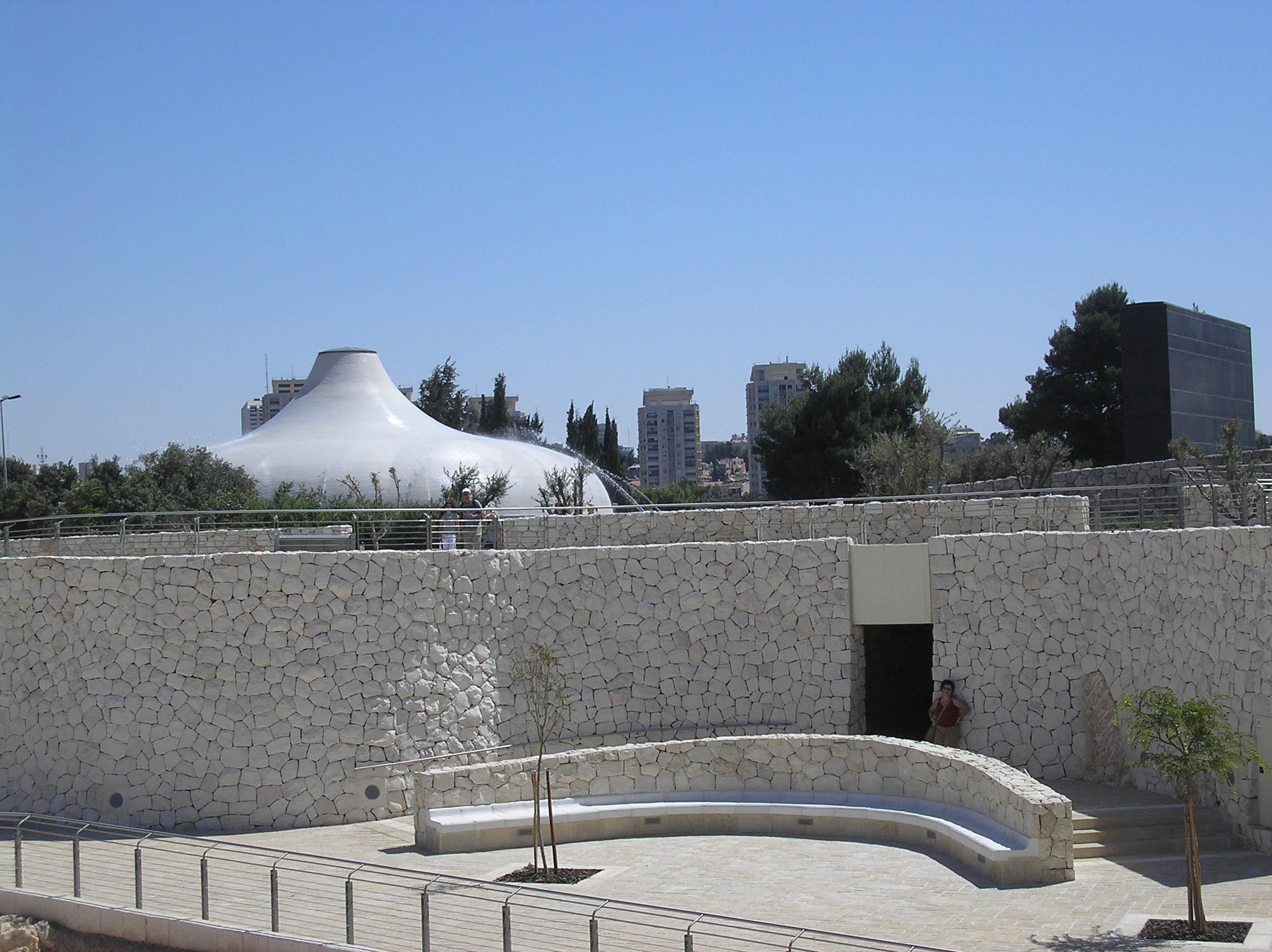
4Q174, designated the Florilegium or Midrash on the Last Days, was recovered from Cave 4 at Khirbet Qumran during the systematic excavations and manuscript recoveries conducted between 1952 and 1956, largely under the direction of Roland de Vaux of the École Biblique et Archéologique Française. The fragmentary manuscript reached the Jordanian Antiquities Department before eventually passing, along with the broader Cave 4 corpus, to the Israel Antiquities Authority. It is currently held within the Shrine of the Book collection at the Israel Museum, Jerusalem, and is formally catalogued as 4Q174 within the Dead Sea Scrolls inventory. The manuscript survives in badly fragmented form, comprising columns written in a square Hebrew script characteristic of the Hasmonean to early Herodian period, generally dated paleographically to the late second or early first century BC. The text is an anthology — a florilegium — that sequences and interprets passages from 2 Samuel 7:10–14, Exodus 15:17–18, Amos 9:11, Psalms 1–2, Isaiah 8:11, Ezekiel 37:23, and Deuteronomy 23:3–4. Each cited passage receives a brief interpretive comment, a technique closely related to the pesher genre attested elsewhere at Qumran, applying biblical prophecy to the community's own historical and theological situation. The document's principal significance for biblical scholarship lies in its explicit conflation of the Davidic covenant oracle of 2 Samuel 7 — the so-called Nathan Prophecy — with the Amos 9:11 reference to the "fallen booth of David" and the royal imagery of Psalm 2, treating these as mutually interpreting witnesses to a coming Davidic figure and an eschatological sanctuary. This pattern of intertextual linkage illuminates the exegetical environment from which early Jewish messianism developed and provides direct comparative context for analogous arguments in the New Testament (cf. Acts 15:15–17; Hebrews 1:5). The Florilegium thus stands as critical evidence for reconstructing the range of pre-Christian biblical interpretation. **Sources:** John Strugnell and John Allegro, *Qumrân Cave 4, I: 4Q158–4Q186*, Discoveries in the Judaean Desert 5 (Clarendon Press, 1968); George J. Brooke, *Exegesis at Qumran: 4QFlorilegium in Its Jewish Context* (JSOT Press, 1985); Geza Vermes, *The Complete Dead Sea Scrolls in English* (Penguin, 1997); 2 Samuel 7:10–14; Amos 9:11; Psalm 2:1–2.
4Q174 is among the earliest extant Jewish documents to weave Davidic dynastic promises from 2 Samuel 7 together with Amos 9:11 and Psalm 2, demonstrating how Second Temple interpreters read these texts as a constellation of messianic and eschatological expectation.