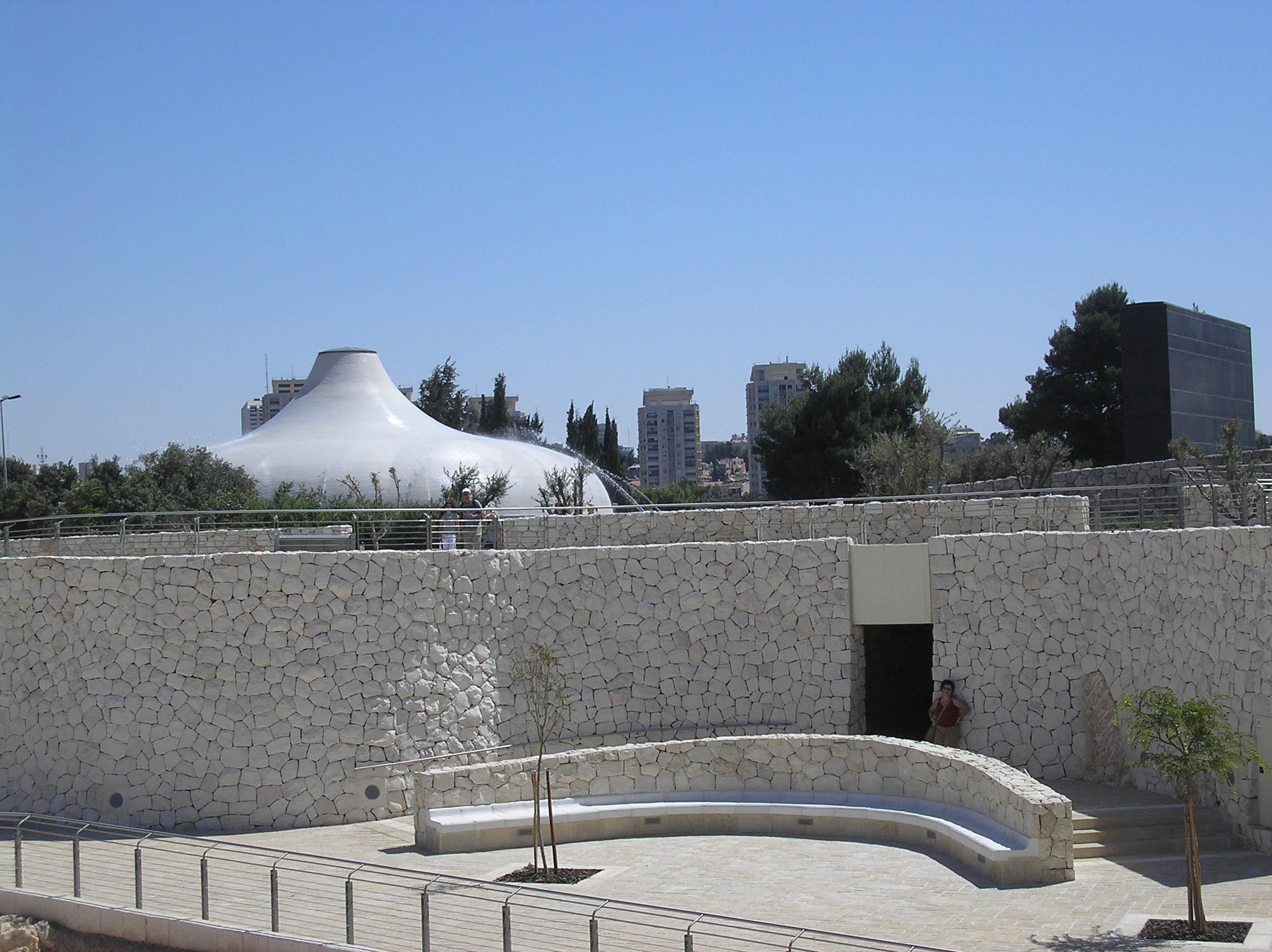
4Q246, commonly designated the Aramaic Apocalypse or 'Son of God text,' was recovered from Cave 4 at Qumran near the Dead Sea, part of the massive manuscript cache discovered between 1947 and 1956. The fragment was identified among the Cave 4 materials held by the Palestine Archaeological Museum (later the Rockefeller Museum) and was formally studied and published by Józef Milik, with a critical edition produced by Émile Puech in 1992. The manuscript is now under the custody of the Israel Antiquities Authority and is associated with the Shrine of the Book collection in Jerusalem. The fragment consists of two small columns of Aramaic text written on leather, paleographically dated to approximately 25–50 BC, though the composition it preserves is generally placed in the late second or early first century BC. The text describes a visionary figure before a throne, followed by a declaration that a coming figure 'shall be called Son of God, and they shall call him Son of the Most High.' The ensuing lines describe a kingdom of God supplanting earthly kingdoms, closely paralleling the sequence and imagery of Daniel 7:13–14 and 7:27. The dimensions of the surviving fragment are approximately 8.5 cm by 11.5 cm. The significance of 4Q246 for biblical studies is considerable. The precise Aramaic epithets it employs — bar 'elah and bar 'elyon — correspond almost verbatim to the Greek titles in Luke 1:32 and 1:35, where the angel Gabriel announces to Mary that her son will be called 'Son of the Most High' and 'Son of God.' This demonstrates that such honorific language existed within Jewish apocalyptic usage before the New Testament, grounding the Lukan annunciation within identifiable Second Temple idiom rather than treating it as derived solely from Greco-Roman divine-man categories. Scholarly debate continues over whether the Qumran figure is messianic or refers to a negative ruler, but the terminological parallel to Luke remains a consensus point of reference. **Sources:** Émile Puech, *Qumran Grotte 4: XVIII, Textes Hébreux* (Brill, 1998); John J. Collins, *The Scepter and the Star: Messianism in Light of the Dead Sea Scrolls*, 2nd ed. (Eerdmans, 2010); Joseph A. Fitzmyer, *The Dead Sea Scrolls and Christian Origins* (Eerdmans, 2000); Luke 1:32–35; Daniel 7:13–14.
4Q246 contains the Aramaic phrases 'Son of God' and 'Son of the Most High' in a Jewish apocalyptic context predating the New Testament, directly illuminating the linguistic and ideological milieu from which Lukan annunciation terminology emerged.