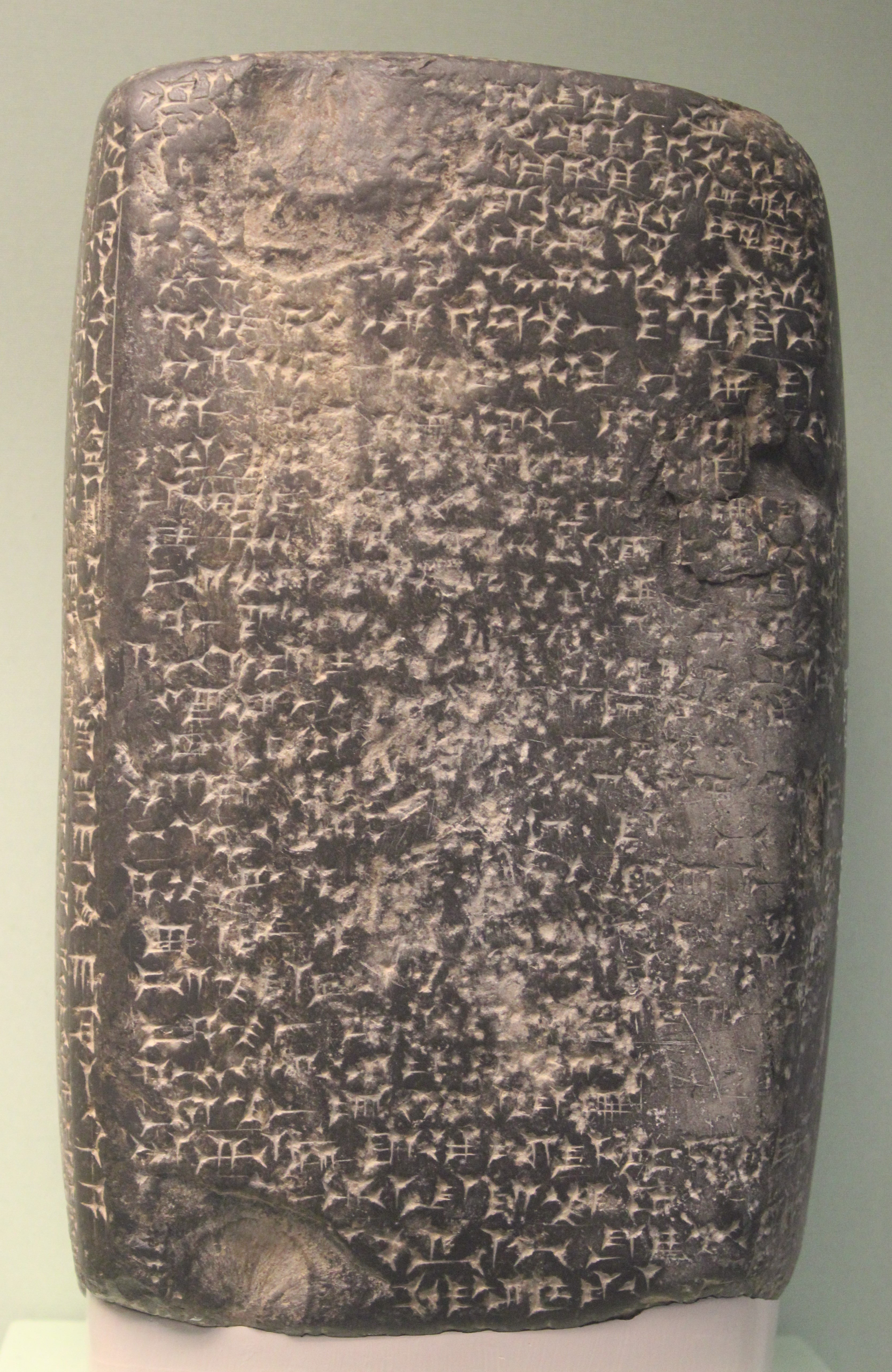
The annals of Tukulti-Ninurta I (reigned c. 1244–1208 BC), king of Assyria, survive across multiple cuneiform tablet fragments and stone prism inscriptions recovered principally from Assur (modern Qal'at Sherqat, Iraq). Major excavations at Assur were conducted by the Deutsche Orient-Gesellschaft under Walter Andrae between 1903 and 1914, with significant fragments now held in the Vorderasiatisches Museum, Berlin (VA 8253) and the British Museum, London. Additional fragments were identified and published by Ernst Weidner in the mid-twentieth century, with critical editions later refined by A. K. Grayson in his Assyrian Royal Inscriptions series. The annals are composed in Standard Babylonian literary dialect on clay tablets and stone prisms. The texts detail Tukulti-Ninurta's military campaigns, most notably his defeat of the Kassite king Kashtiliash IV of Babylon, the plunder of that city's temples—including removal of the statue of Marduk—and the forced deportation of the Babylonian king to Assur. The inscriptions employ formulaic theological language asserting divine mandate from the god Assur for conquest, population transfer, and the absorption of foreign territories. This same ideological vocabulary—divine election of the king, enemy defeat as cosmic order restored, and systematic deportation as policy—structures virtually all subsequent Assyrian royal annals through the Neo-Assyrian period. For biblical studies, the Tukulti-Ninurta annals establish that mass deportation as a deliberate instrument of imperial control was an entrenched Assyrian practice centuries before the deportations of Israel (722 BC) and Judah (597–586 BC) described in 2 Kings 17–18 and referenced in Isaiah 10:5–6. The theological framing of conquest as divinely sanctioned in these inscriptions provides essential comparative context for understanding how Israelite authors interpreted Assyrian and Babylonian aggression within their own theological framework, as reflected in passages such as Daniel 1:1–2. **Sources:** A. K. Grayson, *Assyrian Royal Inscriptions*, vol. 1 (Harrassowitz, 1972); Ernst Weidner, *Die Inschriften Tukulti-Ninurtas I.* (Archiv für Orientforschung Beiheft 12, 1959); Amélie Kuhrt, *The Ancient Near East c. 3000–330 BC*, vol. 1 (Routledge, 1995); 2 Kings 17:6; Isaiah 10:5–6.
Tukulti-Ninurta I's annals provide the earliest extended literary documentation of Assyrian imperial conquest and deportation ideology, directly contextualizing the mechanisms later employed against Israel and Judah as recorded in 2 Kings and Isaiah.