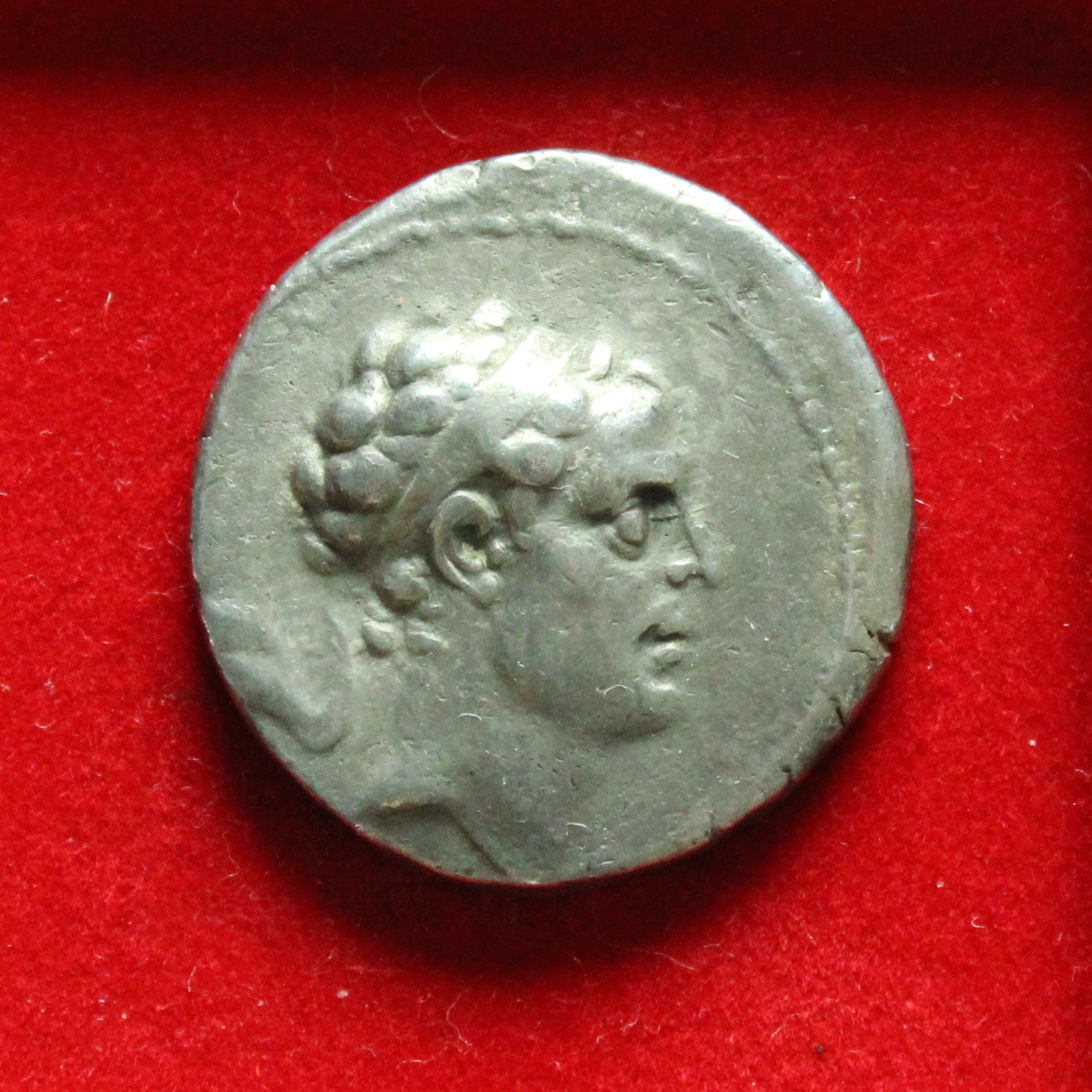
The silver tetradrachm of Antiochus IV Epiphanes (reigned 175–164 BC) is a standard Seleucid denomination struck at the royal mint in Antioch, weighing approximately 16.5–17 grams. The obverse carries a diademed portrait of the king rendered in the Hellenistic tradition, projecting an image of divine majesty; the reverse depicts Zeus Nikephoros—Zeus enthroned and holding Nike, the goddess of victory—accompanied by a Greek legend identifying the king as 'Antiochus, image of god, bearer of victory.' This reverse type is significant because it reflects the king's self-presentation as a divine or semi-divine ruler, a posture echoed in his epithet 'Epiphanes' (god manifest). Some coins from his reign also bear the legend 'Theos Epiphanes,' making his claimed divine status explicit on the coinage itself. The tetradrachm circulated widely across the Seleucid realm and would have passed through Judea during the period of intense Hellenization Antiochus imposed, culminating in the desecration of the Jerusalem Temple around 167 BC. The biblical book of Daniel, in chapters 8 and 11, describes a contemptible figure who exalts himself, abolishes the regular burnt offering, and sets up an abomination—language that the majority of critical scholars connect, at minimum, to the circumstances of Antiochus IV's reign. First Maccabees 1:10–64 provides a corresponding narrative of his decrees against Jewish practice. The coin does not validate any specific prophetic interpretation but materially attests the ideological self-aggrandizement of the ruler whose policies precipitated the Maccabean revolt. Sources: British Museum Collection (1872,0709.1 and related); Arthur Houghton & Catharine Lorber, Seleucid Coins: A Comprehensive Catalogue (2002); American Numismatic Society online corpus.
This tetradrachm provides direct numismatic evidence of Antiochus IV's propagandistic claim to divine status, the ideological backdrop against which both Daniel 11 and the Maccabean crisis are historically situated. It anchors the political and religious self-presentation of the ruler most scholars associate with the 'abomination' described in those texts within a precisely dateable material record.