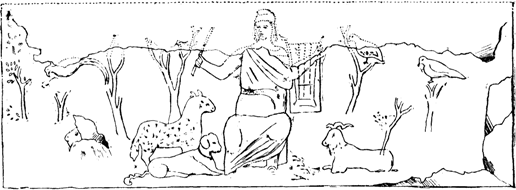
The Christian catacombs of Rome are a network of underground burial galleries cut from the soft volcanic tufa beneath the Roman countryside, beginning in the late 2nd century AD and continuing through the 5th. Roughly forty Christian catacombs have been identified — Calixtus, Domitilla, Priscilla, Sebastiano, Praetextatus among the largest — totaling more than sixty miles of corridors and an estimated 750,000 burials. The earliest layers were established when Christians were a tolerated but legally precarious minority. The galleries were not, contrary to a persistent legend, hideouts during persecution; they were cemeteries, with services held there only for funerals and martyr-anniversaries. Christian preference for inhumation rather than the Roman norm of cremation, combined with the legal status of burial sites as religiosum (protected ground), drove the development of the catacomb system. Wealthy Christian families donated land; corporate burial collegia organized the digging. The walls preserve thousands of inscriptions in Latin and Greek, frescoes, and symbolic motifs: the fish (Greek ichthys as acrostic for "Jesus Christ, Son of God, Savior"), the Good Shepherd carrying the lost sheep, the orant figure with raised hands, Jonah cast from the ship and emerging from the great fish, Daniel in the lions' den, the three young men in the furnace, the raising of Lazarus. Giovanni Battista de Rossi systematized study of the catacombs from 1849, founding the modern discipline of Christian archaeology. The Pontifical Commission for Sacred Archaeology, established in 1852, oversees them today. Five — Calixtus, Domitilla, Priscilla, Sebastiano, and Sant'Agnese — are open to visitors. Sources: Giovanni Battista de Rossi, Roma Sotterranea Cristiana (1864-1877); L. V. Rutgers, Subterranean Rome: In Search of the Roots of Christianity in the Catacombs of the Eternal City (2000); Norbert Zimmermann, Werkstattgruppen römischer Katakombenmalerei (2002); Robin M. Jensen, Understanding Early Christian Art (2000).
The most extensive surviving record of pre-Constantinian Christian belief in their own words and pictures. The catacombs document a faith that prized resurrection, named Christ as Lord, and revered the martyrs — long before Christianity had legal status or political power.