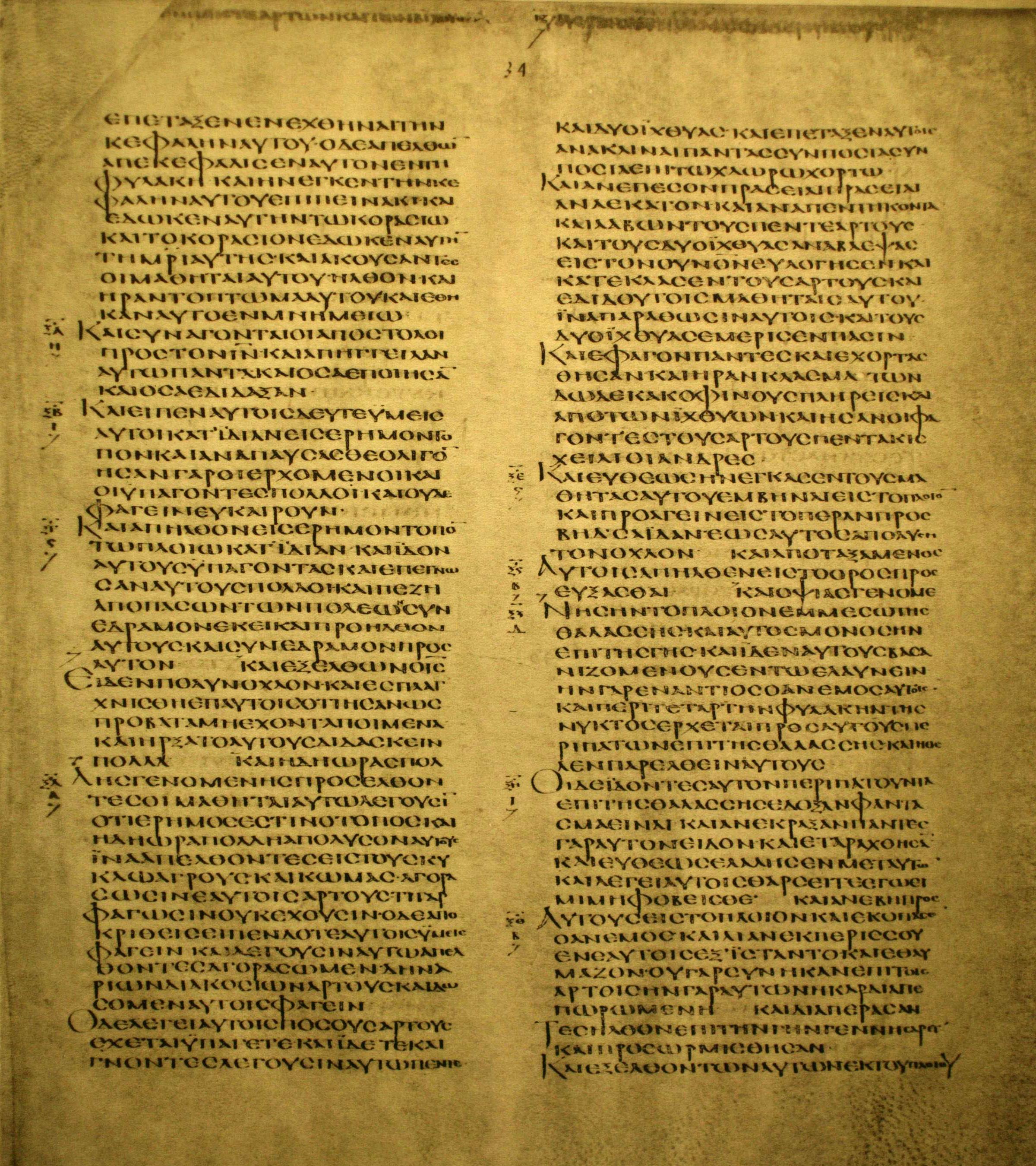
Codex Alexandrinus (London, British Library, Royal MS 1 D V-VIII) is a 5th-century Greek vellum codex containing most of the Old Testament Septuagint, the New Testament with some lacunae, 1 and 2 Clement, and originally the Psalms of Solomon — listed in the table of contents but lost from the surviving leaves. The manuscript runs to 773 surviving folios in two columns of biblical uncial script. Its provenance is Egyptian: a 14th-century Arabic note on the first page records it as a gift to the Patriarchate of Alexandria. Patriarch Cyril Lucaris of Constantinople — a Greek prelate of unusual sympathy for Reformed theology — brought the codex with him from Alexandria and presented it to King Charles I of England in 1627 through the English ambassador Thomas Roe. Charles deposited it in the Royal Library, and it passed with that collection to the British Museum (now British Library) in 1757. It thus arrived in England too late to influence the 1611 King James Bible. For textual criticism, Alexandrinus stands among the four great early uncial Bibles — Sinaiticus, Vaticanus, Ephraemi Rescriptus, Alexandrinus. In the Old Testament, particularly the Psalter and the Prophets, it preserves a high-quality Septuagint text of textual weight comparable to Vaticanus. In the New Testament its Gospels show Byzantine readings, but in Acts, the Pauline epistles, and Revelation it remains a chief witness to the Alexandrian text-type. The codex is on permanent display at the British Library's Sir John Ritblat Treasures Gallery. Sources: F. C. Kenyon, ed., The Codex Alexandrinus in Reduced Photographic Facsimile (1909-1936); Scot McKendrick, "The Codex Alexandrinus, or the Dangers of Being a Named Manuscript," in The Bible as Book: The Transmission of the Greek Text (2003); Bruce Metzger and Bart Ehrman, The Text of the New Testament (4th ed., 2005); Theodore C. Skeat, "The Provenance of the Codex Alexandrinus," JTS 6 (1955).
A primary witness to the text of the New Testament and the Septuagint, especially valuable for the Acts and the General Epistles where Vaticanus is missing material.