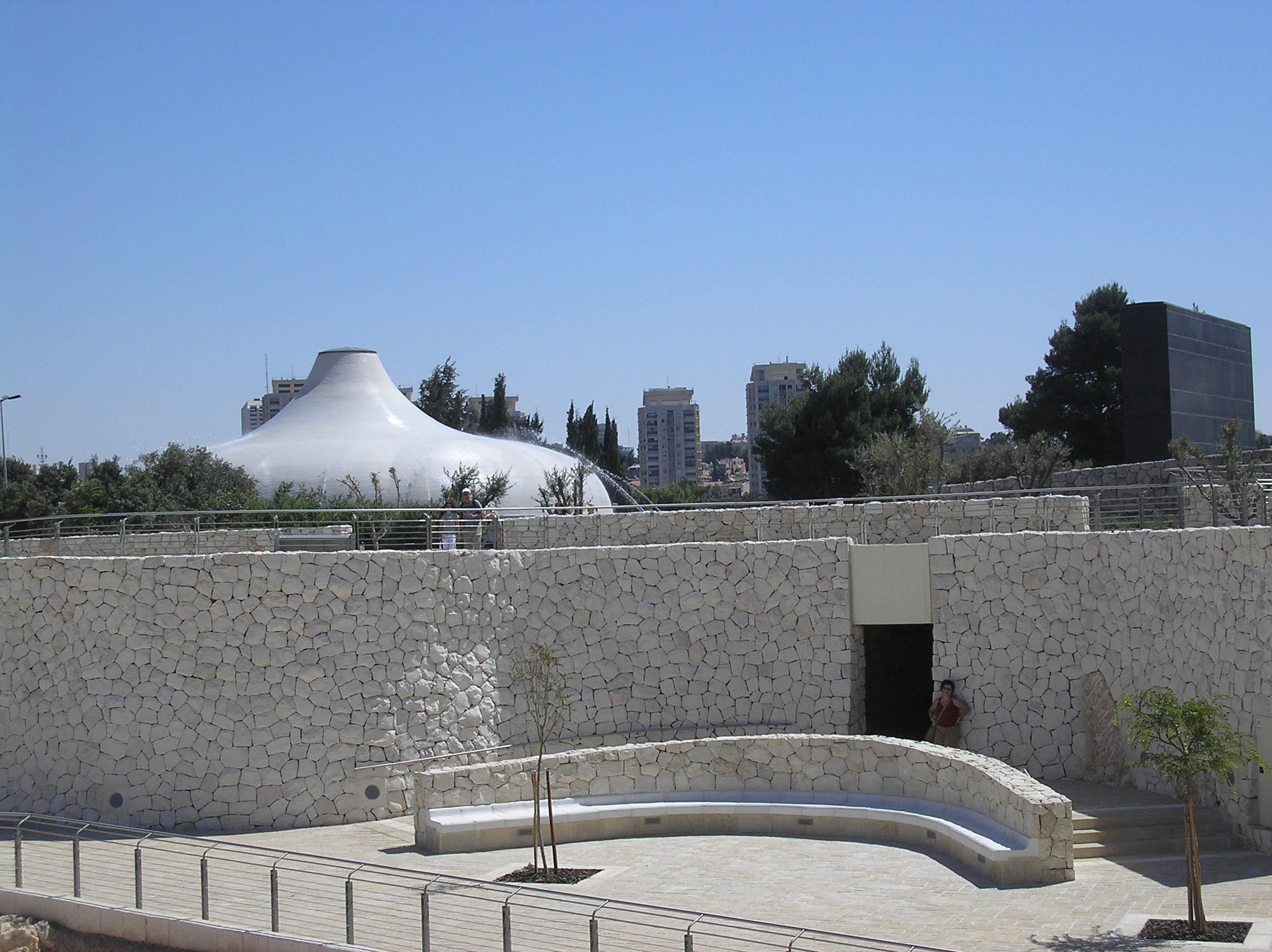
The Community Rule (1QS), one of the seven major scrolls recovered from Cave 1 at Khirbet Qumran, was discovered in 1947 by Bedouin shepherds and subsequently acquired by Eleazar Sukenik on behalf of the Hebrew University. A second portion was purchased through Metropolitan Athanasius Yeshue Samuel and later acquired by Yigael Yadin. The scroll was formally published by Millar Burrows in 1951 as part of the Dead Sea Scrolls series. It is currently housed at the Shrine of the Book within the Israel Museum, Jerusalem, where it has been on display since the museum's inauguration in 1965. The manuscript is composed of eleven columns written on leather in a square Hebrew Herodian script, measuring approximately 2.4 metres in length. Palaeographic and radiocarbon analyses date the physical copy to roughly 100–75 BC, though the composition of the text is generally placed in the mid-second century BC. The document prescribes entry rites, hierarchical rankings, communal meals, penal codes, and a theological framework organized around the "Two Spirits" — a dualism of light and darkness governing human moral agency. Its citation of Isaiah 40:3 — "prepare the way of the Lord in the wilderness" — as justification for the community's desert withdrawal is particularly significant, as the same verse is applied to John the Baptist in all four canonical Gospels (Matthew 3:3; Mark 1:3; Luke 3:4; John 1:23). For biblical scholarship, 1QS situates the New Testament within a traceable matrix of Second Temple Jewish sectarianism. Its covenant renewal liturgy, purity regulations, and communal property arrangements provide comparative context for early Christian community formation as described in Acts 2 and 4. The scroll's dualistic language also supplies background for understanding Johannine light-darkness contrasts and Pauline discussions of flesh and spirit without positing direct literary dependence. The scroll remains a primary reference point in Qumran studies and in reconstructions of Jewish diversity in the late Second Temple period. **Sources:** Millar Burrows, *The Dead Sea Scrolls* (Viking Press, 1955); Florentino García Martínez and Eibert J. C. Tigchelaar, *The Dead Sea Scrolls Study Edition*, vol. 1 (Eerdmans, 1997); James H. Charlesworth, ed., *The Dead Sea Scrolls: Hebrew, Aramaic, and Greek Texts with English Translations*, vol. 1 (Mohr Siebeck/Westminster John Knox, 1994); Isaiah 40:3; Matthew 3:3.
The Community Rule is the most complete legislative text from Qumran, providing direct evidence for a structured Jewish sectarian community whose legal practices, covenant ceremonies, and dualistic theology illuminate the ideological environment surrounding the New Testament writings.