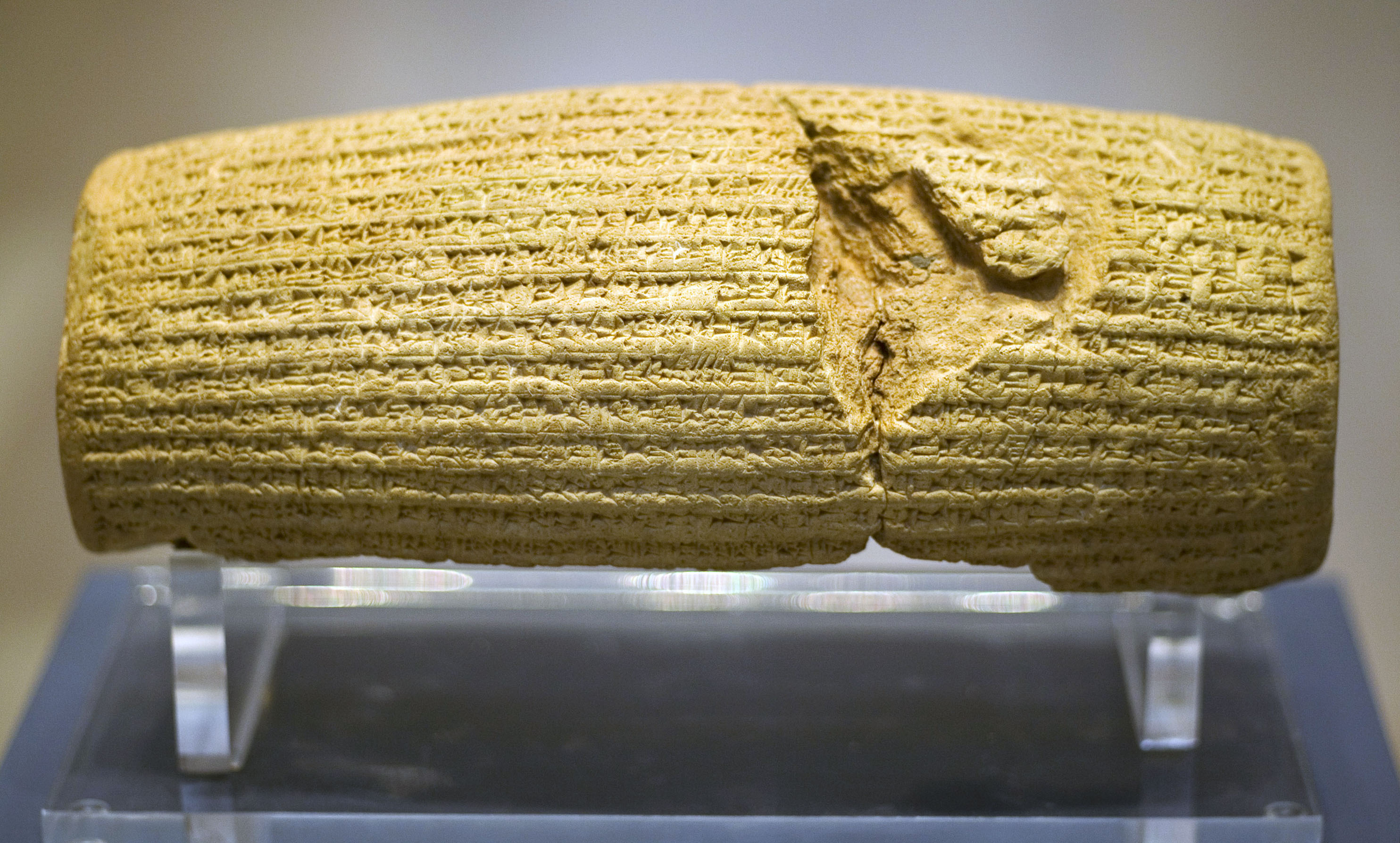
The Cyrus Cylinder is a 9-inch barrel-shaped clay cylinder, inscribed in Akkadian cuneiform, recovered in 1879 by the Anglo-Iraqi archaeologist Hormuzd Rassam from the foundations of the Esagila temple of Marduk in Babylon. The text was composed in the name of Cyrus the Great after his bloodless conquest of the city in October 539 BC. Its forty-five lines are part royal apologia, part building inscription, part propaganda. Cyrus presents himself as having been called by Marduk to deliver Babylon from the impious Nabonidus and proclaims a policy of returning gods, peoples, and temple property to their original homelands. The relevant passage reads: "I returned to these sacred cities on the other side of the Tigris, the sanctuaries of which had been ruins for a long time, the images that used to live therein, and established for them permanent sanctuaries. I also gathered all their former inhabitants and returned to them their habitations." This is precisely the policy Ezra 1:1-4 and Isaiah 44:28-45:7 attribute to Cyrus regarding Judah — authorization to return and rebuild the Jerusalem temple. The cylinder does not mention Judah specifically (it focuses on Mesopotamian sanctuaries), but it confirms the policy as Cyrus's standard imperial practice. In modern reception, the cylinder has often been called "the first declaration of human rights" — a 20th-century overreading. It is a Persian royal inscription in the standard Mesopotamian genre, addressed to a Babylonian audience. What it does establish, beyond reasonable dispute, is the historical authenticity of Cyrus's reconciliation policy toward subject peoples and their gods. The cylinder is on display at the British Museum. Sources: Pierre Briand, From Cyrus to Alexander: A History of the Persian Empire (2002); Amélie Kuhrt, "The Cyrus Cylinder and Achaemenid Imperial Policy," JSOT 25 (1983); Irving Finkel, ed., The Cyrus Cylinder: The King of Persia's Proclamation from Ancient Babylon (2013); Lester L. Grabbe, A History of the Jews and Judaism in the Second Temple Period (2004).
Independent royal confirmation that Cyrus's repatriation policy in Ezra 1 was his actual policy, not a later Jewish invention. Often called the world's first declaration of human rights.