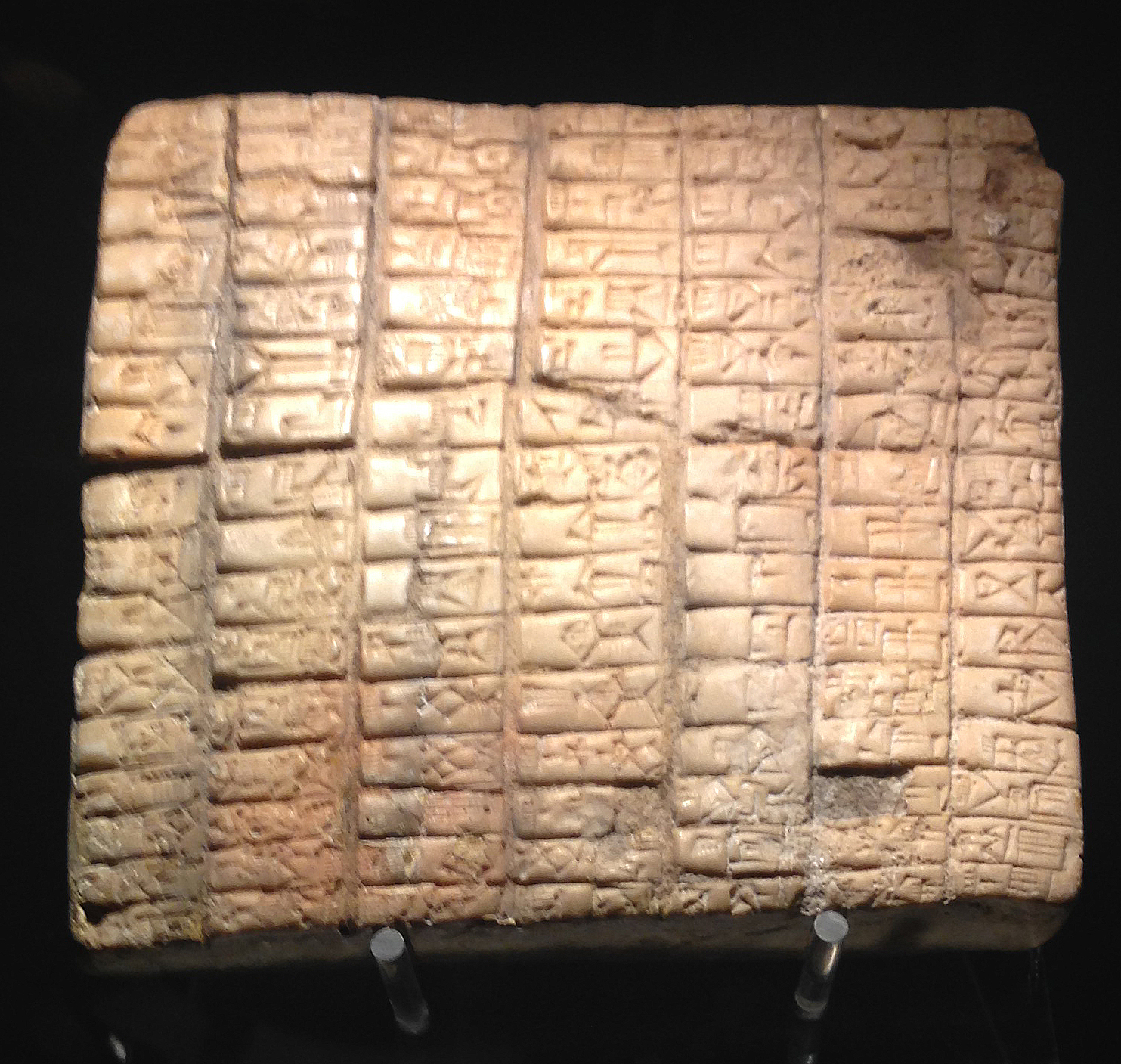
Between 1974 and 1976, Paolo Matthiae's Italian expedition working at Tell Mardikh in northern Syria — about thirty miles south of Aleppo — uncovered the royal palace archive of Ebla, a previously unknown third-millennium Bronze Age city. More than 17,000 cuneiform tablets and fragments lay where they had fallen when the palace burned around 2300 BC, many still in the order they had been shelved. The find vaulted Ebla overnight into the front rank of ancient Near Eastern discoveries: a major Semitic city-state operating at the height of the Akkadian period, with its own language (Eblaite), its own scribal tradition, and economic, lexical, and administrative texts in extraordinary number. The early years brought sensational claims. Giovanni Pettinato, the expedition's first epigrapher, announced readings of the names Sodom, Gomorrah, Admah, Zeboiim, and Bela — the five cities of the Plain in Genesis 14 — and suggested possible references to Abraham and other patriarchs. Conservative Christian publications seized on these as third-millennium confirmation of Genesis. The claims did not hold. Reexamination by Alfonso Archi and Matthiae's team determined that Pettinato had misread several signs and overinterpreted others; the supposed city-list reference was not the cities of the Plain, and the patriarchal name parallels collapsed under closer reading. Pettinato eventually departed the project and the inflated claims were retracted in the standard publications. What Ebla actually preserves is still significant: a vast third-millennium Semitic vocabulary, the earliest known systematic bilingual lexica (Sumerian-Eblaite), city-state diplomatic and trade networks across the Levant, and divine onomastics rich in theophoric Il/El elements that illuminate the religious vocabulary of the patriarchal period. Ebla is a window into the world Abraham would have walked through — without being a direct mention of him. The tablets are held across Syrian state collections. Publication continues in the Archivi Reali di Ebla series. Sources: Alfonso Archi, Ebla and Its Archives (De Gruyter, 2015); Paolo Matthiae, Ebla: An Empire Rediscovered (Doubleday, 1981); Cyrus H. Gordon and Gary A. Rendsburg, eds., Eblaitica vols. 1–4 (Eisenbrauns, 1987–2002); Genesis 14:1–3.
The Ebla archive matters on two levels: as a genuine source of third-millennium Semitic linguistic, diplomatic, and religious data that contextualizes the patriarchal world, and as a textbook case in which premature biblical correlations, once amplified, required formal scholarly retraction and reshaped standards for epigraphic claims.