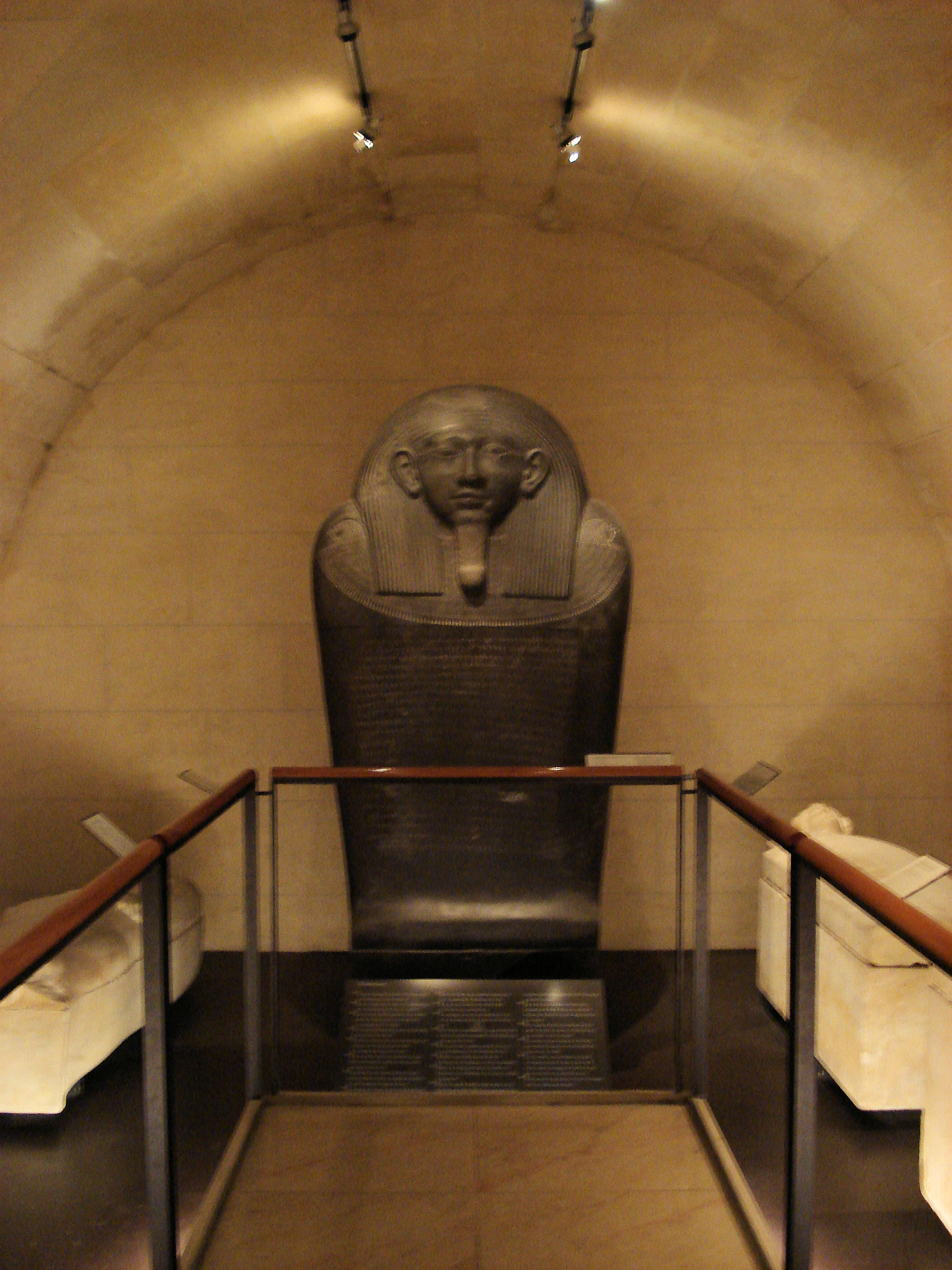
The Eshmunazar II Sarcophagus Inscription is a lengthy Phoenician text carved on the lid of an anthropoid basalt sarcophagus discovered in 1855 near Sidon, in present-day Lebanon. Dated on epigraphic and historical grounds to approximately 500–475 BC, it is among the most substantial royal Phoenician inscriptions known. The text, running to 22 lines, records the reign and death of Eshmunazar II, king of Sidon, and includes a declaration that the Persian king granted him the coastal territories of Dor and Joppa ('Sharon') in recognition of services rendered—understood by most scholars as cooperation with Persian imperial administration. The inscription employs a standard Northwest Semitic script and is a primary document for understanding the political geography of the southern Levantine coast during the Achaemenid period. The cities named, Dor and Joppa, appear in the Hebrew Bible in distinct contexts: Joshua 19:46 locates Joppa on the border of Dan's tribal allotment; Judges 1:31 notes that the Asherites failed to dislodge Sidon's population from several towns; and 2 Chronicles 2:16 depicts Joppa as the Mediterranean port through which cedar logs were floated for Solomon's Temple. The inscription does not corroborate any specific biblical narrative, but it independently attests to Phoenician interest in—and at least nominal control over—these coastal cities during the Persian period, consistent with the broader picture of Phoenician maritime influence along the Levantine littoral that the biblical texts presuppose. The sarcophagus has been housed at the Louvre since its acquisition in 1855. Sources: Louvre Museum (AO 4806); KAI 14 (Donner & Röllig, Kanaanäische und aramäische Inschriften); W. Röllig in Texte aus der Umwelt des Alten Testaments; Bulletin of the American Schools of Oriental Research.
The Eshmunazar II inscription provides direct epigraphic evidence that Phoenician rulers held or claimed sovereignty over the port cities of Dor and Joppa during the Persian period, corroborating the long-standing Phoenician coastal presence that forms the background to multiple biblical references to those sites. It also illuminates the political framework of Persian-era Levantine administration within which post-exilic Judah operated.