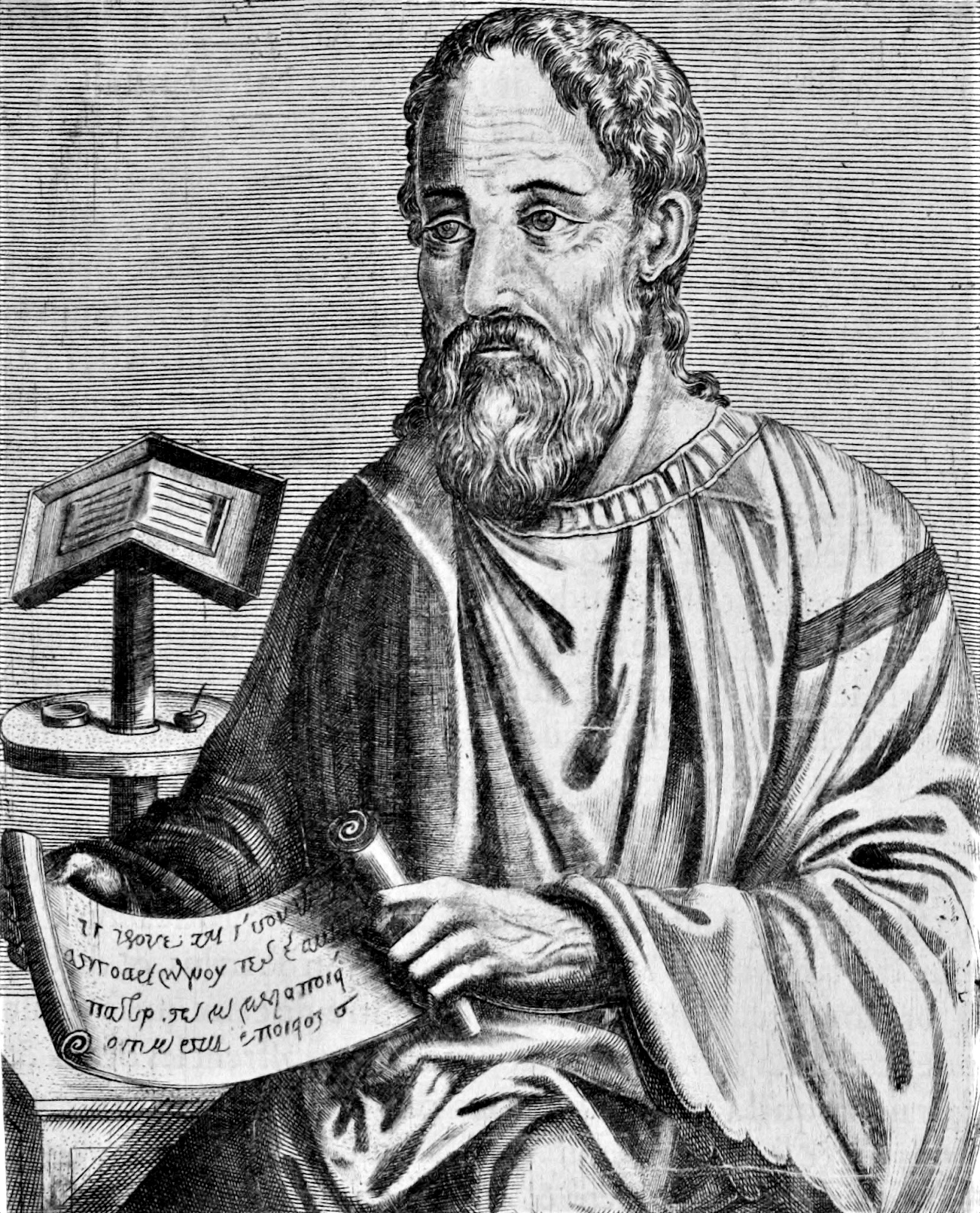
Eusebius of Caesarea composed the Ecclesiastical History in multiple recensions between approximately AD 313 and 324, with the final edition incorporating material related to Constantine's consolidation of imperial power. Eusebius served as bishop of Caesarea Maritima, where he had access to the substantial theological library assembled by Origen and later by Pamphilus of Caesarea, his mentor. The work survives in numerous Greek manuscripts, the most significant being medieval Byzantine codices now held at the Bibliothèque nationale de France (Codex Parisinus Graecus 1431) and several Russian and Athos collections. A Syriac translation produced in the early fifth century provides additional textual witnesses. The Ecclesiastical History comprises ten books and spans from the pre-incarnation ministry of the Logos through the defeat of Licinius in AD 324. Eusebius systematically quotes or paraphrases earlier writers whose original works no longer exist, including Papias of Hierapolis (whose five-volume Exposition of the Dominical Oracles is otherwise lost), Hegesippus, and Julius Africanus. Book III preserves an important early discussion of the New Testament canon, differentiating acknowledged books, disputed books (antilegomena), and spurious works—providing critical evidence for the gradual process of canon recognition. His citation of Josephus's reference to James (Antiquities 20.9.1) and a version of the Testimonium Flavianum (Antiquities 18.3.3) remains central to debates about first-century Jewish-Christian relations. For biblical scholarship, the Ecclesiastical History functions as a primary documentary source rather than simply a secondary narrative. It preserves identifiable fragments attesting to how second- and third-century communities received, transmitted, and debated specific New Testament texts, including the Gospels and the Apocalypse. Eusebius's canon taxonomy in Book III directly informs modern text-critical assessments of the formation of the New Testament. Critical editions have been established by Eduard Schwartz and Theodor Mommsen in the Griechischen christlichen Schriftsteller series, and the work remains a foundational reference in patristic and New Testament text-critical scholarship. **Sources:** Eduard Schwartz and Theodor Mommsen, *Eusebius Werke II: Die Kirchengeschichte*, GCS 9 (Akademie-Verlag, 1903–1909); Andrew Louth, ed., *Eusebius of Caesarea: Ecclesiastical History*, trans. G. A. Williamson (Penguin, 1989); Michael J. Hollerich, *Eusebius of Caesarea's Commentary on Isaiah* (Clarendon Press, 1999); Acts 1:8; Revelation 1:1-3.
Eusebius's Ecclesiastical History constitutes the earliest extant systematic account of the church from the apostolic period through AD 324, preserving otherwise-lost quotations from Papias, Hegesippus, and early canon lists critical for establishing New Testament textual history.