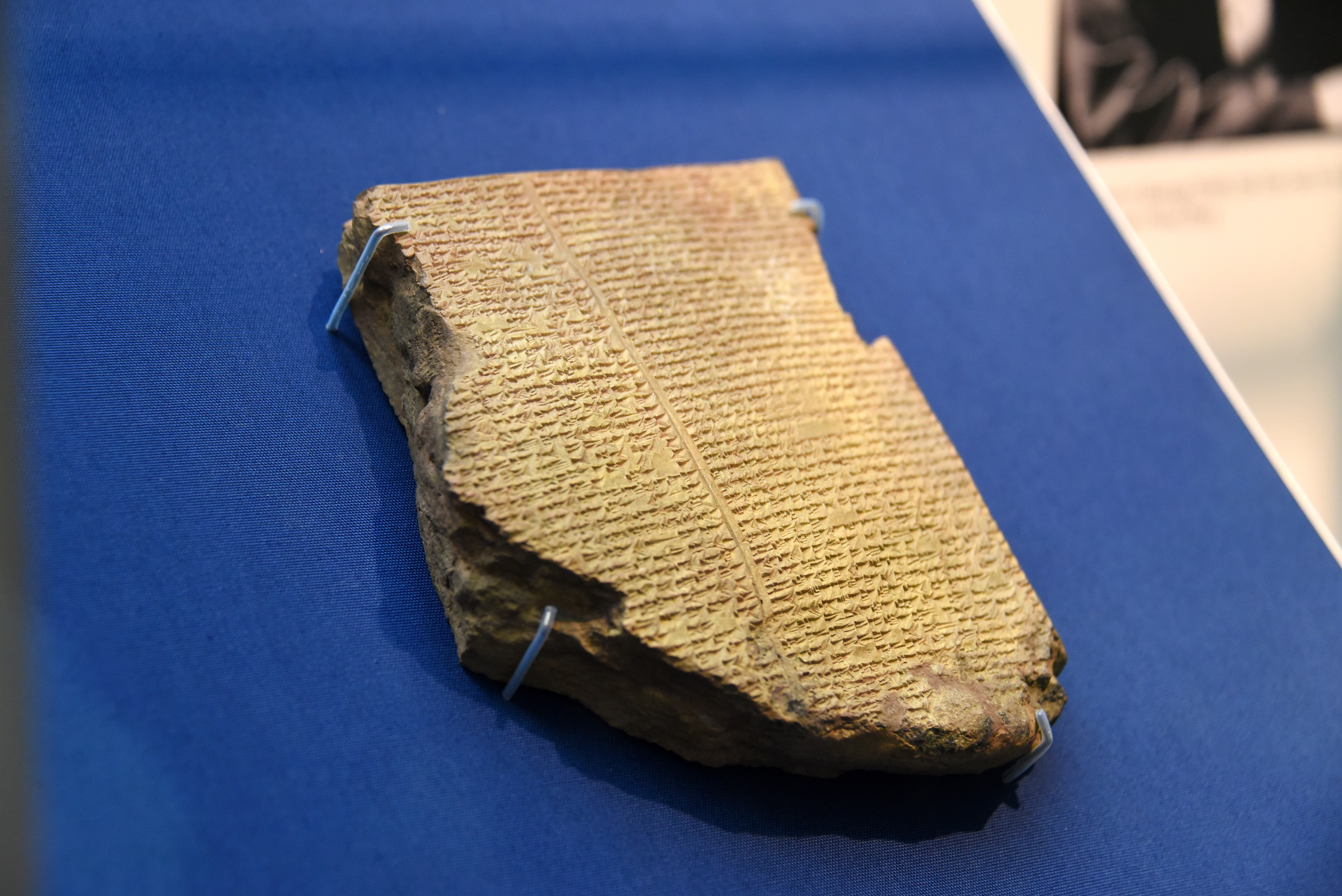
Tablet XI of the Standard Babylonian Gilgamesh Epic was identified and translated by Assyriologist George Smith of the British Museum in 1872, following its excavation from the library of the Assyrian king Ashurbanipal at Nineveh (ancient Kuyunjik, in modern Iraq). The tablet was recovered during British Museum-sponsored excavations led earlier by Austen Henry Layard and Hormuzd Rassam beginning in the 1840s and 1850s. The physical tablet dates to approximately the 7th century BC, though the literary tradition it represents is considerably older, with Akkadian antecedents traceable to at least the 17th century BC. The tablet is currently housed in the British Museum under catalog number K.3375. The tablet is composed of fired clay and measures approximately 15 cm in height. Written in the Akkadian language using cuneiform script, it contains around 300 lines of text constituting the twelfth tablet of the twelve-tablet Standard Babylonian recension. Tablet XI recounts how the god Ea warns the hero Utnapishtim of a coming flood decreed by the divine assembly, instructs him to build a large vessel, load it with living creatures and his family, and survive a catastrophic inundation. After the waters recede, Utnapishtim releases birds — a dove, a swallow, and a raven — to test for dry land, then offers sacrifice on a mountaintop. The structural and thematic correspondences with Genesis 6–9, including the divine warning, vessel construction specifications, preservation of animals, bird-release sequence, and post-flood burnt offering, have been extensively analyzed in comparative Semitic studies. The tablet's significance for biblical scholarship lies in demonstrating that the Genesis flood narrative participated in a wider ancient Near Eastern literary tradition. Comparative analysis clarifies both the distinctives of the biblical account — notably its monotheistic framework, ethical rationale for the flood, and covenantal conclusion — and the shared literary conventions that would have been intelligible to ancient audiences. The tablet remains a foundational artifact in the history of biblical archaeology and ancient Near Eastern studies. **Sources:** Andrew R. George, *The Babylonian Gilgamesh Epic: Introduction, Critical Edition and Cuneiform Texts*, 2 vols. (Oxford University Press, 2003); John H. Walton, *Ancient Near Eastern Thought and the Old Testament* (Baker Academic, 2006); W. G. Lambert and A. R. Millard, *Atra-Hasis: The Babylonian Story of the Flood* (Oxford University Press, 1969); Genesis 6:9–9:17.
Tablet XI of the Standard Babylonian Gilgamesh Epic provides the closest known ancient Near Eastern parallel to the Genesis flood account, illuminating shared literary conventions of divine warning, ark construction, animal preservation, bird release, and post-flood sacrifice across Mesopotamian and biblical traditions.