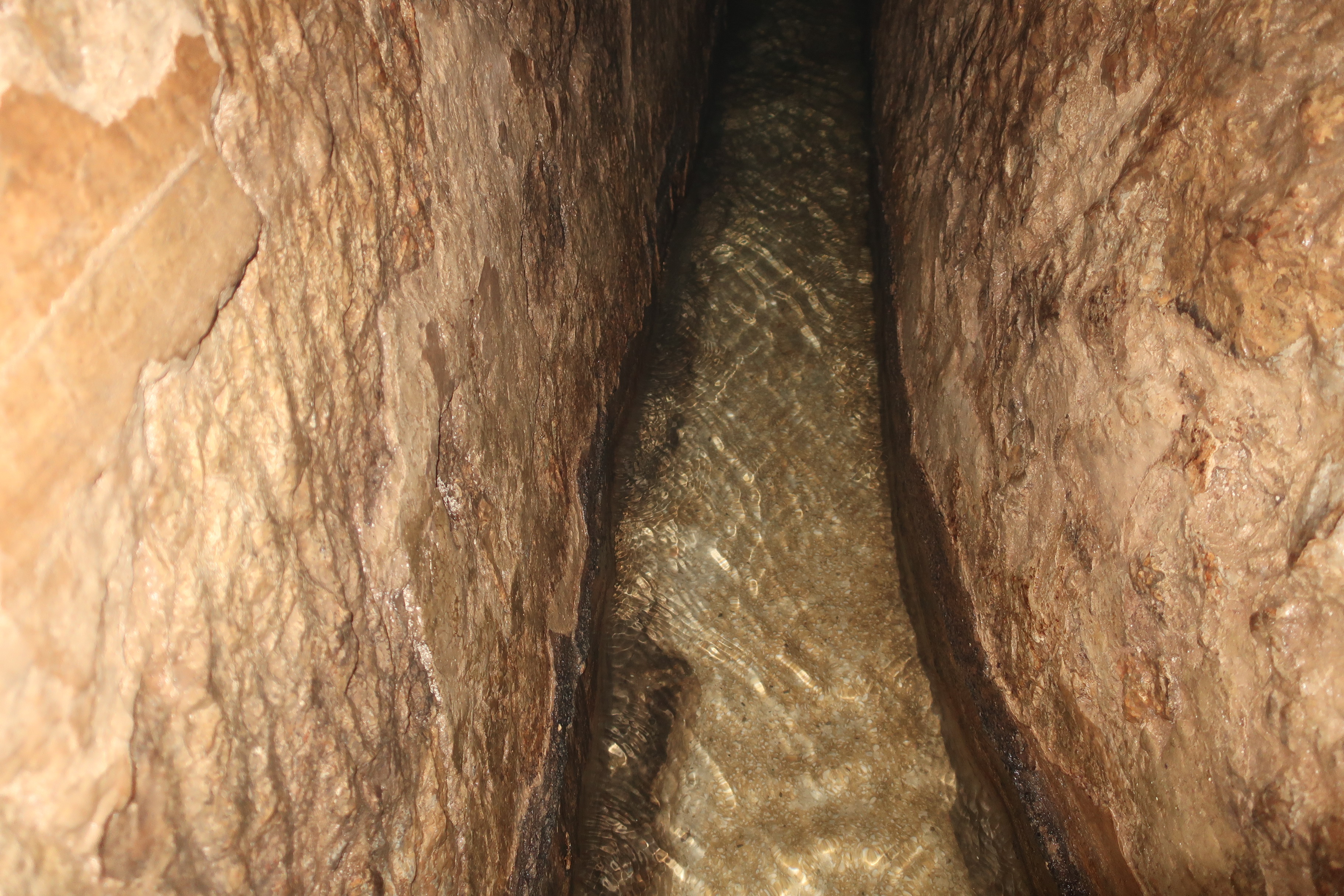
When Sennacherib of Assyria marched on Jerusalem in 701 BC, King Hezekiah of Judah faced the prospect of a long siege without secure water. The Gihon Spring — Jerusalem's only perennial water source — lay outside the city wall in the Kidron Valley. Hezekiah's solution, recorded in 2 Kings 20:20 and 2 Chronicles 32:30, was to cut a tunnel through 1,750 feet of solid limestone bedrock under the City of David and bring the spring water inside the wall to a reservoir at the southern end of the city, the Pool of Siloam. The tunnel still functions; visitors can wade through it. The find that fixes the project to Hezekiah's reign is the Siloam Inscription, discovered in 1880 by a boy bathing in the pool. Six lines of paleo-Hebrew, cut into the rock about twenty feet from the southern outlet, describe the moment two crews — digging from opposite ends — heard each other's pickaxes through the rock and broke through to meet: "while there were yet three cubits to be cut through, [each heard] the voice of a man calling to his neighbor." The script is firmly 8th-century. Radiocarbon dates of organic material in the plaster line the tunnel up with the Hezekiah period. The route is not straight: the tunnel curves and twists, doubling back on itself, in what most engineers reconstruct as the crews following natural fissures and karstic cavities to ease the cutting. The tunnel is the longest pre-Roman water tunnel in the ancient Near East, and the only one known to be cut from both ends to meet in the middle. The Siloam Inscription is in Istanbul; the tunnel remains in place. Sources: Hershel Shanks, "The Siloam Pool," BAR 31:5 (2005); Amos Frumkin, Aryeh Shimron, and Jeff Rosenbaum, "Radiometric Dating of the Siloam Tunnel, Jerusalem," Nature 425 (2003); Ronny Reich, Excavating the City of David (2011); Yigal Shiloh, Excavations at the City of David, vol. 1 (1984).
Direct physical confirmation of 2 Kings 20:20 and 2 Chronicles 32:30. The Siloam Inscription is among the oldest surviving examples of Hebrew writing, dated to Hezekiah's reign by paleography.