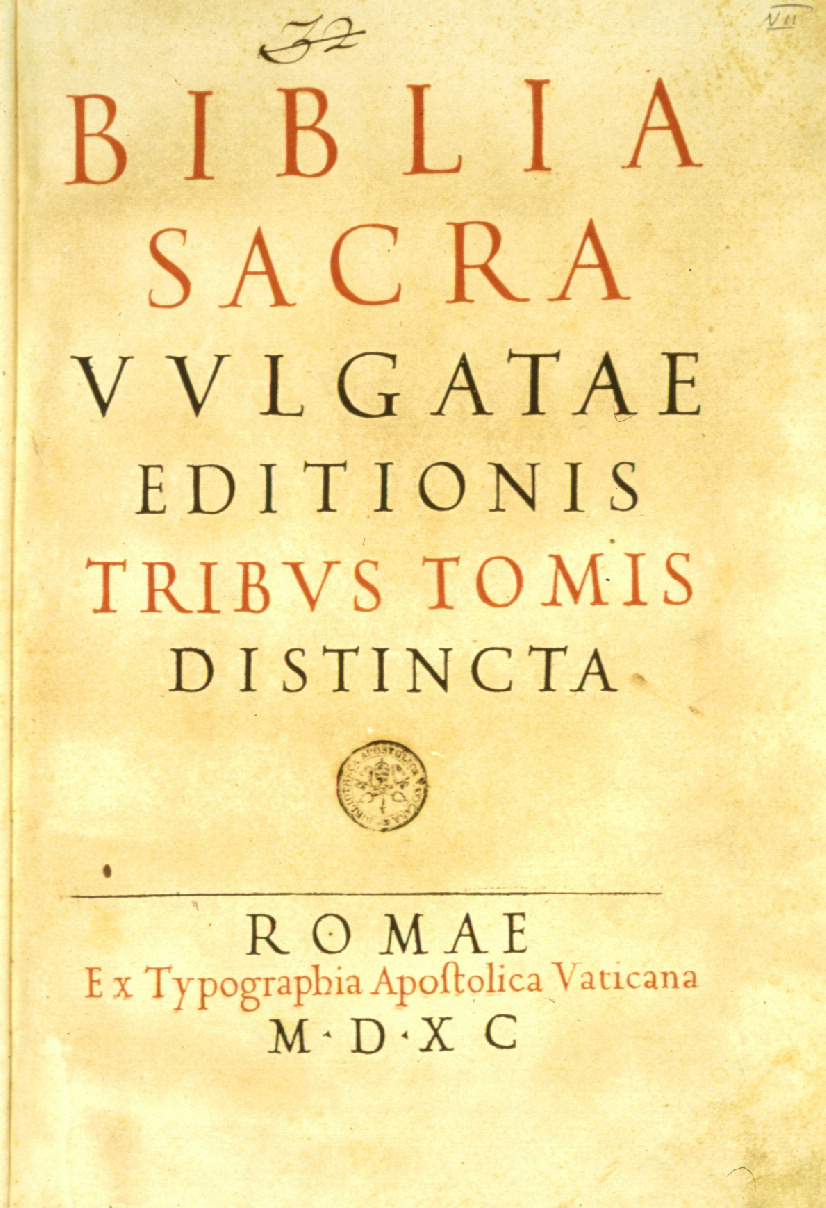
Pope Damasus I commissioned Jerome (Eusebius Sophronius Hieronymus, c. 347-420) in 382 AD to revise the Old Latin biblical translations then in chaotic circulation in the Western church — Augustine in Milan complained that there were as many Latin versions as there were copyists. Jerome began by revising the four Gospels against the best Greek manuscripts available; he completed that work in 383. After Damasus's death in 384, Jerome left Rome under a cloud of controversy and settled at Bethlehem in 386, where he would remain for the next thirty-four years. At Bethlehem, Jerome learned Hebrew under Jewish teachers — itself an unusual move for a 4th-century Latin Christian — and resolved to translate the Old Testament from "the Hebrew truth" (hebraica veritas) rather than from the Greek Septuagint. Augustine objected, fearing the disruption of liturgically settled texts; Jerome pressed on. Over roughly fifteen years he produced fresh Latin translations of every book of the Hebrew Bible from the Hebrew, plus revisions of Tobit and Judith from Aramaic. The deuterocanonical books not extant in Hebrew he left in their Old Latin form. The full corpus was complete by around 405. Jerome's translation was not received as authoritative immediately; it competed with the Old Latin in liturgical use for several centuries. By the 8th-9th centuries, however, what came to be called the Versio Vulgata — "the common edition" — had displaced the older Latin and become the standard Bible of the Western church. The Council of Trent in 1546 declared it the authentic Latin version. The Stuttgart critical edition (Weber-Gryson) and the Nova Vulgata (1979) descend from it. Sources: Stefan Rebenich, Jerome (2002); J. N. D. Kelly, Jerome: His Life, Writings, and Controversies (1975); Megan Hale Williams, The Monk and the Book: Jerome and the Making of Christian Scholarship (2006); Robert Weber and Roger Gryson, eds., Biblia Sacra Vulgata (5th ed., 2007).
The Bible the Western church read for the next millennium and the foundation of European Christian thought, art, music, and literature. When Wycliffe, Tyndale, and Luther translated the Bible into English and German, they were translating Jerome's text.