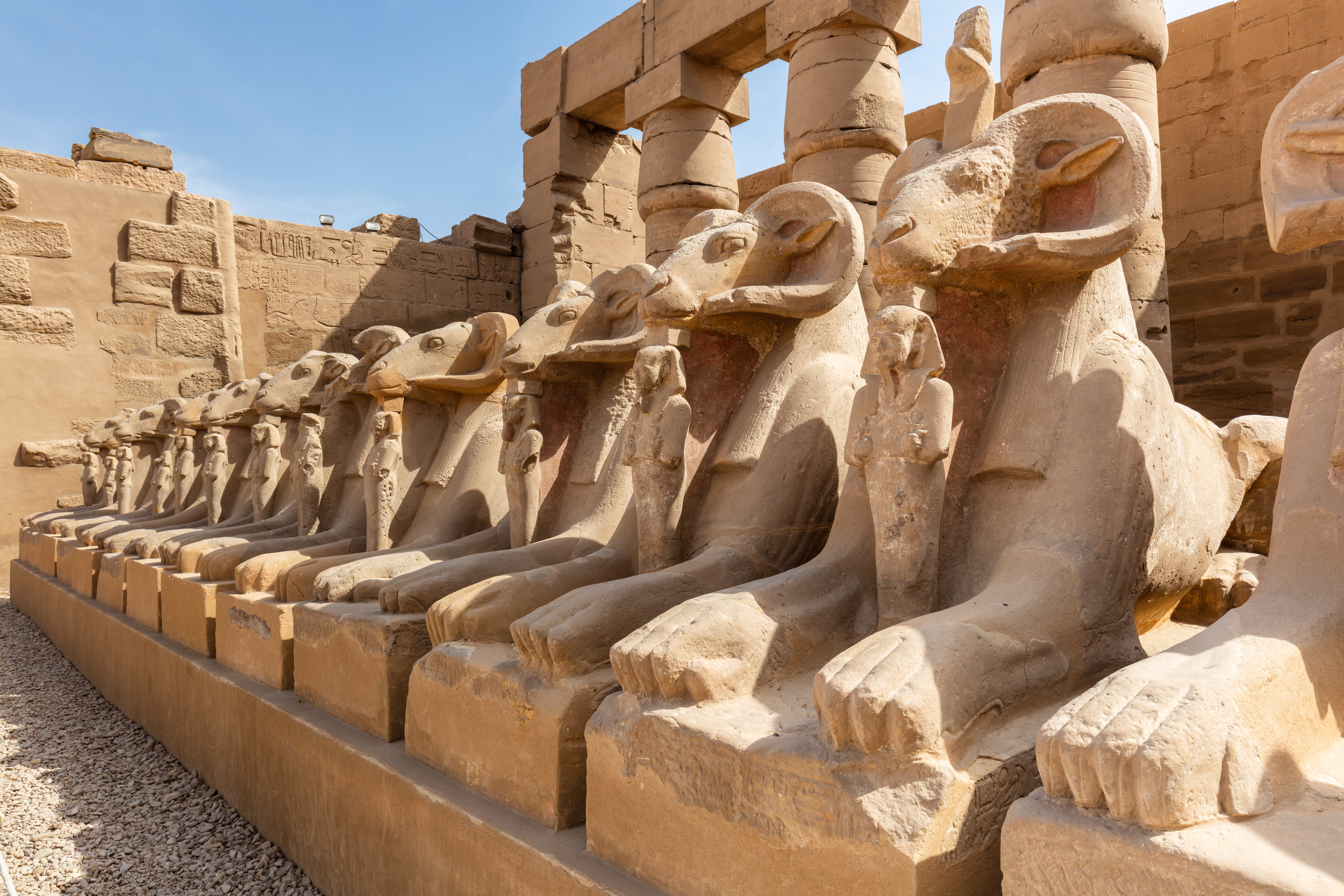
The Karnak Temple Complex at ancient Thebes (modern Luxor) represents one of the largest religious architectural ensembles in the ancient world, with continuous building activity from approximately the Middle Kingdom (c. 2055 BC) through the Ptolemaic and Roman periods. Systematic scholarly documentation began with the Napoleonic expedition of 1798–1801 and the subsequent publication of the Description de l'Égypte. Ongoing epigraphic and archaeological work has been conducted by the Centre Franco-Égyptien d'Étude des Temples de Karnak (CFEETK), with major campaigns published through the Institut Français d'Archéologie Orientale (IFAO). Core structures and inscriptions remain in situ, while selected relief fragments are held in the Egyptian Museum, Cairo. The complex encompasses multiple processional courts, hypostyle halls, obelisks, and pylons erected by successive pharaohs of the New Kingdom and later dynasties. The Great Hypostyle Hall, constructed primarily under Seti I and Ramesses II (c. 1290–1213 BC), contains over 130 papyrus-cluster columns and extensive military and religious relief cycles. Of particular biblical relevance is the Bubastite Portal on the south exterior wall of the Hypostyle Hall, commissioned by Shoshenq I (biblical Shishak) of the Twenty-Second Dynasty. Its topographical list, studied in depth by Kenneth Kitchen in his Ramesside Inscriptions (1986) and Third Intermediate Period work, records Canaanite town names corresponding to the campaign described in 1 Kings 14:25–26 and 2 Chronicles 12:2–9 during the reign of Rehoboam (c. 925 BC). Additional Karnak texts reference Nubia, Syria-Palestine, and Thebes itself—the city referenced as No-Amon in Nahum 3:8. Karnak's inscriptions illuminate the geopolitical environment presupposed by the Hebrew biblical narrative at multiple points: the administrative infrastructure of Egypt alluded to in the Joseph cycle (Genesis 41), the monument-building context of the Exodus tradition (Exodus 1:11), and prophetic oracles against Egypt found in Isaiah 19 and Jeremiah 46. The site remains under active epigraphic study, with CFEETK publications continuing to refine readings of relief sequences relevant to Levantine history. **Sources:** Kenneth A. Kitchen, *The Third Intermediate Period in Egypt (1100–650 BC)* (Aris & Phillips, 1986); James Henry Breasted, *Ancient Records of Egypt*, vols. 1–5 (University of Chicago Press, 1906); Donald B. Redford, *Egypt, Canaan, and Israel in Ancient Times* (Princeton University Press, 1992); 1 Kings 14:25–26; 2 Chronicles 12:2–9.
Karnak's Bubastite Portal preserves the earliest Egyptian inscription naming identifiable sites in ancient Canaan during Shishak's campaign, providing a direct archaeological correlate to the biblical account in 1 Kings 14 and 2 Chronicles 12 of his invasion of Judah under Rehoboam.