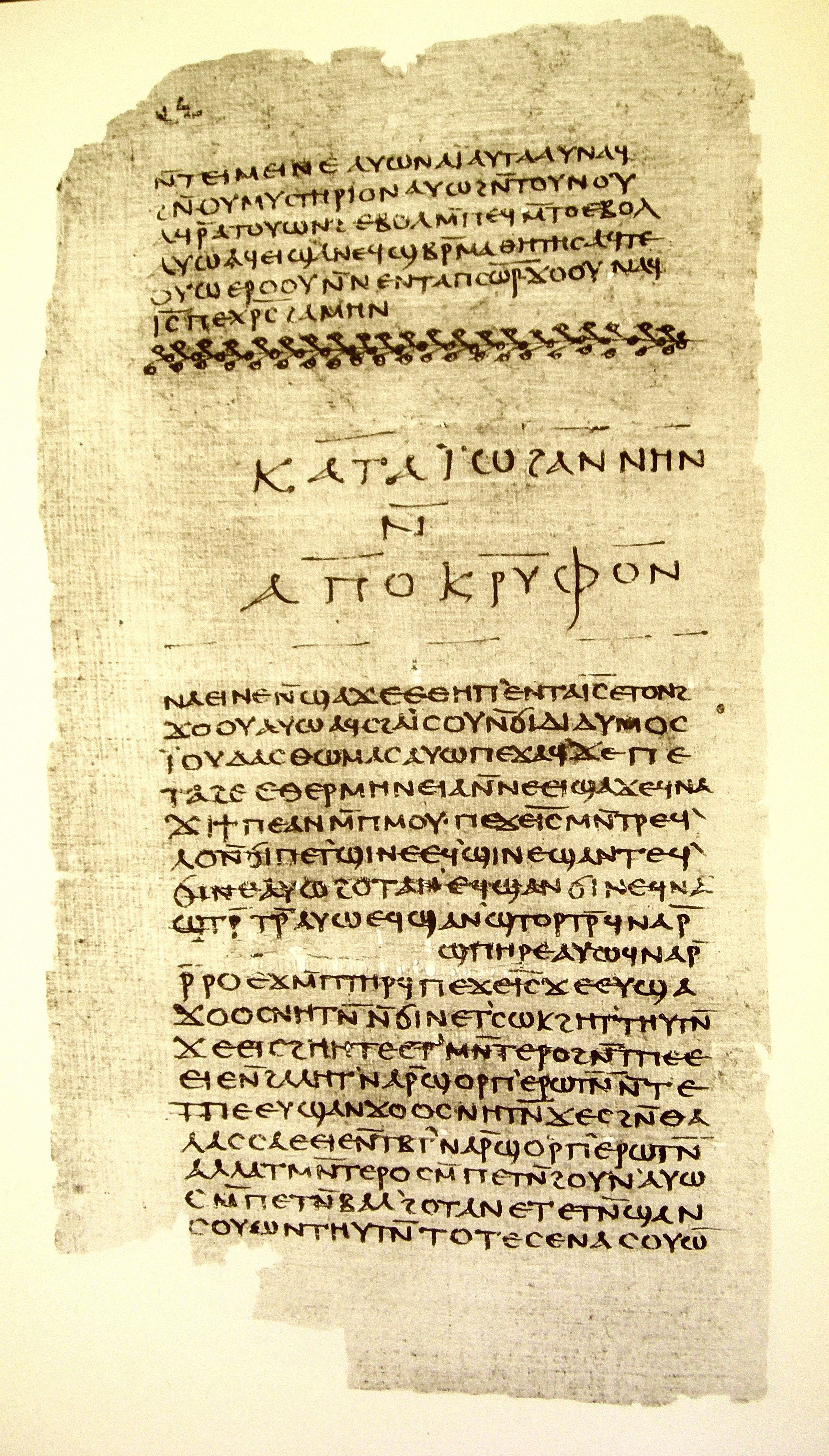
In December 1945, an Egyptian peasant named Muhammad 'Ali al-Samman was digging for sabakh fertilizer at the foot of the cliff at Jabal al-Tarif near the village of Nag Hammadi in Upper Egypt when his hoe struck a large red earthenware jar buried at the base of a boulder. Inside, sealed under a bowl, were thirteen leather-bound papyrus codices — the largest cache of Coptic Christian literature ever recovered. After a complicated provenance involving Muhammad 'Ali's family, the Cairo black market, and Jean Doresse, the codices were eventually consolidated at the Coptic Museum in Cairo, with one (Codex I, the Jung Codex) traveling briefly to Zurich before returning. The thirteen codices contain fifty-two tractates, the great majority Gnostic Christian texts: the Gospel of Thomas, the Gospel of Philip, the Gospel of Truth, the Apocryphon of John, the Tripartite Tractate, three versions of the Apocalypse of Adam, and many others. Most are Coptic translations of Greek originals composed in the 2nd to 4th centuries. The codices themselves were copied in the mid-4th century. The library's existence had been suspected from references in Irenaeus and the heresiologists; finding it more than doubled the known corpus of pre-Constantinian Christian literature outside the New Testament. The hiding place is itself revealing. The codices were buried, almost certainly by Pachomian monks from the nearby monastic settlement of Chenoboskion, in the years following Athanasius's 367 Festal Letter restricting authorized reading to the canonical scriptures. The library is a snapshot of the diversity of 2nd-4th century Christianity, and of the moment that diversity was being deliberately narrowed. The Gospel of Thomas alone contains 114 sayings of Jesus, some paralleling the canonical Gospels and some independent. Sources: James M. Robinson, ed., The Nag Hammadi Library in English (3rd ed., 1988); Marvin Meyer, ed., The Nag Hammadi Scriptures (2007); Elaine Pagels, The Gnostic Gospels (1979); Hugo Lundhaug and Lance Jenott, The Monastic Origins of the Nag Hammadi Codices (2015).
Validates the picture early orthodox writers (Irenaeus, Tertullian) gave of the Gnostic movement, putting their writings directly in our hands. Lets us see exactly what teachings the church rejected as canonical scripture coalesced — and why.