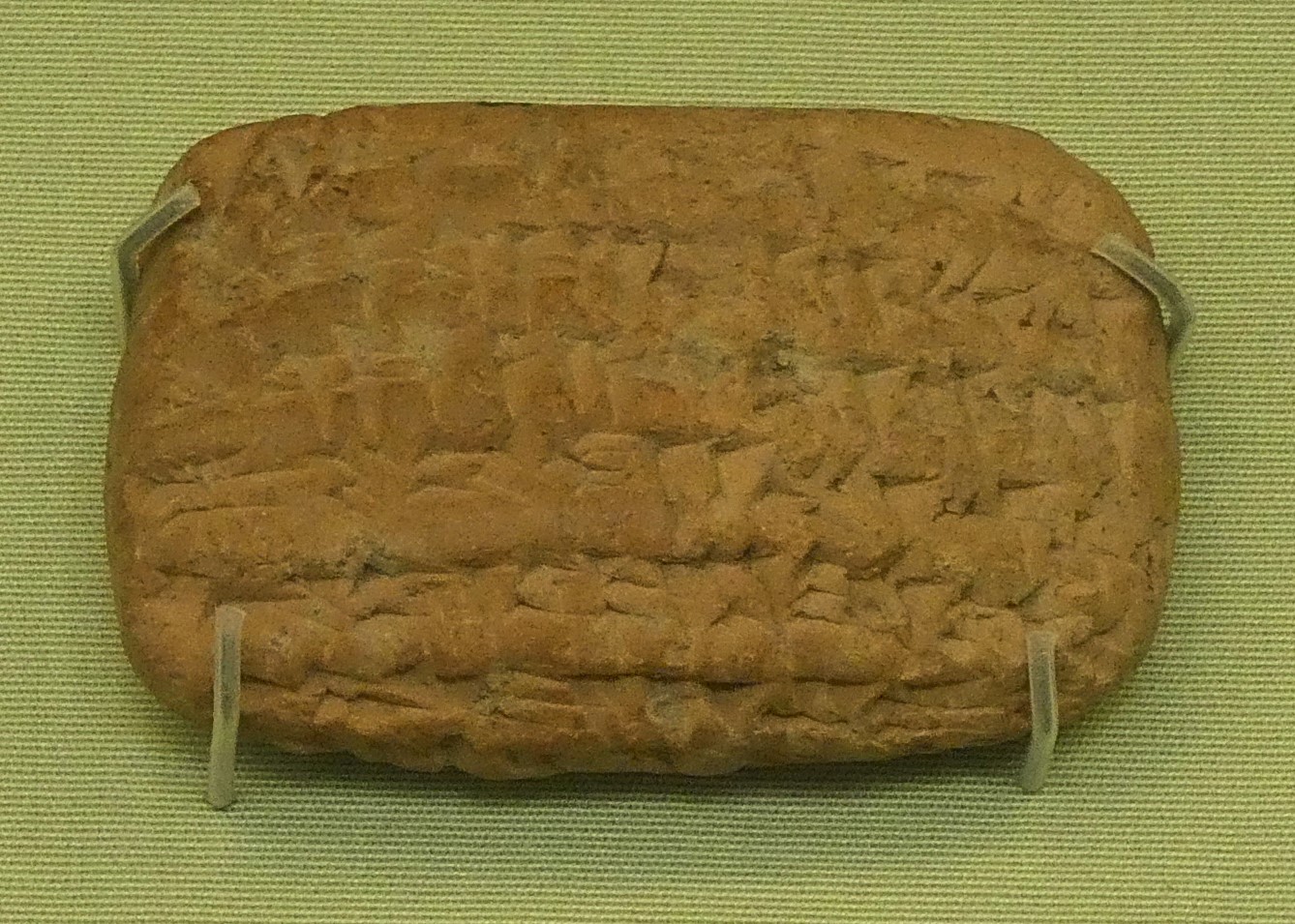
The tablet designated BM 114789 was identified in 2007 by Michael Jursa, an Assyriologist at the University of Vienna, while conducting research among the British Museum's extensive collection of cuneiform tablets acquired from Sippar in the late nineteenth century. The clay tablet had been part of the Museum's holdings for decades before its significance was recognized; its provenance traces to the ancient city of Sippar in Babylonia, modern-day Tell Abu Habbah in Iraq. Jursa's identification was announced publicly in July 2007 and reported in subsequent scholarly literature. The tablet measures approximately 5.1 by 3.8 centimetres and is a temple administrative receipt recording a gold donation to the Esangila temple in Babylon. It is dated by internal Babylonian regnal formula to the tenth year of Nebuchadnezzar II, corresponding to approximately 595 BC. The cuneiform text records a payment made by an official whose name is rendered Nabu-sharrussu-ukin, and whose title is given as Rab-Saris — a Babylonian court designation denoting a senior palace official. This name and title correspond closely to the figure identified in Jeremiah 39:3 as Nebo-Sarsekim the Rab-Saris, listed among the Babylonian commanders present at the siege of Jerusalem in 587 BC. The tablet's significance for biblical scholarship lies in its independent, contemporary attestation of a named individual who appears in Jeremiah's narrative of Jerusalem's fall. Prior to Jursa's identification, no extrabiblical record had confirmed the existence of this particular officer. The find supports the general historical reliability of the Jeremiah 39 account regarding the composition of Nebuchadnezzar's military and administrative retinue. BM 114789 remains in the British Museum's cuneiform collection and continues to be cited in discussions of the historicity of the Hebrew prophetic corpus. **Sources:** Michael Jursa, *Aspects of the Economic History of Babylonia in the First Millennium BC* (Ugarit-Verlag, 2010); Alan Millard, "The Tablet of Nebo-Sarsekim," *Tyndale Bulletin* 59.2 (2008); Jeremiah 39:3.
BM 114789 provides the first extrabiblical attestation of an individual named in Jeremiah 39:3, directly corroborating the historicity of the Babylonian officials present at the siege and fall of Jerusalem in 587 BC.