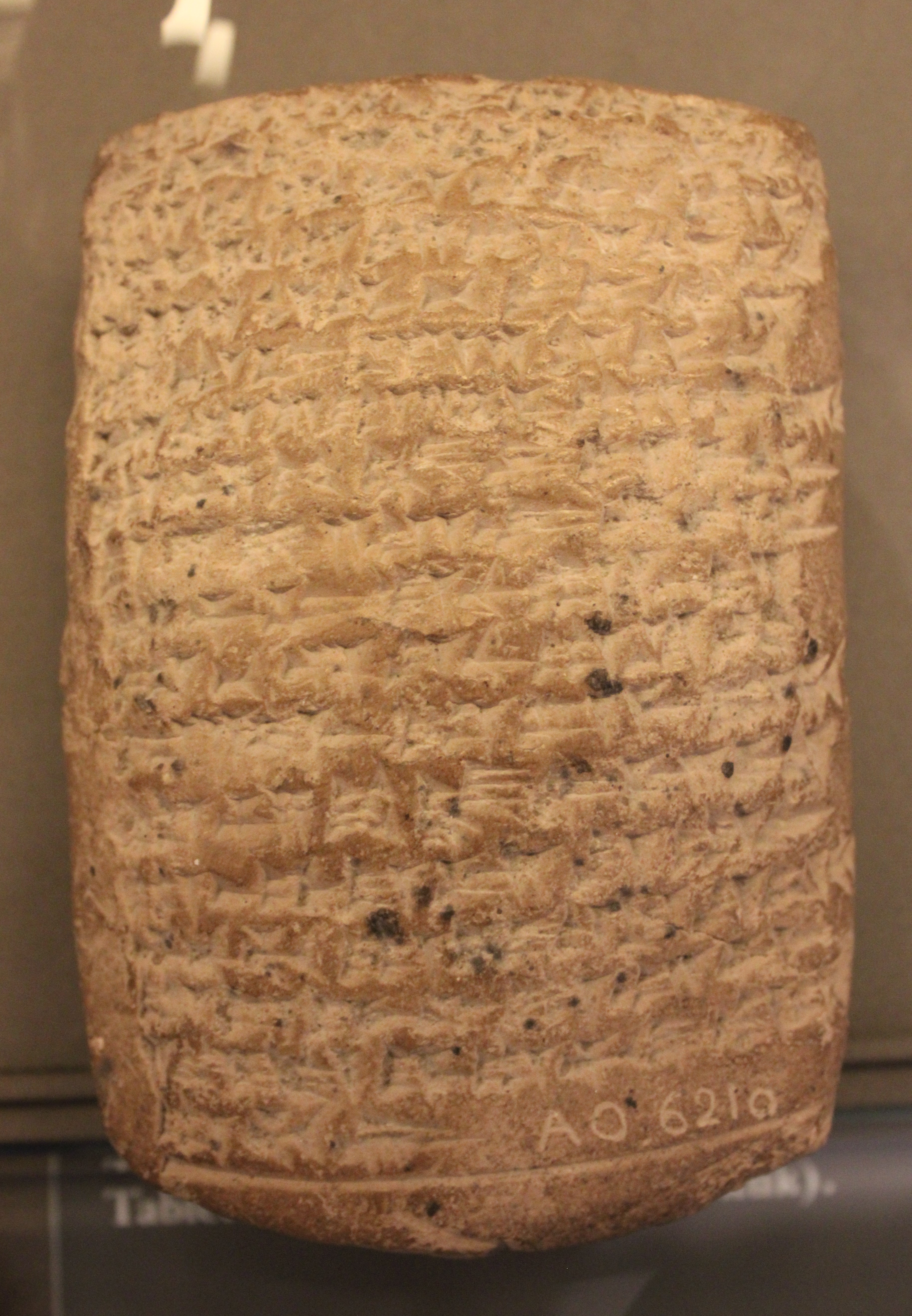
The Nuzi tablets are a corpus of roughly 5,000 cuneiform tablets recovered from Yorghan Tepe (ancient Nuzi) near Kirkuk in northern Iraq, excavated jointly by the American Schools of Oriental Research and Harvard between 1925 and 1931. Nuzi was a provincial Hurrian town in the kingdom of Mitanni, and the tablets — chiefly family archives — date to the 15th and 14th centuries BC. They preserve in remarkable detail the customary law that governed adoption, marriage, inheritance, and household economics in Hurrian society. For Genesis the tablets are illuminating because Hurrian customary law parallels otherwise puzzling patriarchal practices. A childless wife at Nuzi could give her handmaid to her husband to bear an heir whose status would be that of the wife's own son — exactly the arrangement Sarah makes with Hagar (Genesis 16) and Rachel and Leah make with Bilhah and Zilpah (Genesis 30). A deathbed blessing carried legal force; an inheritance birthright could be transferred between siblings, as Esau transferred his to Jacob. Household teraphim — the figurines Rachel stole from Laban (Genesis 31) — functioned at Nuzi as legal title-deeds tied to the headship of the household. The customary law E. A. Speiser of Penn used to date the patriarchs to the mid-second millennium BC has, on closer examination, been shown to persist for centuries; Thomas Thompson's critique in The Historicity of the Patriarchal Narratives (1974) demonstrated that the parallels do not narrow the dating window as tightly as Speiser claimed. The customs are real, the parallels are genuine, the precise patriarchal era remains debated. Sources: E. A. Speiser, "New Kirkuk Documents Relating to Family Laws," AASOR 10 (1930); Cyrus H. Gordon, "Biblical Customs and the Nuzu Tablets," Biblical Archaeologist 3 (1940); Thomas L. Thompson, The Historicity of the Patriarchal Narratives (1974); Maynard P. Maidman, Nuzi Texts and Their Uses as Historical Evidence (2010).
These customs disappeared from the ancient Near East after about 1400 BC. Genesis preserving them argues for the patriarchal narratives being genuinely ancient, not invented during or after the Babylonian exile (a popular skeptic theory).