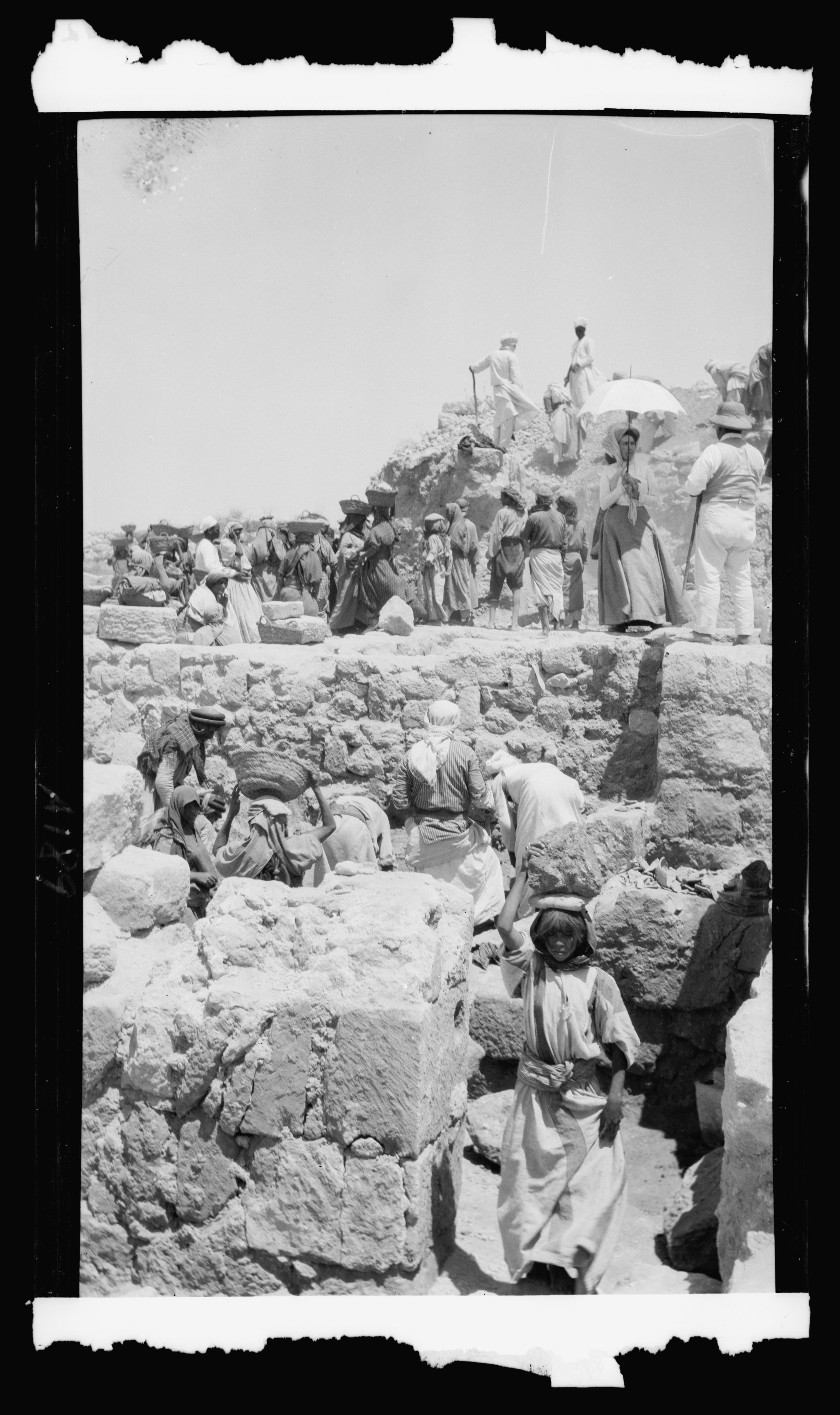
The Samaria Ostraca were discovered in 1910 during Harvard University excavations led by George Andrew Reisner at Tell es-Sebaste, ancient Samaria, in the western wing of the Israelite palace complex. The dig uncovered sixty-three inscribed potsherds in a single administrative storage room, later supplemented by additional fragments, bringing the recognized corpus to approximately sixty-three to sixty-five pieces. The ostraca are conventionally dated to the reigns of Jeroboam II or, on some paleographic readings, slightly earlier Jehu-dynasty kings, placing them in the first half of the eighth century BC. Primary holdings reside at the Istanbul Archaeological Museum and the Israel Museum, Jerusalem, with select pieces at the Rockefeller Archaeological Museum and the Harvard Semitic Museum. The ostraca are inscribed in early Hebrew script on broken ceramic sherds averaging roughly 15 by 10 centimeters. Their content records deliveries of wine and fine oil from named rural estates or clan districts to the royal administration at Samaria, noting the regnal year, the place of origin, the recipient's name, and the commodity quantity. Personal names such as Abiba'al, Gaddiyau, and Shemaryau reflect both Yahwistic (theophoric -yau/-yahu) and Baal-compounded naming patterns, directly mirroring the dual religious landscape the Hebrew prophets describe. Clan and district names—including Abiezer, Helek, Shechem, Shemida, and Noah—correspond closely to the Manassite clan lists in Numbers 26 and Joshua 17. For biblical study, the Samaria Ostraca provide rare epigraphic confirmation that tribal territorial designations preserved in pentateuchal and Deuteronomistic texts reflect genuine administrative geography rather than late literary invention. The documents illuminate the fiscal bureaucracy underlying passages in Amos that condemn the economic elite of Samaria, grounding prophetic critique in documented socioeconomic structures. They also demonstrate the vitality of Hebrew literacy in royal administration well before the Assyrian destruction of the Northern Kingdom in 722 BC. **Sources:** G.A. Reisner, C.S. Fisher, and D.G. Lyon, *Harvard Excavations at Samaria, 1908–1910*, 2 vols. (Harvard University Press, 1924); André Lemaire, *Inscriptions hébraïques*, vol. 1 (Éditions du Cerf, 1977); John C.L. Gibson, *Textbook of Syrian Semitic Inscriptions*, vol. 1 (Clarendon Press, 1971); Numbers 26:30–33; Joshua 17:1–3; Amos 6:1.
The Samaria Ostraca constitute the largest corpus of administrative Hebrew inscriptions from the Northern Kingdom, directly corroborating tribal clan names, regional territories, and personal theophoric names preserved in the Hebrew Bible's accounts of Israelite society under the Omride and Jehu dynasties.