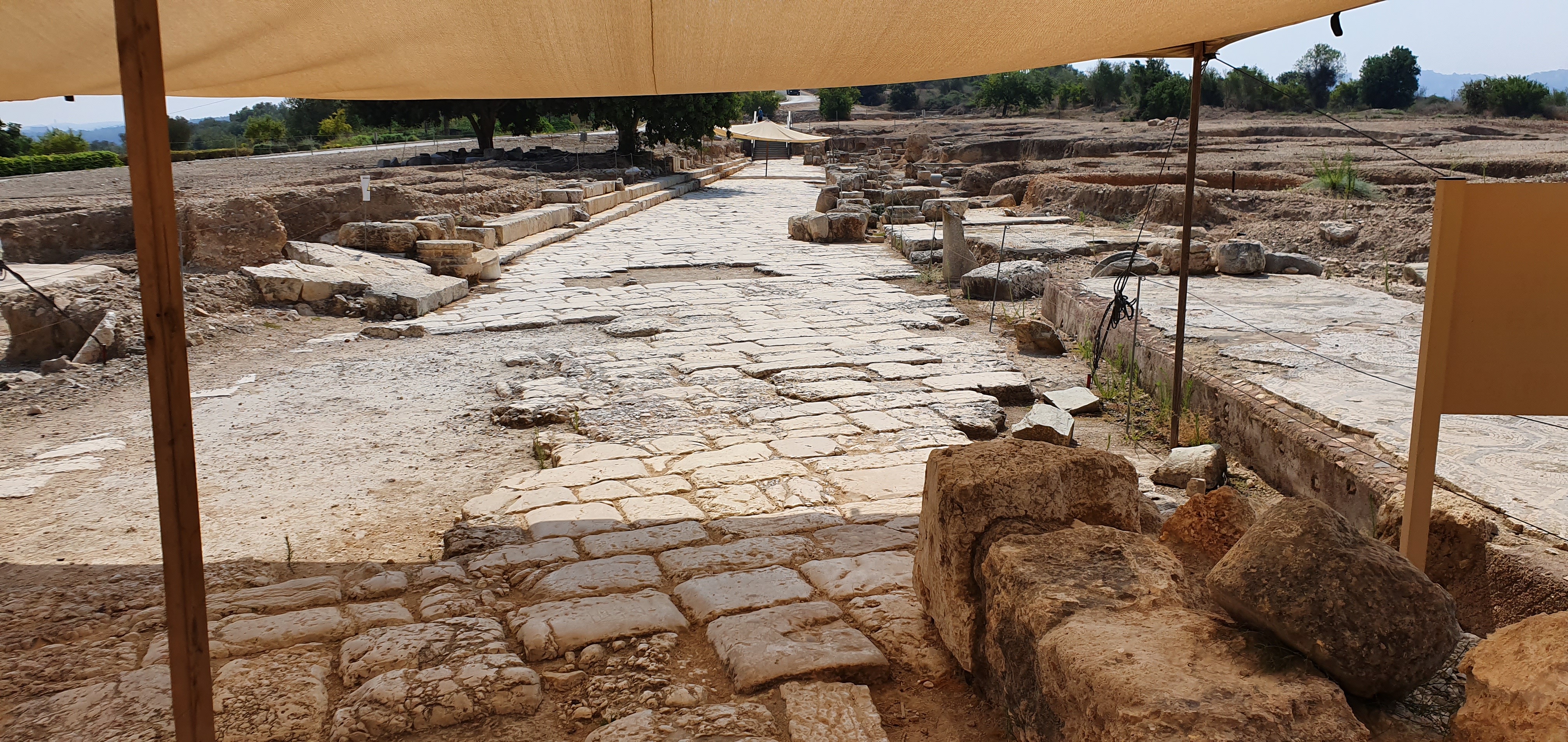
Sepphoris (Hebrew Tzippori; Greek Sepphoris) is a substantial urban site in Lower Galilee, situated approximately 6 kilometers northwest of Nazareth. Archaeological excavations conducted by Hebrew University, Duke University, and the University of South Florida since the 1980s have revealed a densely occupied city spanning the late Hellenistic through Byzantine periods, with its most intensive development occurring under Herod Antipas following his rebuilding of the city after Roman suppression of the revolt of Judas of Galilee ca. 4 BC. By the early first century AD, Sepphoris was the administrative capital of Galilee, featuring a colonnaded cardo, a 4,000-seat theater, elite residential quarters with elaborate mosaic floors, and evidence of mixed Jewish and Gentile populations. No surviving ancient text places Jesus or his family at Sepphoris, and the Gospels do not mention the city by name. Matthew 2:23 and Luke 2:39 record the family's settlement in Nazareth; Mark 6:3 identifies Jesus as a carpenter (or craftsman, Greek tektōn). Scholars such as Richard Batey and John Meier have proposed—though others dispute—that Joseph and Jesus may have worked in Sepphoris's active construction projects, given its proximity to Nazareth. This inference is plausible but circumstantial; it is a hypothesis about the social and economic world of Galilee, not a textual claim. What Sepphoris does illuminate concretely is the urban, Hellenized environment of first-century Galilee, complicating older portrayals of a purely rural, isolated Galilean context for the early Jesus movement. Sources: Tzippori National Park (Israel Antiquities Authority); E. Meyers, E. Netzer & C. Meyers, Sepphoris (1992); R. Batey, Jesus and the Forgotten City (1991); Journal of Roman Archaeology, relevant Galilean survey articles.
Sepphoris provides the most direct material evidence for the urban, Hellenized character of Lower Galilee during Jesus' lifetime, enriching the socioeconomic backdrop against which the Gospels' Galilean narratives are set. While the city is not named in the New Testament, its proximity to Nazareth makes it an important reference point for understanding the cultural and commercial world immediately surrounding Jesus' hometown.