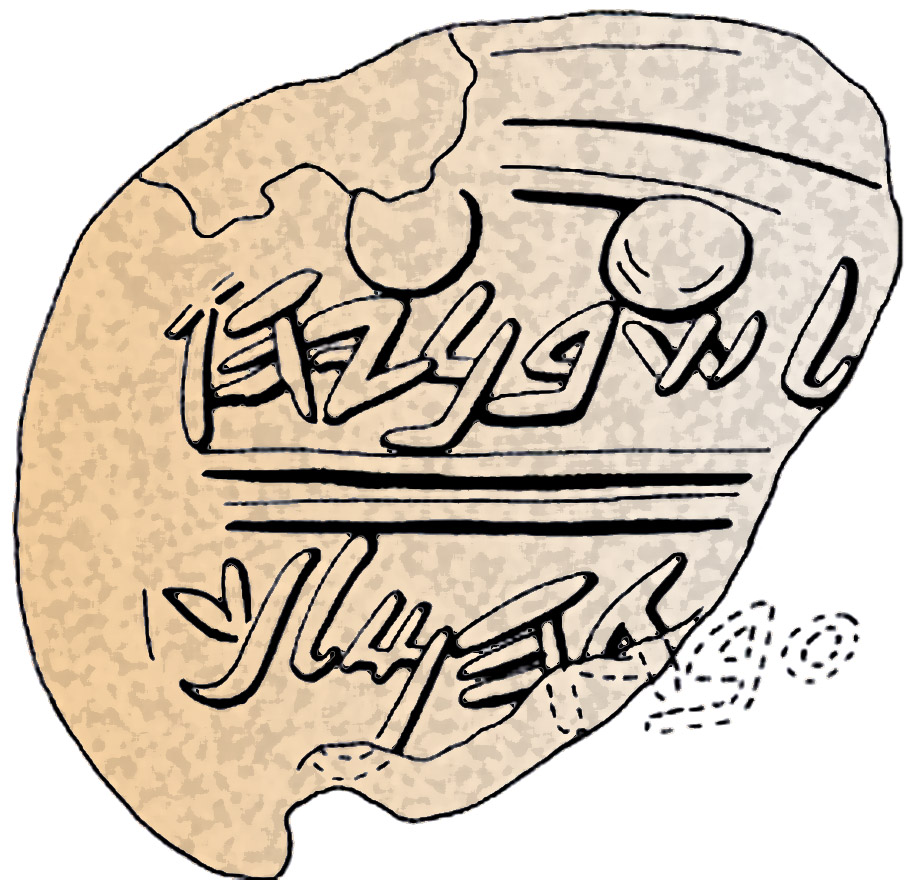
The bulla of Shevanyahu is a small fired clay seal impression recovered from Lachish, dated paleographically and archaeologically to approximately 730–680 BC, placing it within the late Judahite monarchy of the First Temple period. The impression preserves the personal name שבניהו (Shebnayahu), a longer form of the name Shebna (שבנא), inscribed in the paleo-Hebrew script characteristic of the period. Clay bullae of this type were used to seal papyrus documents, and their survival is typically owed to accidental firing during conflagrations—a fate consistent with Lachish's well-documented destructions in this era, most notably the Assyrian assault under Sennacherib around 701 BC. The impression does not include a title or patronym, which limits firm prosopographical identification, and scholars are careful to note that Shebnayahu was not an uncommon name in Iron Age Judah. Isaiah 22:15–19 addresses a royal steward (אשר על הבית, 'who is over the house') named Shebna, rebuking him for his ostentation and announcing his removal from office. Second Kings 18:18 and 19:2 reference a Shebna serving as scribe (סֹפֵר) in Hezekiah's administration during the Sennacherib crisis. Whether these passages refer to the same individual who had been demoted, or to a different Shebna, remains a matter of scholarly discussion. The Lachish bulla's name is consonant with the biblical figures, and its date and provenance are compatible, but the absence of a title on the seal means direct identification cannot be asserted as certain. The artifact attests the name's usage in the relevant administrative milieu without constituting proof of biblical identification. Sources: Israel Antiquities Authority holdings (Lachish excavation material); N. Avigad & B. Sass, Corpus of West Semitic Stamp Seals (1997); D. Ussishkin, The Renewed Archaeological Excavations at Lachish (2004); Israel Exploration Journal.
The bulla demonstrates that the name Shebnayahu circulated within Judahite administrative contexts at Lachish during precisely the period described in Isaiah 22 and 2 Kings 18–19, offering a material parallel—though not a confirmed identification—to the royal officials bearing that name in the biblical record.