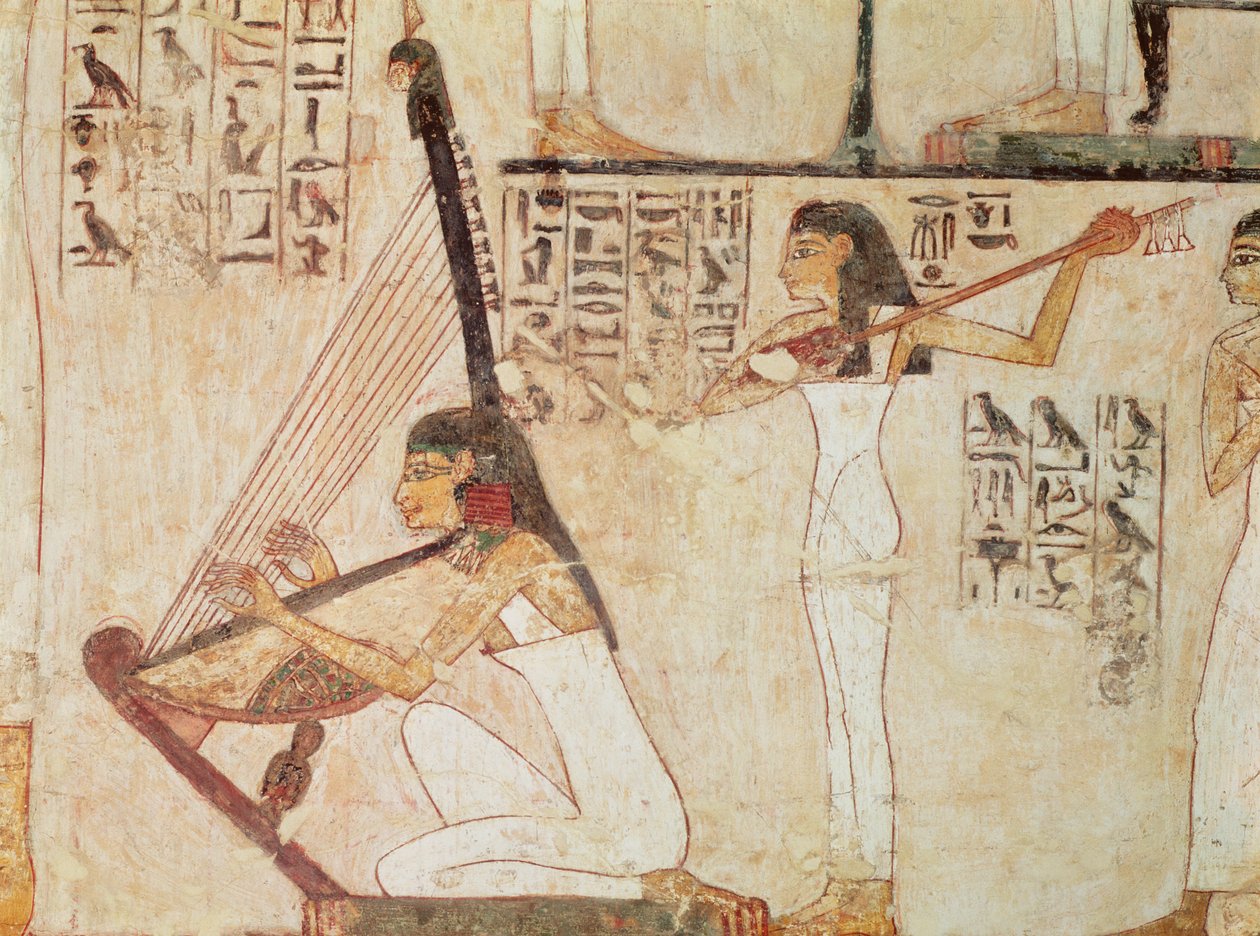
The tomb of Rekhmire (designated TT100) was recorded and systematically documented in the nineteenth century, with major epigraphic work conducted by Norman de Garis Davies, whose foundational facsimile campaign was published by the Metropolitan Museum of Art in 1943. The tomb is cut into the hillside of Sheikh Abd el-Qurna on the West Bank at Thebes and dates to the reigns of Thutmose III and Amenhotep II, approximately 1479–1400 BC. Davies produced detailed painted copies now housed in the Metropolitan Museum of Art's Egyptian galleries, while the original decorated chambers remain in situ at Luxor under the jurisdiction of Egypt's Ministry of Tourism and Antiquities. Rekhmire served as vizier under Thutmose III and Amenhotep II, and his tomb's painted registers are among the most extensive administrative records surviving from the Egyptian New Kingdom. The walls depict workshops staffed by Asiatic, Nubian, Aegean, and Syrian tribute-bearers, as well as brick-making scenes in which workers—some identified by Semitic features and dress—are shown under the supervision of Egyptian taskmasters carrying staves. One inscription accompanying the brick-making scene reads "the taskmaster says to the workers." These images correspond closely to the social conditions described in Exodus 1:11 and 5:6–14, where Israelite laborers construct store-cities under Egyptian overseers, and they illuminate the Genesis references to Asiatic peoples entering Egypt as commodities or bound laborers (Genesis 37:25; 39:1). For biblical scholarship, TT100 provides material confirmation that coerced Asiatic labor under Egyptian administrative hierarchy was a documented institutional reality during the New Kingdom period. The tomb does not name Israelites specifically, but it contextualizes the organizational structures—taskmasters, quotas, and corvée labor—that the Exodus narrative presupposes. Egyptologists including James Hoffmeier and Kenneth Kitchen have drawn on Rekhmire's tomb in reconstructing the plausibility of the biblical sojourn's socioeconomic setting. **Sources:** Norman de Garis Davies, *The Tomb of Rekh-mi-Rēʿ at Thebes*, 2 vols. (Metropolitan Museum of Art, 1943); James K. Hoffmeier, *Israel in Egypt* (Oxford University Press, 1996); Kenneth A. Kitchen, *On the Reliability of the Old Testament* (Eerdmans, 2003); Exodus 1:11, 5:6–14.
Rekhmire's tomb paintings document Egyptian administrative control over Asiatic labor and tribute during the New Kingdom period most commonly associated with the biblical sojourn and exodus traditions, providing direct visual and administrative context for Israelite bondage narratives.