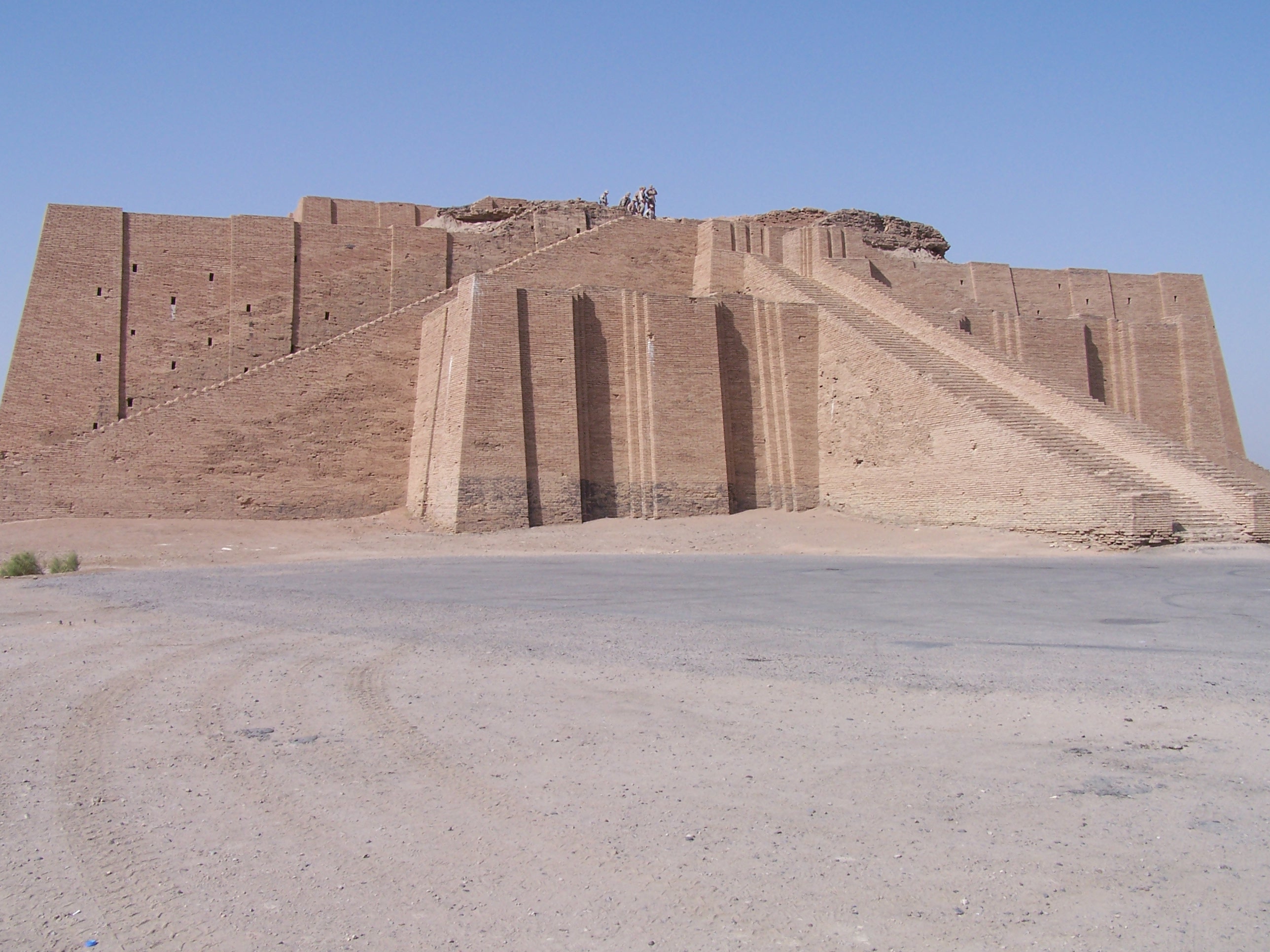
Sir Leonard Woolley directed the joint British Museum and University of Pennsylvania expedition to Tell el-Muqayyar in southern Iraq from 1922 to 1934 — the site identified since the 19th century with the biblical Ur of the Chaldees. Genesis names Ur as the home of Terah and the city Abram left when God called him to Canaan. Woolley unearthed a sophisticated urban civilization: the great Ziggurat of Nanna still partially standing, royal tombs from around 2600 BC filled with gold helmets, lapis-lazuli lyres, and the bodies of attendants who had been put to death to accompany their lords, and clay tablets documenting a literate, advanced Sumerian society of merchants, scribes, and lawyers. The find complicates as much as it confirms. The Genesis description of Abram leaving a settled urban world for a tent-dwelling life in Canaan now had material substance — Ur in the early second millennium BC was indeed a great city. But the text's "Ur of the Chaldees" is anachronistic: the Chaldeans (Kaldu) do not appear in Mesopotamian sources until roughly the 9th century BC, suggesting the phrase reflects a later editorial gloss for readers who knew Ur as a Chaldean city. Some scholars, following Cyrus Gordon, have argued for a northern Ur in Upper Mesopotamia closer to Haran; the southern site remains the consensus. Woolley also identified a thick flood-deposit layer he linked to the biblical deluge — a claim later excavations showed to be a local Euphrates flood, not regional. The ziggurat has since been partially restored. Sources: Leonard Woolley, Ur of the Chaldees (1929; rev. P. R. S. Moorey, 1982); Harriet Crawford, Ur: The City of the Moon God (2015); Cyrus Gordon, "Abraham and the Merchants of Ura," JNES 17 (1958); P. R. S. Moorey, Ancient Mesopotamian Materials and Industries (1994).
Confirms Genesis's description of Abraham coming from a developed urban culture, not a primitive nomadic backwater. The world Abraham left behind was sophisticated — making his obedience to leave it more, not less, remarkable.