Public domain · via Wikimedia Commons ↗
Family 13 — The Ferrar Group
Also called f13, Ferrar Group.
Reflection
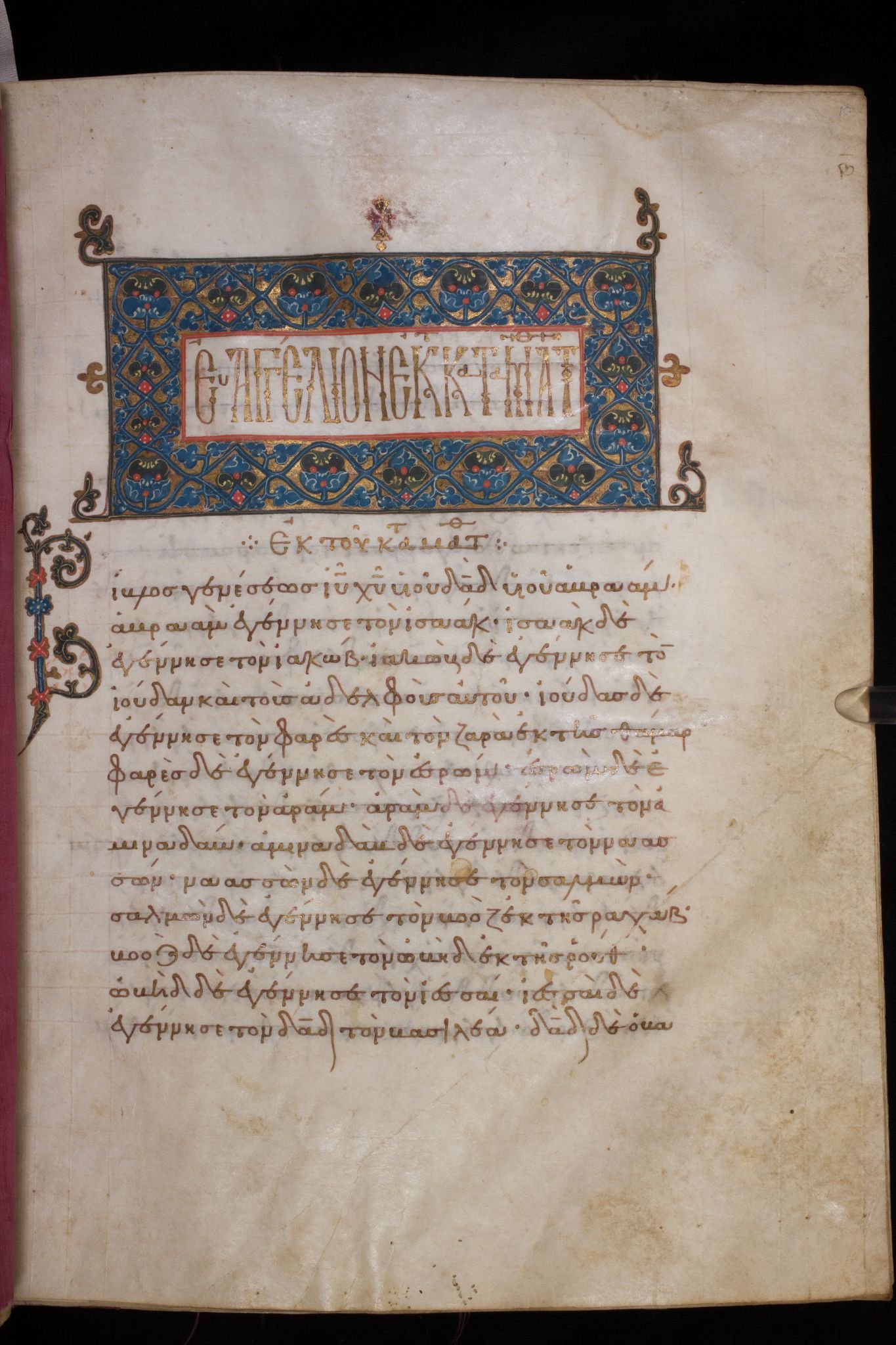
In 1868, the Irish scholar William Hugh Ferrar noticed that four particular minuscule manuscripts of the gospels shared an unusual cluster of readings — readings that did not match the Byzantine majority and did not match the great Alexandrian uncials. He died before he could finish his work. His friend T. K. Abbott published the analysis after his death, and the group has been called the Ferrar Group, or Family 13, ever since. It now includes more than a dozen identified manuscripts, all rooted in the Italo-Greek monasteries of southern Italy — communities of Greek-speaking Christians who lived under Byzantine rule and later Norman rule and preserved their own scribal tradition into the late Middle Ages.
What Family 13 witnesses is a Caesarean text closely related to Family 1 but distinct from it. Where Family 1 places the Pericope Adulterae after John 21, Family 13 places it after Luke 21:38 — the verse that says "every day he was teaching in the temple, but at night he went out and lodged on the mount called Olivet." The manuscript tradition lodged the floating story of the woman caught in adultery in different places, and Family 13 preserves a southern-Italian memory of where some early communities placed it. The gospel substance is identical wherever the passage sits. The variant is in location, not in content.
Family 13's significance lies in independence. By the late Byzantine and medieval period, the Greek text was being copied by scribes following dominant exemplars. The Calabrian monasteries followed their own. They preserved older readings, archaic features, and distinctive memories of how the gospels had been received. When modern critical editions weigh variants in the gospels, Family 13 is consulted as a third independent witness alongside the Alexandrian uncials and Family 1.
For the believer today, Family 13 is the witness that small communities, on the edges of the empire, preserving their own copies of scripture, mattered. They mattered to God then. They matter to the text now. The Word stands.
Why this manuscript matters
- Caesarean sister-family to Family 1
- Pericope Adulterae after Luke 21:38
- Italo-Greek transmission