Public domain · via Wikimedia Commons ↗
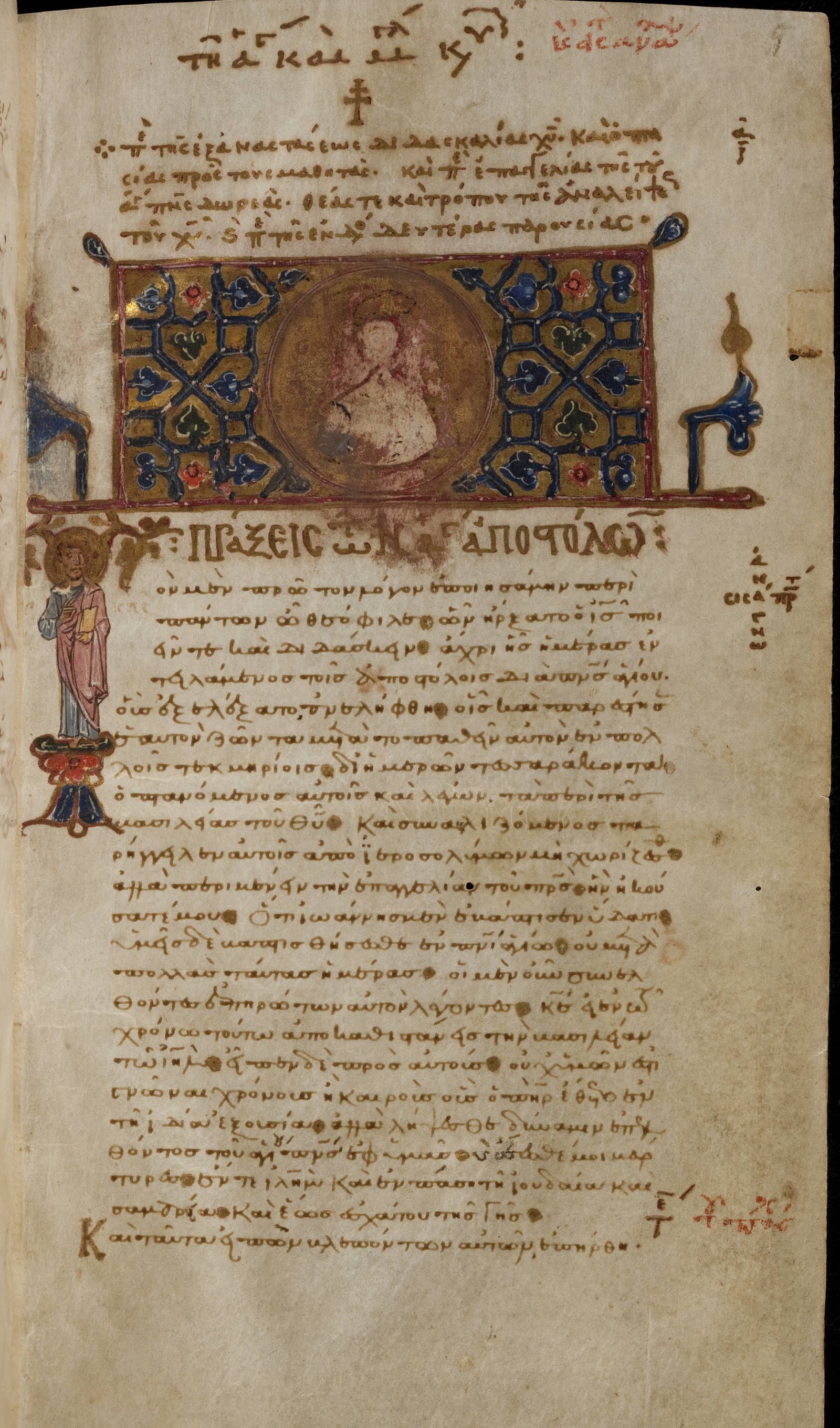
Minuscule 1 — Family 1 Archetype
Also called GA 1, Family 1, Lake Group.
Reflection
The history of New Testament textual criticism is partly a history of finding patterns. In 1902, the British scholar Kirsopp Lake noticed that several Greek minuscule manuscripts — small, late, easy to dismiss as routine Byzantine copies — actually shared a distinctive textual character that set them apart from the standard Byzantine stream. He called the group Family 1. Minuscule 1, a 12th-century gospel codex now in Basel, became the named head of the family.
What Family 1 witnesses is a textual stream associated with Caesarea Palaestina — the Caesarean text-type — that runs back through Origen and the early library that Origen and Eusebius shaped there. The family's readings often agree with the older Greek papyri (𝔓45, in particular) against the standardized Byzantine text. They preserve archaic readings that survived in this minor stream long after most scribes had switched to the dominant Byzantine norm.
The Pericope Adulterae — the story of the woman caught in adultery, John 7:53–8:11 — has a distinctive treatment in Minuscule 1. Rather than placing it inline at John 8, the manuscript places it after John 21, with a marginal note questioning its proper location. This is a memory of the textual situation: the passage is absent from the earliest manuscripts (𝔓66, 𝔓75, Sinaiticus, Vaticanus), present in others, and floats around different locations in still others. The Family 1 placement preserves an old scribal awareness that the passage was authentic to the Lord's life — but uncertain in its original gospel position.
For the believer today, Minuscule 1 and the Family 1 stream are a witness that even in the dominance of the Byzantine text, the older readings of Caesarea were not lost. Origen's library reached forward through obscure copies in remote monasteries until the 20th century recognized them. God did not preserve his Word through one channel only. He preserved it through many. The Word stands.
Why this manuscript matters
- Head of Family 1
- Caesarean text witness
- Pericope Adulterae placement