CC BY-SA 4.0 · via Wikimedia Commons ↗
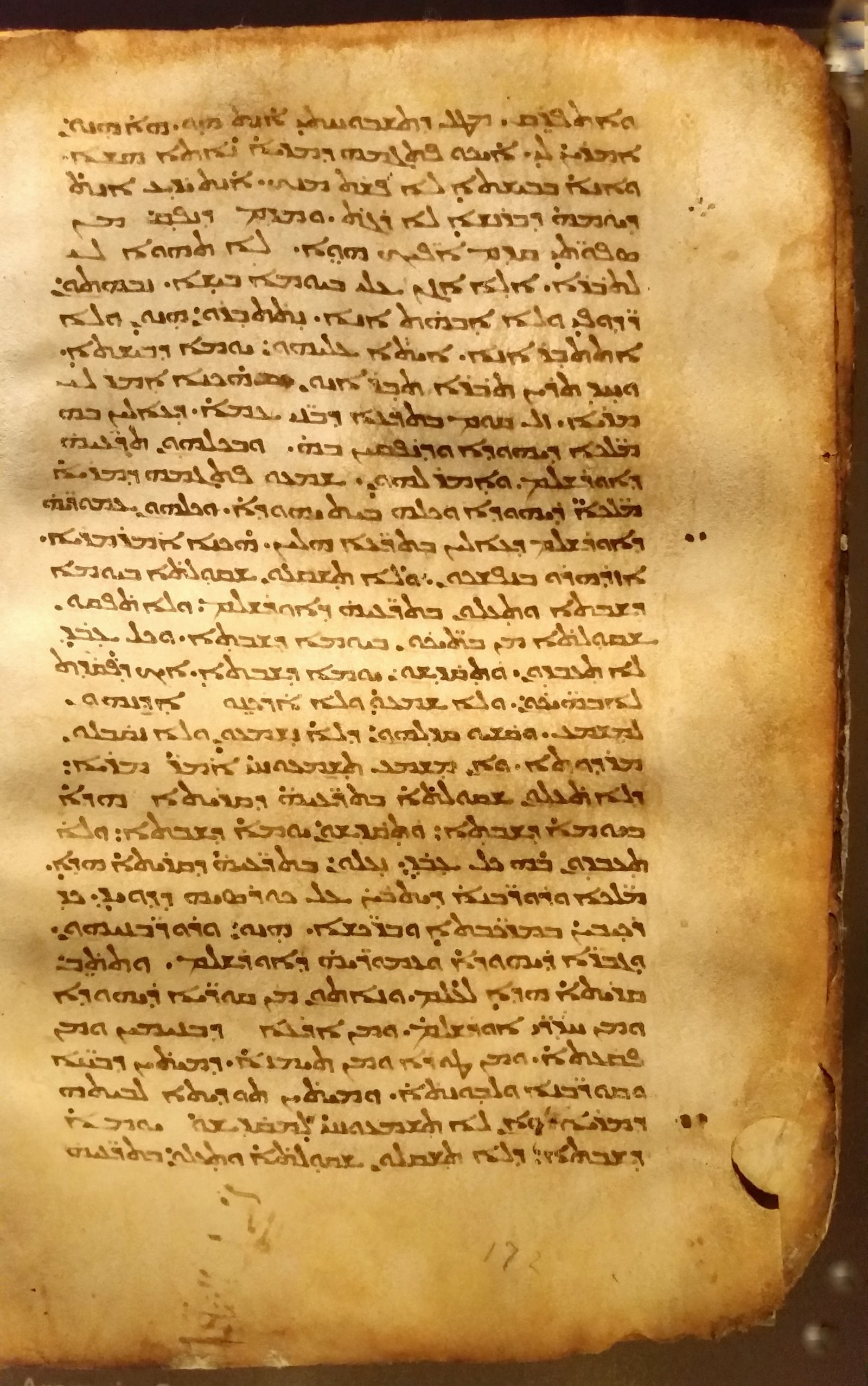
The Peshitta
Also called Syriac Peshitta, ܦܫܝܛܬܐ.
Reflection
The Peshitta — the word means simple or plain — is the standard Bible of the Eastern Christian churches. While the Greek-speaking West read Sinaiticus and Vaticanus, and the Latin-speaking West read Jerome's Vulgate, the Aramaic- and Syriac-speaking Christians of Mesopotamia, Persia, India, and Ethiopia read the Peshitta. They have been reading it continuously since the 4th century. They are still reading it today.
What the Peshitta witnesses is the gospel in the language closest to the language Jesus spoke. Aramaic was the household language of first-century Palestine; Syriac is its later literary descendant. When Mark records Jesus saying "Talitha cumi" — "Little girl, arise" — he is preserving the Lord's actual Aramaic. When the Peshitta translates the gospels into Syriac, it is bringing the words of Jesus back into a language his cousins spoke. The Peshitta is not the autograph language; the gospels were written in Greek. But the Syriac Peshitta returns the gospel to the soil from which Christ stepped into history.
The Old Testament Peshitta is also remarkable. Unlike the Latin Vulgate, which Jerome translated from Hebrew, or the Septuagint, which a Jewish community in Egypt translated from Hebrew into Greek, the Peshitta Old Testament is a direct translation from the Hebrew into Syriac, made probably by Jewish or Jewish-Christian communities in Edessa. Where the Septuagint sometimes paraphrases or expands, the Peshitta tracks the Hebrew with literal precision.
The Peshitta New Testament canon, in its earliest form, included 22 of the 27 books — omitting 2 Peter, 2 John, 3 John, Jude, and Revelation. The five later books were added to the Syriac canon over time. The Eastern church received the same Christ, the same gospels, the same Pauline letters as the rest of Christendom; they came to receive the smaller catholic epistles and Revelation slowly, by their own deliberation.
For the believer today, the Peshitta is a witness that the gospel has been spoken, prayed, and read in Aramaic-Syriac for sixteen centuries. The church Christ founded has never stopped speaking. The Word stands.
Why this manuscript matters
- Standard Bible of the Eastern churches
- Direct Hebrew-to-Syriac OT translation
- Living scripture for 1,500 years