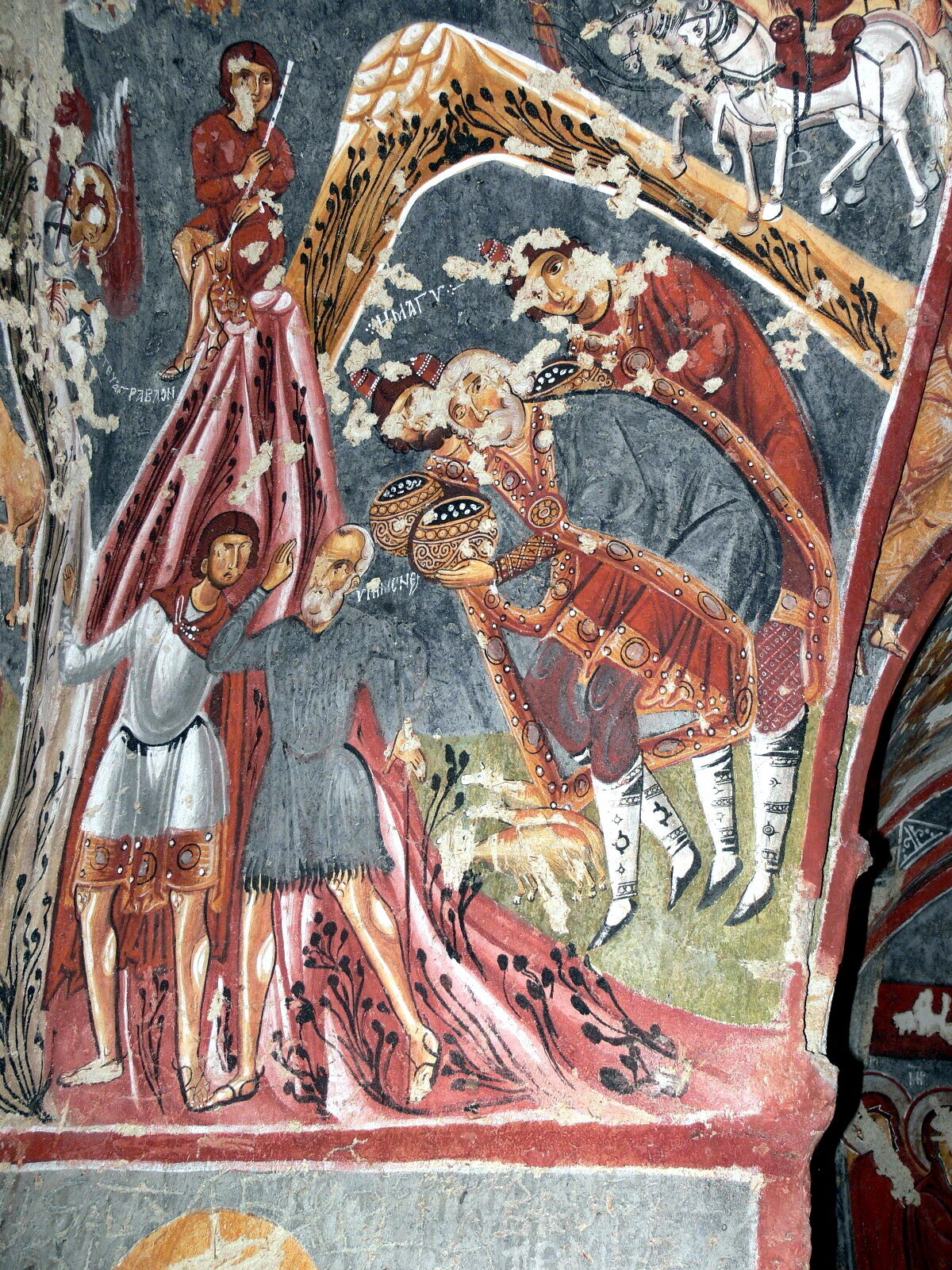
The Adoration of the Magi
Fresco, Çarıklı Kilise (Sandals Church), Göreme, Cappadocia — 11th century
Doctrinal reflection
Three figures approach from the left, gifts in their hands — the magi from the East, in royal travel-dress, their Persian-style soft caps marking them as foreign nobility. On the right, the Theotokos sits enthroned with the Christ-child on her lap. The composition is the canonical Byzantine Adoration of the Magi, the iconographic moment of Matthew 2:11. The fresco is in Çarıklı Kilise (the Sandals Church) in Göreme, Cappadocia, painted in the 11th century — Cappadocia's second corpus entry, paired with the Wedding at Cana at Tokalı Kilise (#73) and the Judas Kiss at Karanlık Kilise (#86).
Matthew 2:1–12 supplies the gospel scene. Magi from the East come to Jerusalem looking for "he that is born King of the Jews," having seen "his star in the east." Herod consults the chief priests and scribes, who locate Bethlehem from Micah 5:2. The magi follow the star to the house, see the child with his mother, and present gifts: gold, and frankincense, and myrrh (Matt 2:11). They depart by another route, having been warned in a dream not to return to Herod.
Three magi, three gifts. The number is iconographic tradition rather than gospel record — Matthew names neither the magi nor specifies their count; the three derives from the three gifts. The Çarıklı painter renders the canonical iconographic three. The corpus reads what scripture preserves (gifts named, magi unnumbered) without adjudicating the later legendary accretions (Caspar/Melchior/Balthasar names, royal status as kings rather than astrologer-priests, ages distinguished as young/middle/old). The historically-defensible core is what the gospel preserves: foreign astrologer-priests came to honor the Christ-child early in the infancy narrative.
The gifts. Patristic and medieval exegesis read the three gifts typologically: gold for kingship (Christ as king), frankincense for priesthood (Christ as priest), myrrh for burial (Christ as the one who would die). The Çarıklı iconographer's three gifts in three different vessel-shapes preserve this reading visually. The corpus reads the typology as legitimate apostolic-tradition extension — though Matthew 2:11 itself does not gloss the gifts theologically, the three-gift pattern lends itself to the kingship-priesthood-burial reading without doctrinal overreach. Mode 1 typology by patristic extension.
Gentile inclusion at the start of the gospel. Matthew opens the gospel of the Jewish Messiah with foreign magi worshipping the Christ-child — and closes with the Great Commission "Go ye therefore, and teach all nations" (Matt 28:19). The Adoration is the bookend of Matthew's universalism: the gospel reaches the Gentiles even before Christ's public ministry begins. Romans 9–11 and Galatians 3 work out the doctrinal implications; the Çarıklı fresco renders the iconographic anchor.
Cappadocia at 3 entries. Tokalı Cana (#73), Karanlık Judas Kiss (#86), Çarıklı Adoration. Three Cappadocian rock-church frescoes from three sites in the same Göreme valley, all 11th-century narrative-cycle work. The rock-church iconographic tradition is iconographically continuous with imperial-Constantinopolitan iconography (the compositional vocabulary is the same) but produced in modest local contexts — Cappadocia is the most-surviving repository of provincial Byzantine fresco painting because the rock-cut chambers preserved their interiors through Ottoman and modern centuries.
The magi came. They brought gifts. The Christ-child was held by his mother on the throne. The gospel began with Gentiles worshipping in the house at Bethlehem.