Byzantine Art Project
150 artworks from the great traditions of Byzantine and Eastern Christian iconography, each paired with a doctrinal reflection. The corpus surfaces GLM's confessional shape case by case as the iconography requires it — read what the picture argues.
150
ARTWORKS
10
COLLECTIONS
17
FLAGSHIPS
1,250+
YEARS
COLLECTION:
ERA:
REGION:
MEDIUM:
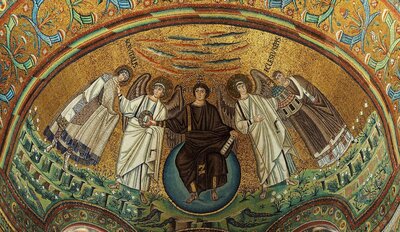 Angels
Christ Enthroned with Archangels
Photo by Petar Milošević (2015). Wikimedia Commons. Released under Creative Commons Attribution-ShareAlike 4.0 International (CC BY-SA 4.0). The underlying 6th-century mosaic is in the public domain.
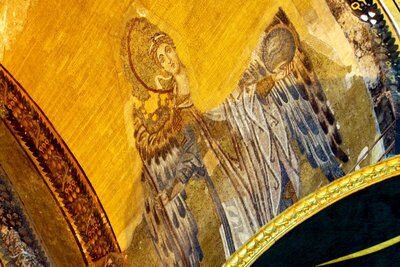 Angels
Archangels Gabriel and Michael
Photo by Dennis G. Jarvis / archer10 (2013). Wikimedia Commons. Released under Creative Commons Attribution-ShareAlike 2.0 Generic (CC BY-SA 2.0). The underlying 9th-century mosaics are in the public domain.
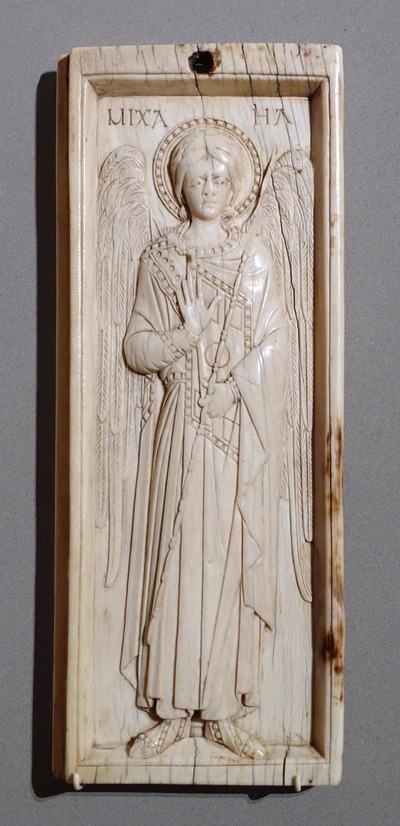 Angels
Archangel Michael Relief Panel
Photograph by Daderot (2014). Wikimedia Commons. Released under Creative Commons CC0 1.0 Universal Public Domain Dedication. The underlying 11th-century Byzantine ivory relief at the Bode-Museum is in the public domain.
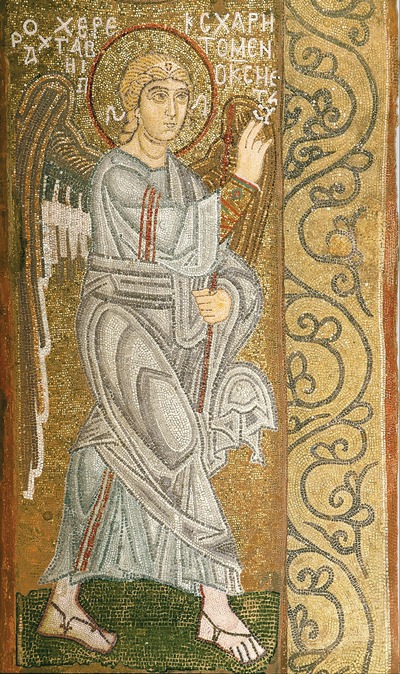 Angels
The Archangel Gabriel of the Annunciation
Google Art Project / Wikimedia Commons. The underlying 11th-century mosaic at Saint Sophia Cathedral Kyiv is in the public domain.
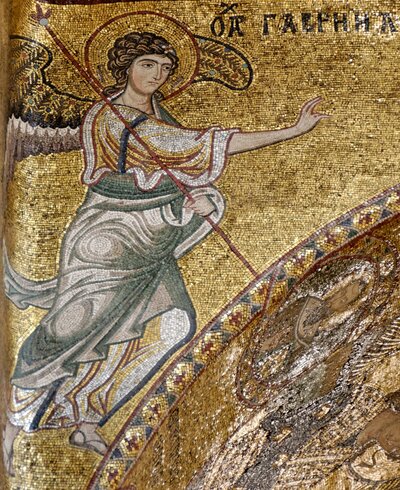 Angels
The Archangel Gabriel
Photo by Marie-Lan Nguyen / Jastrow (2008). Wikimedia Commons. Released under Creative Commons Attribution 2.5 Generic (CC BY 2.5). The underlying 12th-century mosaic is in the public domain.
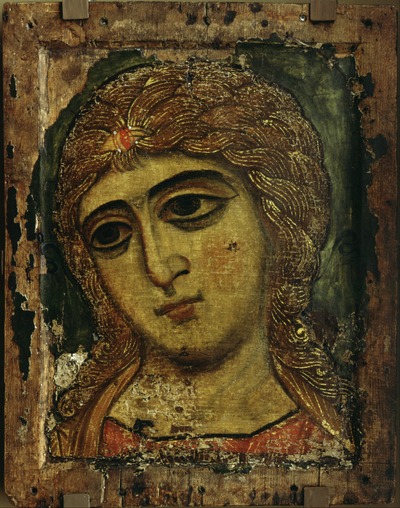 Angels
The Angel with Golden Hair (Archangel Gabriel)
Google Art Project / Wikimedia Commons. The underlying late-12th-century Novgorod-school icon at the Russian Museum is in the public domain.
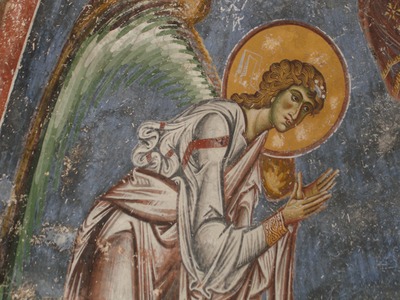 Angels
The Archangel Gabriel of the Annunciation
Photograph by Efkoski Bobi (2009). Wikimedia Commons. Released under Creative Commons Attribution-ShareAlike (CC BY-SA 1.0/2.0/2.5/3.0/4.0) and GNU Free Documentation License 1.2+. The underlying 1191 fresco at Saint George Kurbinovo is in the public domain.
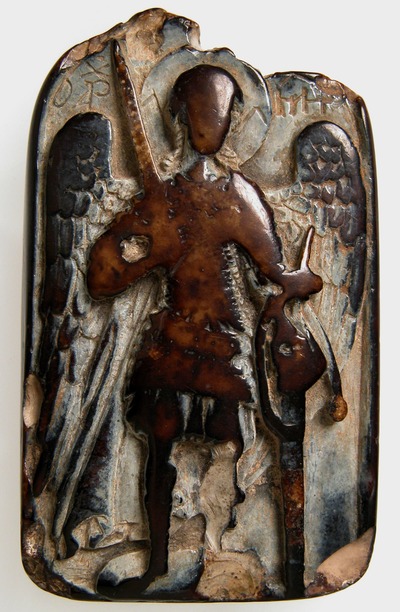 Angels
Two-Sided Pendant with the Archangel Michael and Daniel in the Lions' Den
Photograph: The Metropolitan Museum of Art, New York. Open Access (Public Domain / CC0). The underlying c. 1200+ serpentine pendant is in the public domain. Credit line: Gift of Mrs. Hayford Peirce, 1987.
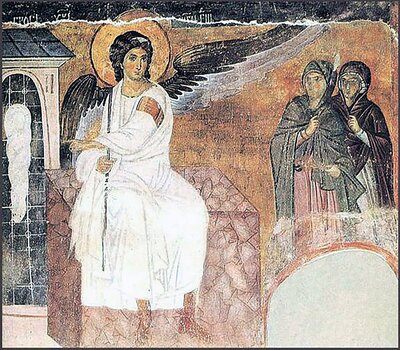 Angels
The White Angel
Photograph by Levan Ramishvili (2018). Wikimedia Commons. Public domain (faithful reproduction of a 13th-century fresco, which is itself in the public domain).
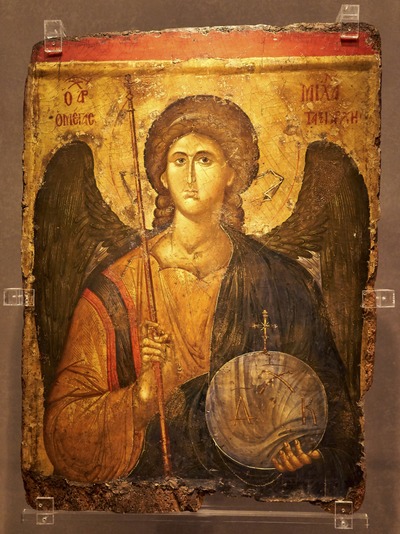 Angels
The Archangel Michael
Photograph by George E. Koronaios (2019). Wikimedia Commons. Released under Creative Commons Attribution-ShareAlike 4.0 International (CC BY-SA 4.0). The underlying c. early-14th-century icon at the Byzantine and Christian Museum, Athens (BXM 1353) is in the public domain.
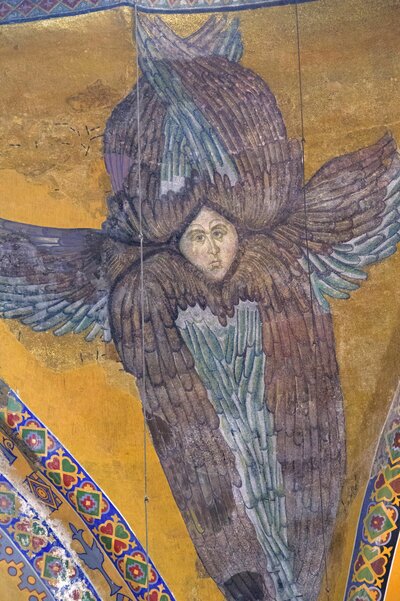 Angels
The Six-Winged Seraphim
Photo by Dick Osseman / Dosseman (2016). Wikimedia Commons. Released under Creative Commons Attribution-ShareAlike 4.0 International (CC BY-SA 4.0). The underlying mosaic is in the public domain.
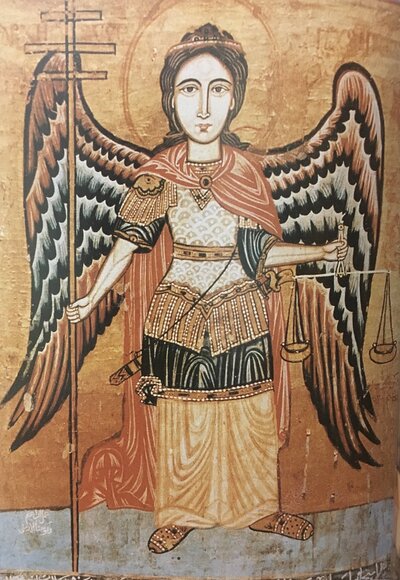 Angels
Michael Weighing Souls
Photographic reproduction in the public domain (Wikimedia Commons; uploaded by Gabriel Philadelpho). The underlying 18th-century Coptic icon is in the public domain.
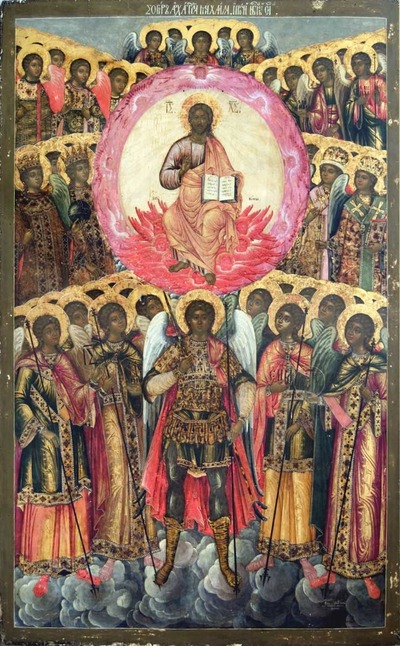 Angels
Synaxis of the Archangel Michael and the Other Bodiless Powers
Wikimedia Commons. Public Domain (CC0). The underlying 1704 icon by Kirill Ulanov at the Andrey Rublev Museum (Acc. КП 204) is in the public domain.
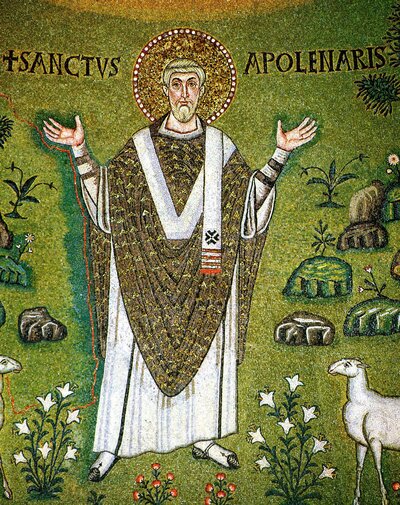 Apostles
The Apostolic Flock
Photographic reproduction in the public domain (Wikimedia Commons; uploaded by user MChew, 2005). The underlying 6th-century mosaic is in the public domain.
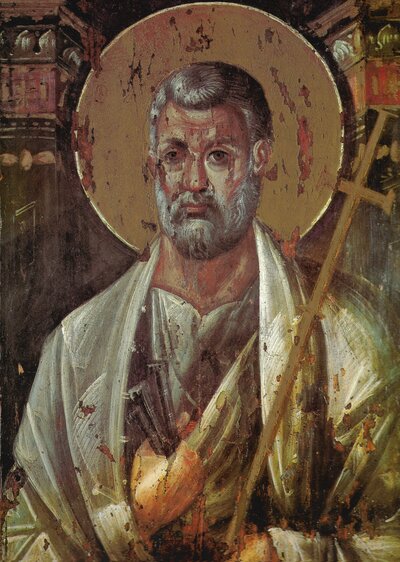 Apostles
Saint Peter
Photographic reproduction in the public domain (Wikimedia Commons; photographed by Michel Bakni). The underlying mid-6th-century encaustic icon (92.8 × 53 cm) is in the public domain.
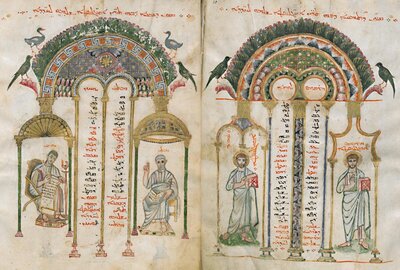 Apostles
The Four Evangelists
Photographic reproduction in the public domain (Wikimedia Commons; source: Syriac Patriarchate digital archive). The underlying 6th-century manuscript is in the public domain.
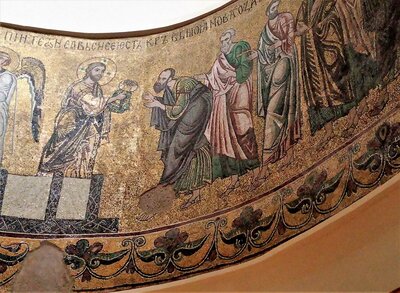 Apostles
The Communion of the Apostles
Photo by Vi Ko (2021). Wikimedia Commons. Released under Creative Commons Attribution-ShareAlike 4.0 International (CC BY-SA 4.0). The underlying 11th-century mosaic is in the public domain.
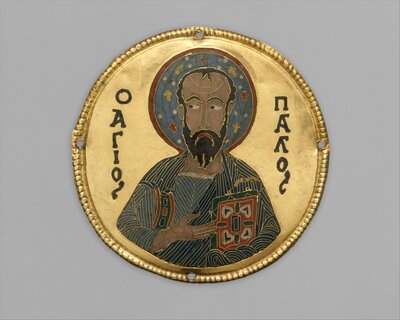 Apostles
Saint Paul
Image courtesy of the Metropolitan Museum of Art, New York (accession 17.190.673), via Wikimedia Commons. Released under CC0 1.0 Universal Public Domain Dedication. The underlying c. 1100 Byzantine cloisonné medallion is in the public domain.
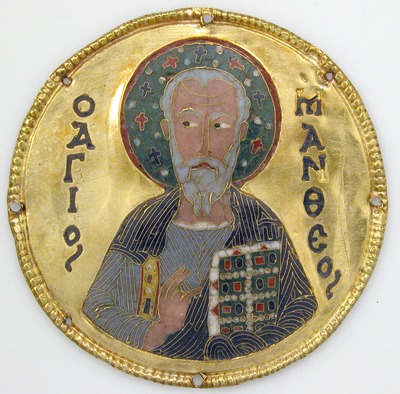 Apostles
Medallion with Saint Matthew from an Icon Frame
Photograph: The Metropolitan Museum of Art, New York. Open Access (Public Domain / CC0). The underlying c. 1100 Byzantine cloisonné medallion is in the public domain. Credit line: Fletcher Fund, 1917.
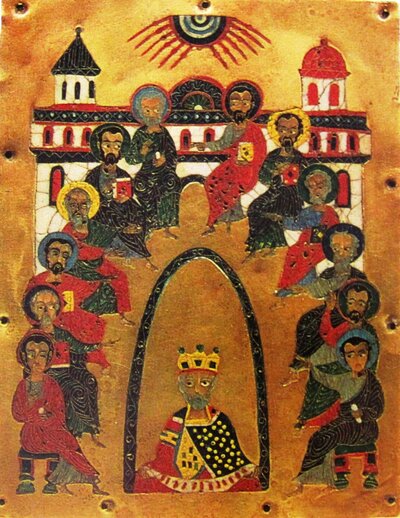 Apostles
The Descent of the Holy Spirit
Photographic reproduction in the public domain (Wikimedia Commons; faithful reproduction of a two-dimensional public domain work). The underlying 12th-century cloisonné-enamel-on-gold icon (Shalva Amiranashvili Museum, Tbilisi) is in the public domain.
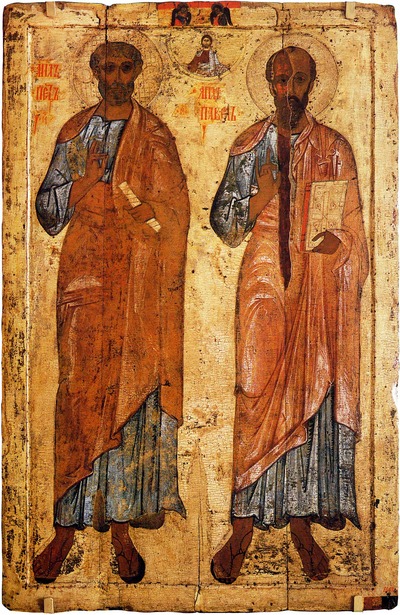 Apostles
The Holy Apostles Peter and Paul
Photographic reproduction in the public domain (Wikimedia Commons; faithful reproduction of a c. 1200 icon scanned from Sarabyanov and Smirnova, *Russian Icon Painting*, 2007). The underlying icon is in the public domain.
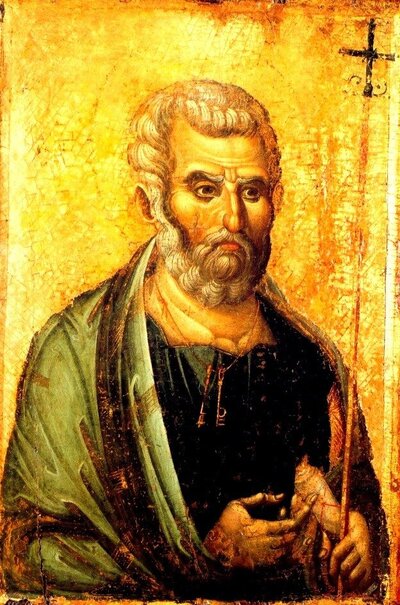 Apostles
The Apostle Peter
Photographic reproduction in the public domain (Wikimedia Commons; faithful reproduction of a two-dimensional public domain work). The underlying 13th-century Byzantine icon (93 × 61.3 cm; Dumbarton Oaks Museum, Washington D.C.) is in the public domain.
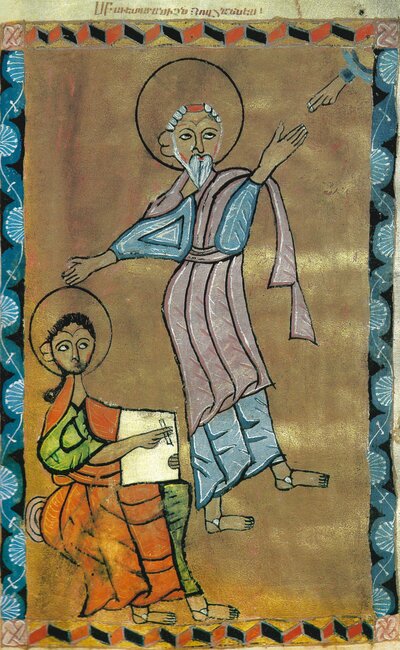 Apostles
John the Theologian Dictating to Prochorus
Photograph by Michel Bakni (2020). Wikimedia Commons. Public domain (the underlying 1224 Armenian Gospel manuscript miniature is in the public domain; Matenadaran MS 4823, fol. 247).
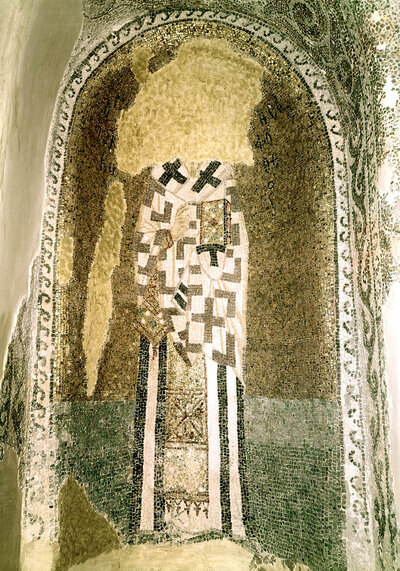 Apostles
James the Just
Photograph by Byzantine Institute staff (1949–1963), Dumbarton Oaks fieldwork records (MSBZ004_BF_T_F_022_A). Wikimedia Commons. Released under Creative Commons CC0 1.0 Universal Public Domain Dedication. The underlying c. 1310 mosaic is in the public domain.
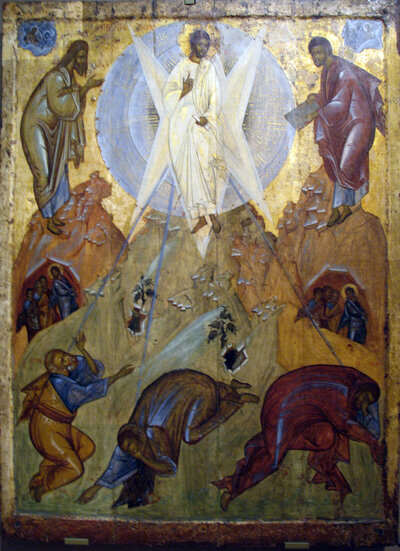 Apostles
The Transfiguration of Christ
Photograph by Anagoria (Wikimedia Commons). Public domain. The underlying icon by Theophanes the Greek (c. 1403) is in the public domain.
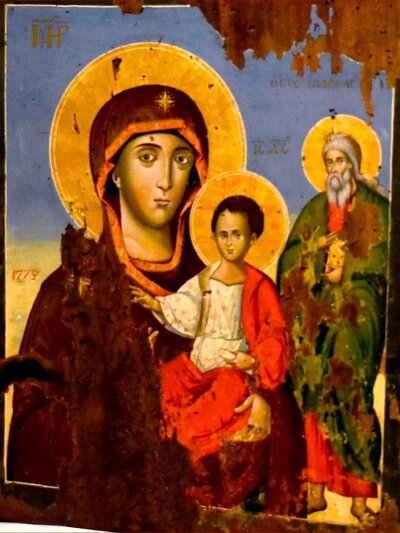 Apostles
The Apostle Andrew
Photographic reproduction in the public domain (Wikimedia Commons; faithful reproduction of a public domain icon). The underlying 1779 icon at Saint Andrew Church, Kastoria, is in the public domain.
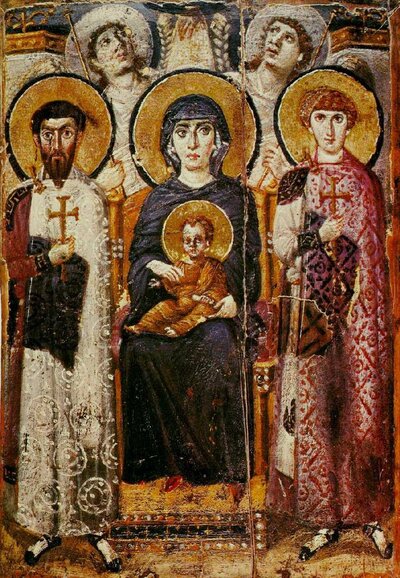 Iconoclasm Debate
Virgin Enthroned with Saints Theodore and George
Photographic reproduction in the public domain (Wikimedia Commons; faithful reproduction of a two-dimensional public domain work). Underlying late-6th-century encaustic icon (Saint Catherine's Monastery, Sinai) is in the public domain.
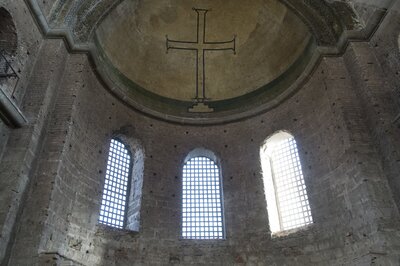 Iconoclasm Debate
The Iconoclastic Cross
Photo by Dick Osseman / Dosseman (2016). Wikimedia Commons. Released under Creative Commons Attribution-ShareAlike 4.0 International (CC BY-SA 4.0). The underlying 8th-century mosaic is in the public domain.
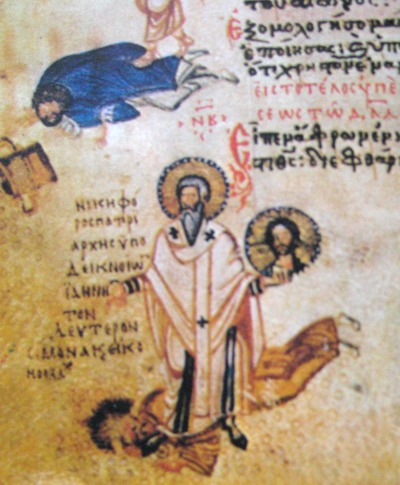 Iconoclasm Debate
Patriarch Nikephoros and the Iconoclast
Photographic reproduction in the public domain (Wikimedia Commons; faithful reproduction of a 9th-century manuscript folio published before 1931). The underlying Khludov Psalter (State Historical Museum, Moscow, MS D.129) is in the public domain.
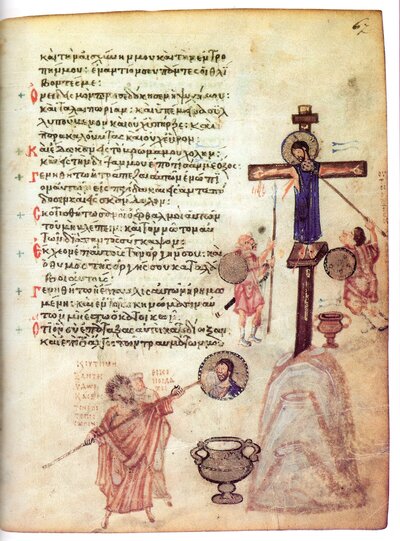 Iconoclasm Debate
Crucifixion with Iconoclasts
Photographic reproduction in the public domain (Wikimedia Commons; scanned 2021). The underlying mid-9th-century manuscript folio (19.5 × 15 cm; State Historical Museum, Moscow, MS D.129) is in the public domain.
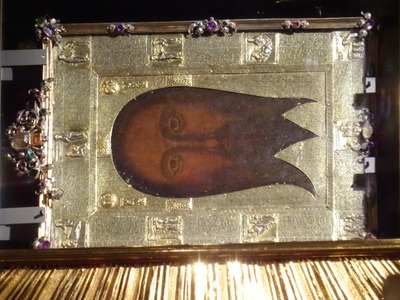 Iconoclasm Debate
The Holy Mandylion (Image of Edessa)
Photograph by Postcrosser (2018). Wikimedia Commons. Released under Creative Commons Attribution-ShareAlike 4.0 International (CC BY-SA 4.0). The underlying Byzantine Mandylion icon and 14th-century frame are in the public domain.
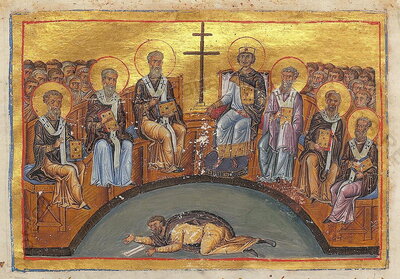 Iconoclasm Debate
The Second Council of Nicaea
Photographic reproduction in the public domain (Wikimedia Commons; faithful reproduction of a two-dimensional public domain work). The underlying late-10th-century manuscript illumination (Vatican Apostolic Library, Vat. gr. 1613) is in the public domain.
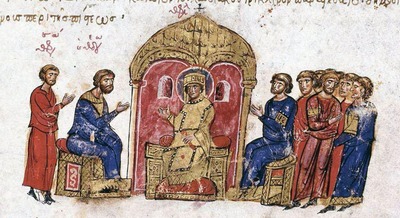 Iconoclasm Debate
The Argument about Icons (Empress Theodora and the Iconoclasts)
Public domain photographic reproduction (Wikimedia Commons; faithful reproduction of a 12th-century manuscript published before 1931). The underlying Madrid Skylitzes (Biblioteca Nacional de España, MS Vitr. 26-2) is in the public domain.
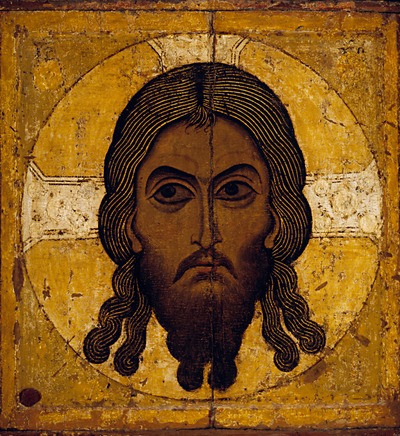 Iconoclasm Debate
The Saviour Not Made by Hands (Spas Nerukotvorny)
Google Art Project / Wikimedia Commons. The underlying late-12th-century Novgorod-school icon at the Tretyakov Gallery is in the public domain. Photographic reproduction in the public domain (CC0 / structured-data convention).
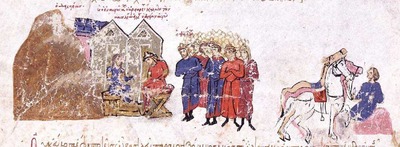 Iconoclasm Debate
Emperor Leo V and the Monk of Dagisteas
Public domain photographic reproduction (Wikimedia Commons; faithful reproduction of a 12th-century manuscript published before 1931). The underlying Madrid Skylitzes is in the public domain.
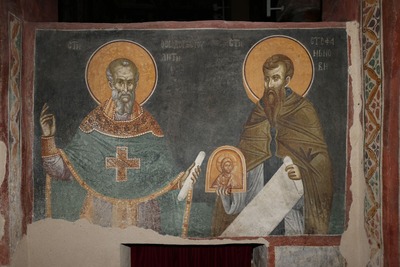 Iconoclasm Debate
Theodore the Studite and Stephen the Younger
Photograph by BLAGO Fund, Inc. (2021). Wikimedia Commons. Released under Creative Commons Attribution 4.0 International (CC BY 4.0). The underlying c. 1321 fresco at Gračanica Monastery is in the public domain.
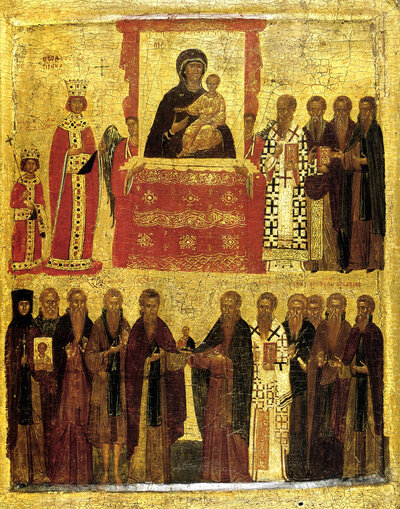 Iconoclasm Debate
The Triumph of Orthodoxy
Photographic reproduction in the public domain (Wikimedia Commons; faithful reproduction of a two-dimensional public domain work). Underlying late-14th-century / early-15th-century icon (37.8 × 31.4 cm; British Museum, 1988,0411.1) is in the public domain.
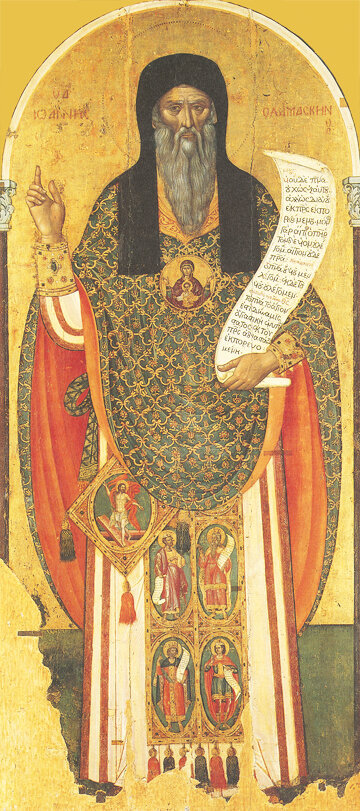 Iconoclasm Debate
Saint John of Damascus
Photographic reproduction in the public domain (Wikimedia Commons; faithful reproduction of a 17th-century icon by Emmanouel Tzanes). The underlying icon is in the public domain.
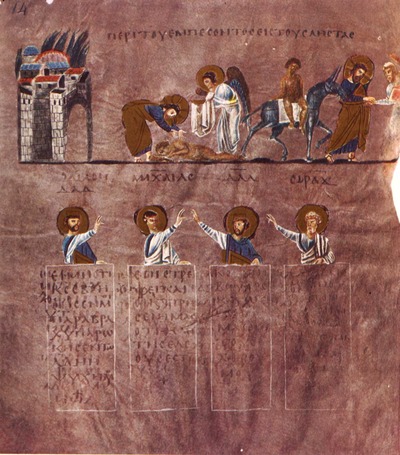 Life of Christ
The Parable of the Good Samaritan
Photographic reproduction in the public domain (Wikimedia Commons; faithful reproduction of a 6th-century manuscript). The underlying Codex Purpureus Rossanensis is in the public domain.
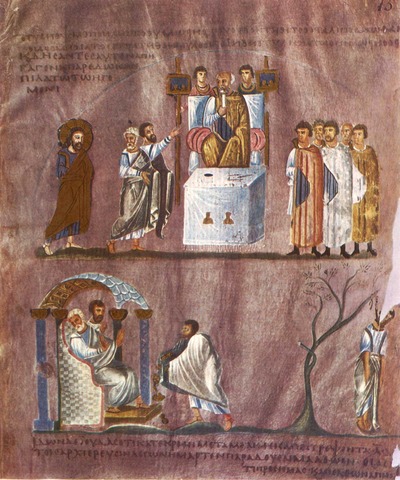 Life of Christ
Christ before Pilate
Photographic reproduction in the public domain (Wikimedia Commons; faithful reproduction of a 6th-century manuscript folio). The underlying Codex Purpureus Rossanensis is in the public domain.
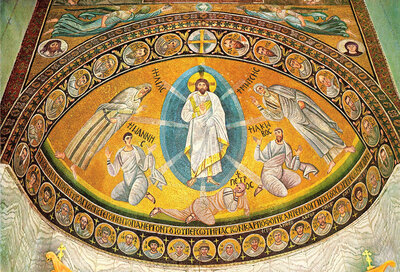 Life of Christ
Christ in the Transfiguration
Image from Forsyth & Weitzmann, *The Monastery of Saint Catherine at Mount Sinai* (University of Michigan Press, 1973), reproduced via Linn, Tepper & Bar-Oz (2017). Wikimedia Commons. Released under CC0 1.0 Universal Public Domain Dedication. The underlying 6th-century mosaic is in the public domain.
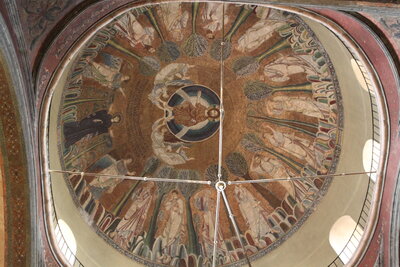 Life of Christ
The Ascension
Photo by Iolchos07 (2019). Wikimedia Commons. Released under Creative Commons Attribution-ShareAlike 4.0 International (CC BY-SA 4.0). The underlying 9th-century mosaic is in the public domain.
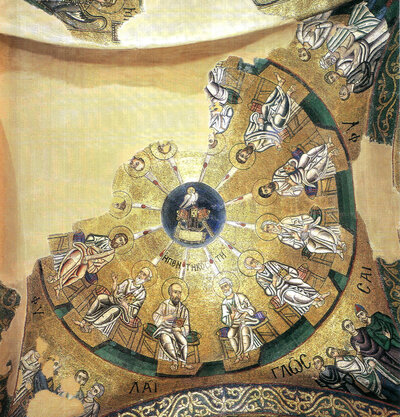 Life of Christ
Pentecost
Photograph in the public domain (Wikimedia Commons, file: Hosios_Loukas_Katholikon_(sanctuary_vault)_-_Pentecost_01.jpg, processed by user Shakko 2015). The underlying 11th-century mosaic is in the public domain.
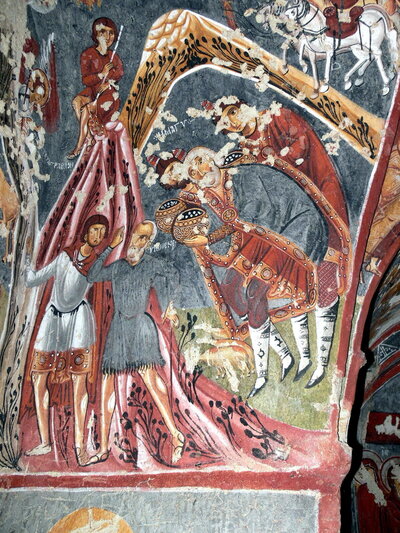 Life of Christ
The Adoration of the Magi
Photograph by Wolfgang Sauber (2010). Wikimedia Commons. Released under Creative Commons Attribution-ShareAlike 3.0 Unported (CC BY-SA 3.0). The underlying 11th-century fresco is in the public domain.
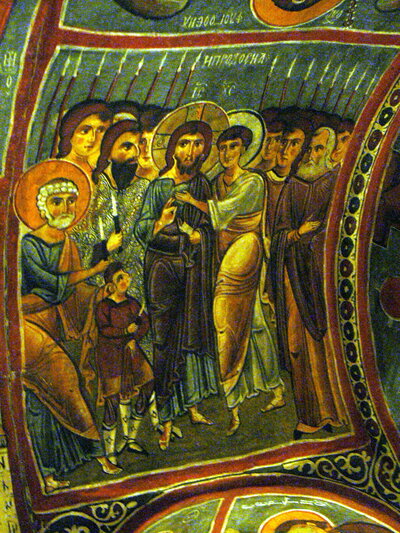 Life of Christ
The Kiss of Judas
Photograph by Wolfgang Sauber (2010). Wikimedia Commons. Released under Creative Commons Attribution-ShareAlike 3.0 Unported (CC BY-SA 3.0). The underlying 11th-century fresco is in the public domain.
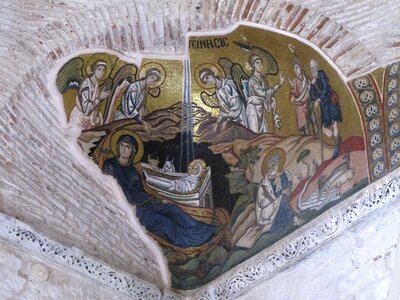 Life of Christ
The Nativity
Photo by Jacob Freeland (2023). Wikimedia Commons. Released under Creative Commons Attribution 4.0 International (CC BY 4.0). The underlying 11th-century mosaic is in the public domain.
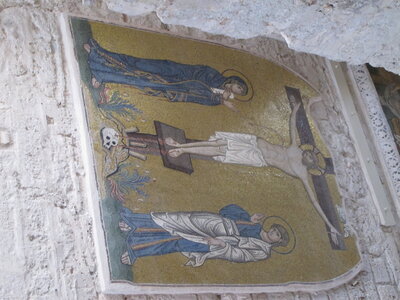 Life of Christ
The Crucifixion
Photo by Jacob Freeland (2023). Wikimedia Commons. Released under Creative Commons Attribution 4.0 International (CC BY 4.0). The underlying 11th-century mosaic is in the public domain.
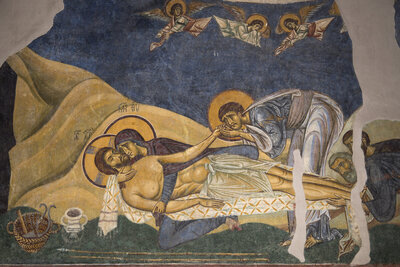 Life of Christ
The Lamentation
Photo by zavar_vera (2017). Wikimedia Commons. Released under Creative Commons Attribution-ShareAlike 4.0 International (CC BY-SA 4.0). The underlying 12th-century fresco is in the public domain.
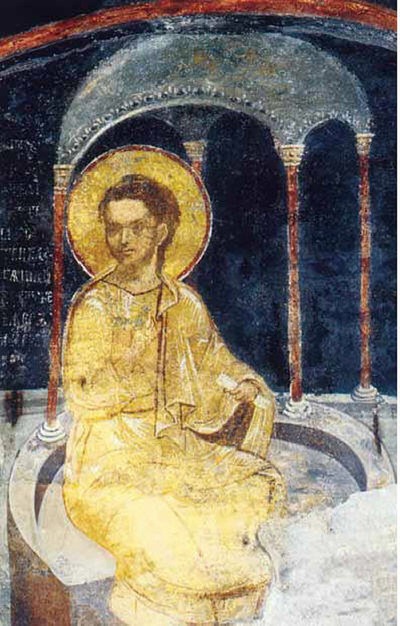 Life of Christ
Christ among the Doctors (Young Jesus in the Temple)
Photographic reproduction in the public domain (Wikimedia Commons; faithful reproduction of a 1259 fresco). The underlying Boyana Church fresco is in the public domain.
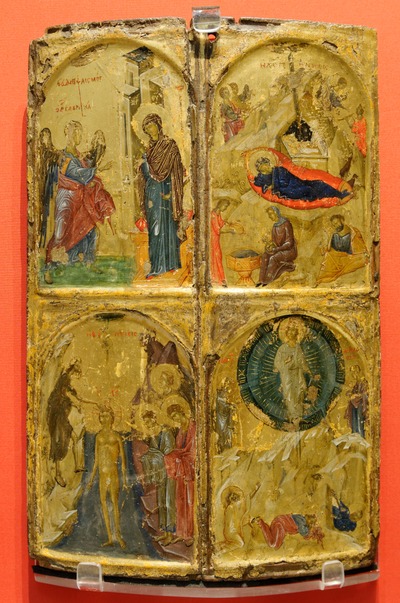 Life of Christ
Four-Festival Icon (Annunciation, Nativity, Baptism, Transfiguration)
Photograph released under Creative Commons Attribution 2.5 Generic. The underlying c. 1310–1320 Byzantine icon at the British Museum (BM 1852.1-02.1) is in the public domain.
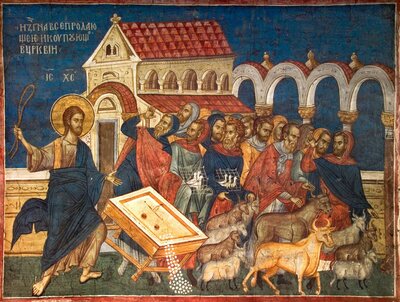 Life of Christ
The Cleansing of the Temple
Photographic reproduction in the public domain (Wikimedia Commons; Creative Commons CC0 1.0). The underlying 14th-century fresco at Visoki Dečani is in the public domain.
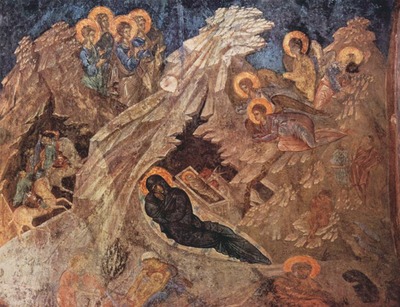 Life of Christ
The Nativity
Photograph by Wooofer (2018). Wikimedia Commons. Released under Creative Commons Attribution-ShareAlike 4.0 International (CC BY-SA 4.0). The underlying 14th-century fresco at Peribleptos Mistra is in the public domain.
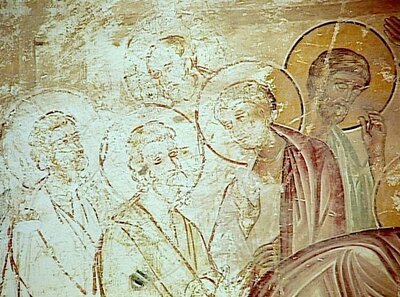 Life of Christ
The Incredulity of Thomas
Photograph from Réunion des Musées Nationaux (RMN). Wikimedia Commons. Public domain (the underlying 14th-century fresco is in the public domain).
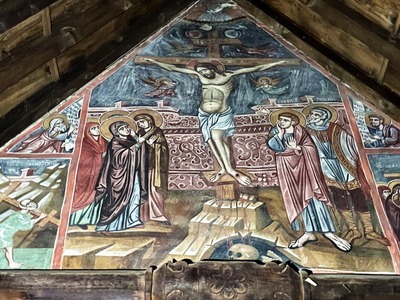 Life of Christ
The Crucifixion
Photograph by Croquemort Nestor (2025). Wikimedia Commons. Released under Creative Commons CC0 1.0 Universal Public Domain Dedication. The underlying 1494 fresco is in the public domain.
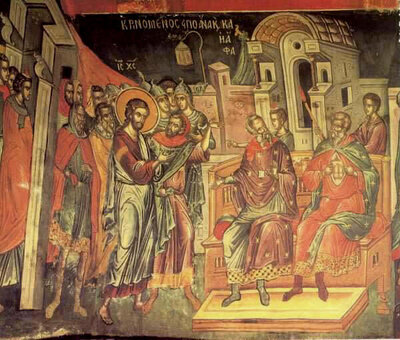 Life of Christ
Christ before Pilate
Photographic reproduction in the public domain (Wikimedia Commons; faithful reproduction of a two-dimensional public domain work). The underlying 1546 fresco by Theophanes the Cretan at Stavronikita Monastery, Mount Athos, is in the public domain.
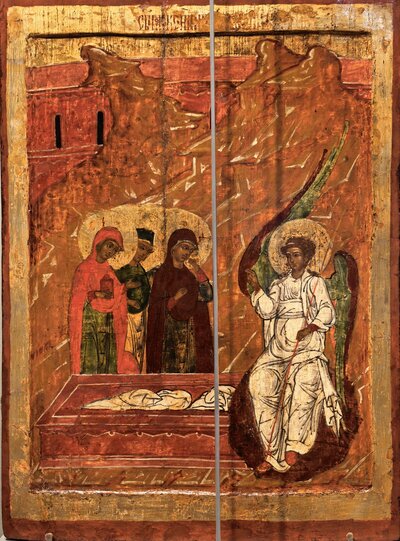 Life of Christ
The Myrrh-Bearing Women at the Tomb
Photograph by Wikimedia Commons user Александровы АГ. The underlying 17th-century Russian icon at the State Hermitage Museum is in the public domain.
 Life of Christ
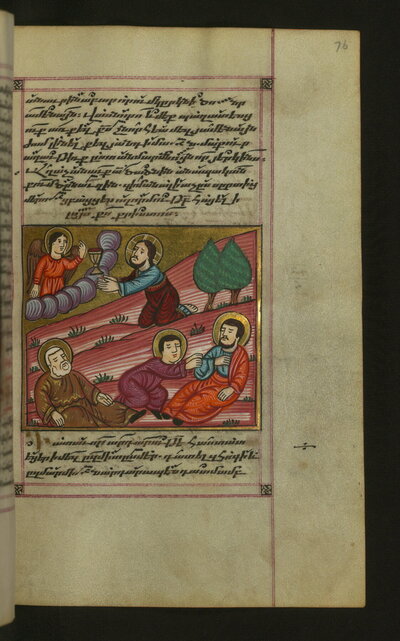
The Agony in the Garden
Photographic reproduction in the public domain (Wikimedia Commons; Walters Art Museum). Released under Creative Commons CC0 1.0 Universal Public Domain Dedication. The underlying 1678 Armenian hymnal page is in the public domain.
 Liturgical
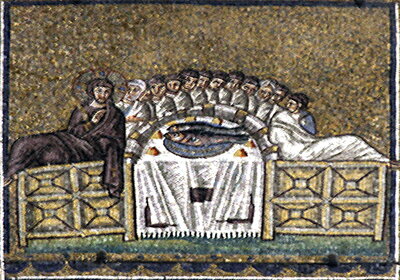
The Last Supper
Photograph by José Luiz Bernardes Ribeiro (2016). Wikimedia Commons. Released under Creative Commons Attribution-ShareAlike 4.0 International (CC BY-SA 4.0). The underlying early-6th-century mosaic is in the public domain.
 Liturgical
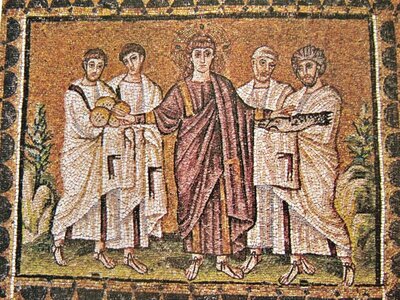
The Multiplication of the Loaves and Fishes
Photographic reproduction in the public domain (Wikimedia Commons; faithful reproduction of a two-dimensional public domain work). The underlying early-6th-century mosaic at Sant'Apollinare Nuovo, Ravenna, is in the public domain.
 Liturgical
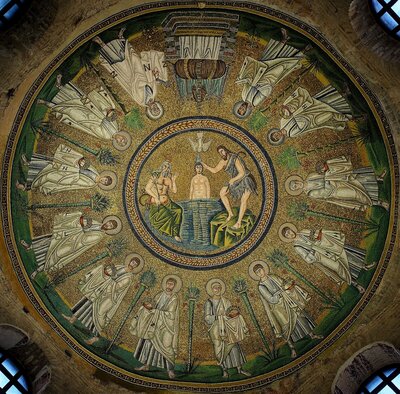
The Baptism of Christ
Photograph by Petar Milošević (2015). Wikimedia Commons. Released under Creative Commons Attribution-ShareAlike 4.0 International (CC BY-SA 4.0). The underlying late-5th / early-6th-century mosaic is in the public domain.
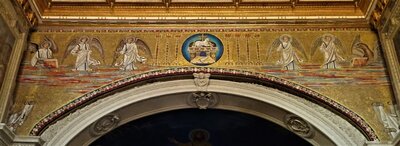 Liturgical
The Apex Lamb
Photograph by Hugo DK (2019). Wikimedia Commons. Released under Creative Commons Attribution-ShareAlike 4.0 International (CC BY-SA 4.0). The underlying 6th–7th-century mosaic is in the public domain.
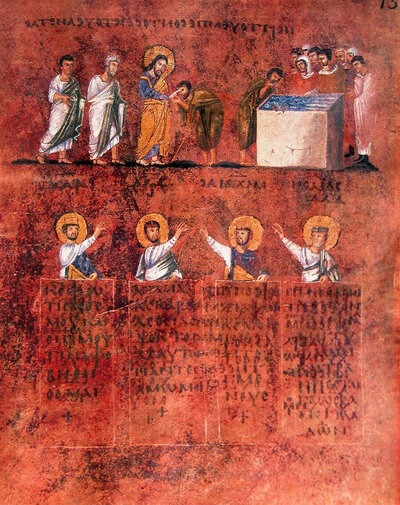 Liturgical
The Healing of the Blind Man
Photographic reproduction in the public domain (Wikimedia Commons; faithful reproduction of a two-dimensional public domain work). The underlying 6th-century Codex Purpureus Rossanensis (Diocesan Museum, Rossano Cathedral, Calabria) is in the public domain.
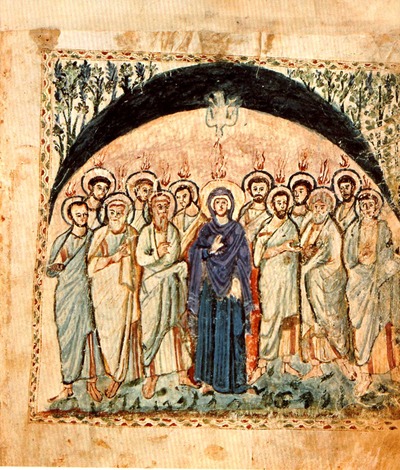 Liturgical
The Pentecost
Photographic reproduction in the public domain (Wikimedia Commons; faithful reproduction of a 6th-century manuscript folio). The underlying Rabbula Gospels (Plut. 1.56) is in the public domain.
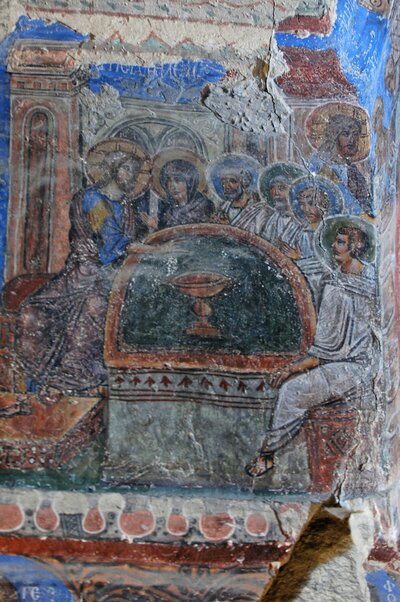 Liturgical
The Wedding at Cana
Photograph by Dosseman (Dick Osseman). Wikimedia Commons. Released under Creative Commons Attribution-ShareAlike 4.0 International (CC BY-SA 4.0). The underlying late-10th-century fresco is in the public domain.
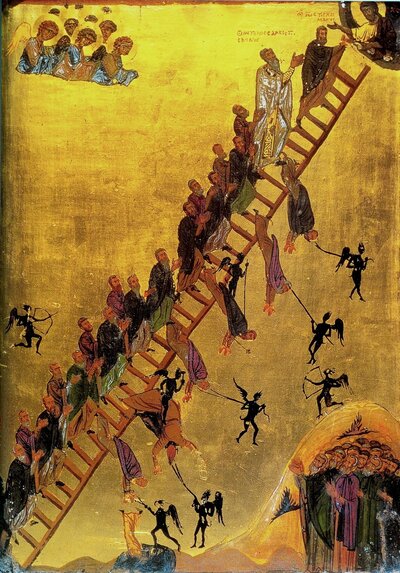 Liturgical
The Ladder of Divine Ascent
Photograph by Pvasiliadis (2007). Wikimedia Commons. Public domain (faithful reproduction of a 12th-century icon, which is itself in the public domain).
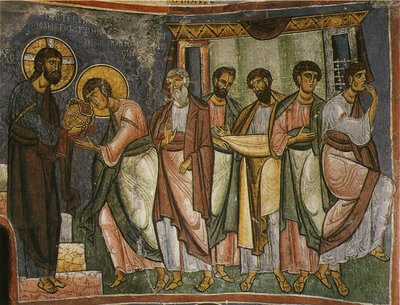 Liturgical
The Communion of the Apostles
Photographic reproduction in the public domain (Wikimedia Commons; faithful reproduction of a two-dimensional public domain work). The underlying 1106 fresco at Panagia tis Asinou is in the public domain.
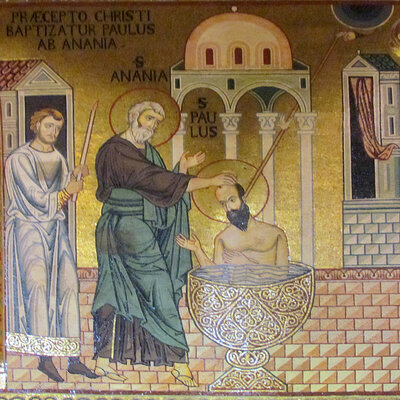 Liturgical
Ananias Lays Hands on Saul
Photograph by Gmihail (2013). Wikimedia Commons. Released under Creative Commons Attribution-ShareAlike 3.0 Serbia (CC BY-SA 3.0 RS). The underlying 12th-century mosaic is in the public domain.
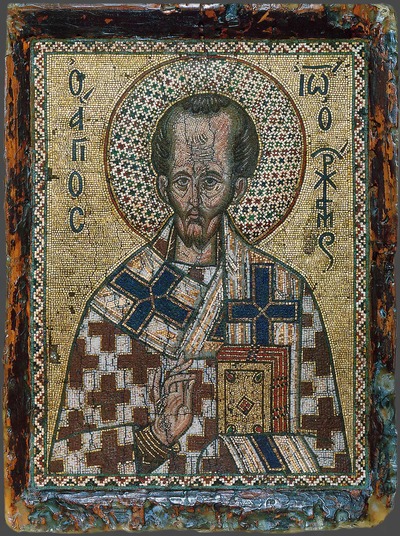 Liturgical
Saint John Chrysostom
Wikimedia Commons. Public domain (faithful photographic reproduction of a 14th-century icon). The underlying micro-mosaic at Vatopedi Monastery is in the public domain.
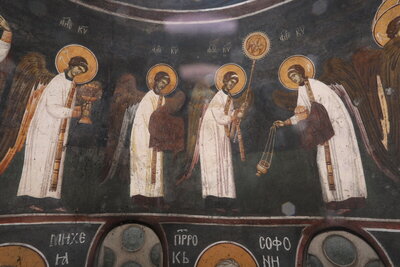 Liturgical
The Heavenly Liturgy
Photograph by BLAGO Fund, Inc. (2021). Wikimedia Commons. Released under Creative Commons Attribution 4.0 International (CC BY 4.0). The underlying c. 1320 fresco at Gračanica Monastery is in the public domain.
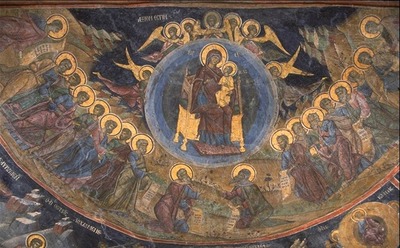 Liturgical
The Cozia Monastery Mural Program
Wikimedia Commons. Public domain (faithful reproduction of late-14th to 16th-century frescoes). The underlying frescoes at Cozia Monastery are in the public domain.
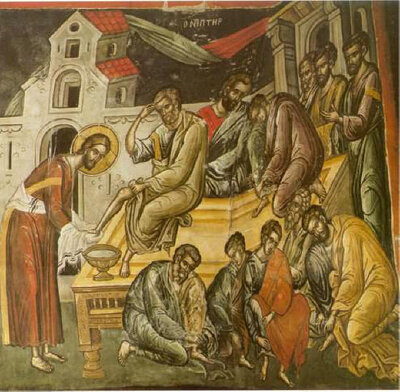 Liturgical
Christ Washes the Disciples' Feet
Photographic reproduction in the public domain (Wikimedia Commons; faithful reproduction of a two-dimensional public domain work). The underlying 1546 fresco by Theophanes the Cretan at Stavronikita Monastery, Mount Athos, is in the public domain.
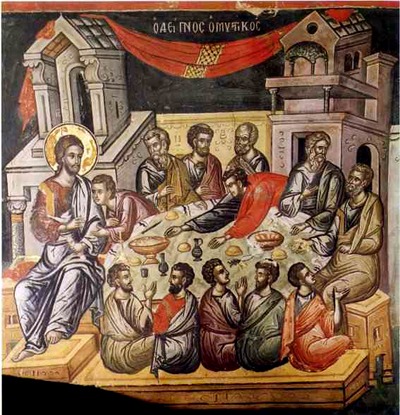 Liturgical
The Mystic Supper (Last Supper)
Wikimedia Commons. Faithful photographic reproduction of a 1546 fresco by Theophanes the Cretan. The underlying work is in the public domain.
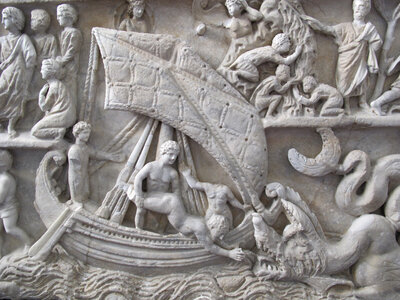 OT Typology
The Sign of Jonah
Photo by Sailko (2013). Wikimedia Commons. Released under Creative Commons Attribution 3.0 Unported (CC BY 3.0). The underlying late-3rd-century relief is in the public domain.
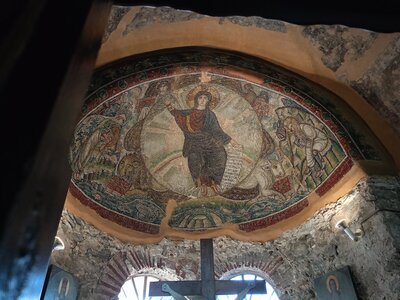 OT Typology
The Vision of Christ in Glory
Photograph by Giovanni Dall'Orto (2024). Wikimedia Commons. The photographer permits use for any purpose with attribution. The underlying 5th-century mosaic is in the public domain.
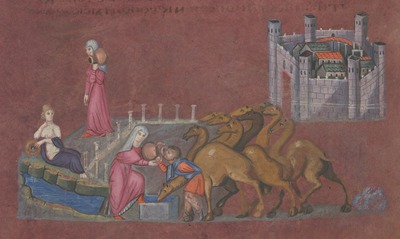 OT Typology
Rebecca at the Well
Photographic reproduction in the public domain (Wikimedia Commons; from the Yorck Project's *10,000 Masterworks of Painting*; faithful reproduction of a 6th-century manuscript folio). The underlying Vienna Genesis (Codex Vindobonensis Theol. gr. 31) is in the public domain.
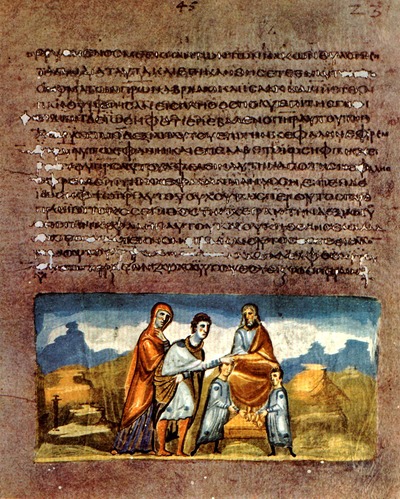 OT Typology
Jacob Blessing Ephraim and Manasseh
Photographic reproduction in the public domain (Wikimedia Commons; faithful reproduction of a 6th-century manuscript folio). The underlying Vienna Genesis is in the public domain.
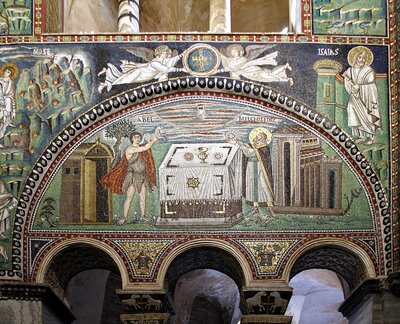 OT Typology
Abel and Melchizedek at the Altar
Photograph by José Luiz Bernardes Ribeiro (2016). Wikimedia Commons. Released under Creative Commons Attribution-ShareAlike 4.0 International (CC BY-SA 4.0). The underlying 6th-century mosaic is in the public domain.
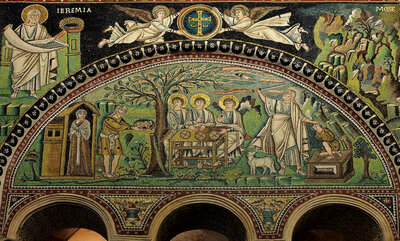 OT Typology
The Sacrifice of Isaac
Photo by Petar Milošević (2015). Wikimedia Commons. Released under Creative Commons Attribution-ShareAlike 4.0 International (CC BY-SA 4.0). The underlying 6th-century mosaic is in the public domain.
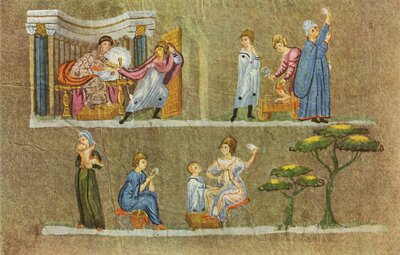 OT Typology
Joseph and Potiphar's Wife
Photographic reproduction in the public domain (Wikimedia Commons; The Yorck Project). The underlying late-6th-century manuscript page (Austrian National Library) is in the public domain.
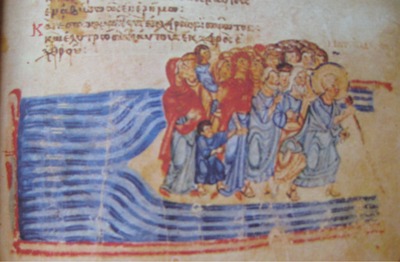 OT Typology
The Crossing of the Red Sea
Photographic reproduction in the public domain (Wikimedia Commons; faithful reproduction of a 9th-century manuscript folio published before 1931). The underlying Khludov Psalter (State Historical Museum, Moscow, MS D.129) is in the public domain.
 OT Typology
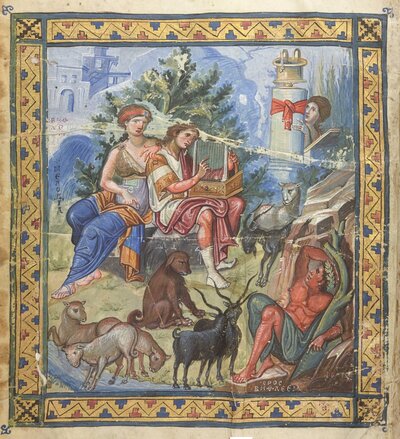
David Composing the Psalms
Photographic reproduction in the public domain (Wikimedia Commons; faithful reproduction of a 10th-century manuscript). The underlying Paris Psalter (BnF MS gr. 139) is in the public domain.
 OT Typology
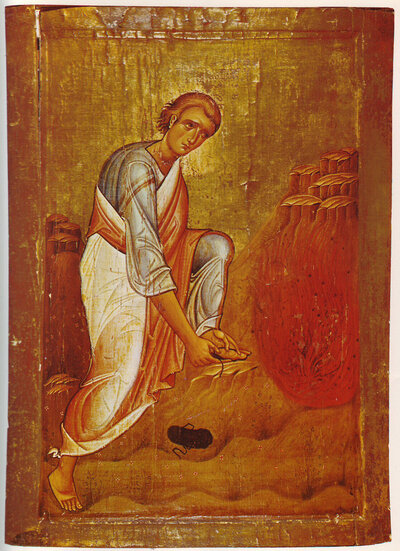
Moses and the Burning Bush
Photographic reproduction in the public domain (Wikimedia Commons, scanned 2008). The underlying 12th-century icon (92 × 64 cm) is in the public domain.
 OT Typology
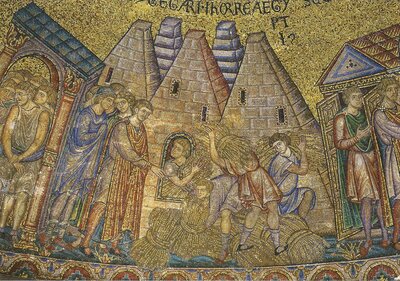
Joseph Gathering Corn
Photographic reproduction in the public domain (Wikimedia Commons; faithful reproduction of a 13th-century mosaic). The underlying San Marco mosaic is in the public domain.
 OT Typology
Pammakaristos Parekklesion: Old Testament Prophet
Photograph by Vmenkov (2010). Wikimedia Commons. Released under Creative Commons Attribution-ShareAlike 3.0 Unported (CC BY-SA 3.0) and GNU Free Documentation License 1.2+. The underlying c. 1310 mosaic at the Pammakaristos parekklesion is in the public domain.
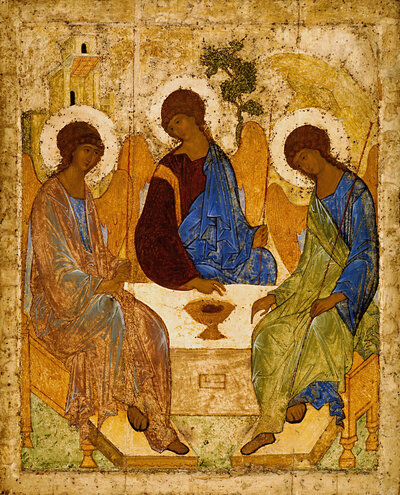 OT Typology
The Hospitality of Abraham
Photographic reproduction in the public domain (Wikimedia Commons, Google Art Project file). The underlying 15th-century icon (141.5 × 114 cm, tempera on panel) is in the public domain.
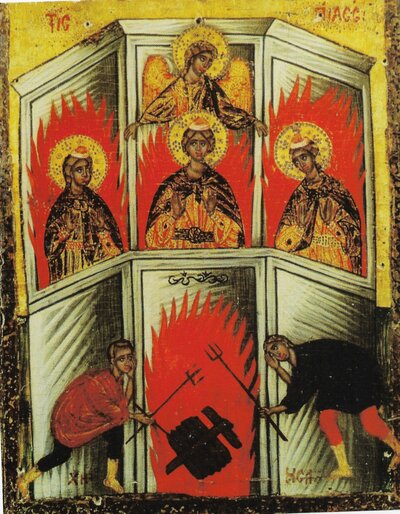 OT Typology
The Three Hebrews in the Fiery Furnace
Photograph by Michel Bakni (2020) via the Wikimedians of the Levant 'One Hundred Icon Project.' Wikimedia Commons. The underlying 16th-century icon is in the public domain.
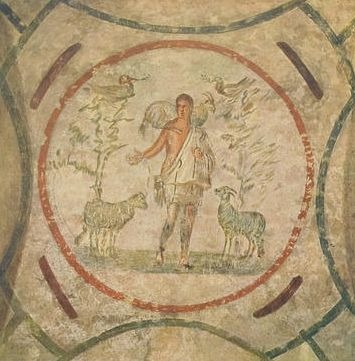 Pantocrator
The Good Shepherd
Photographic reproduction in the public domain (Joseph Wilpert documentation, 1903; faithful reproduction of a c. 225 AD fresco). The underlying catacomb fresco is in the public domain.
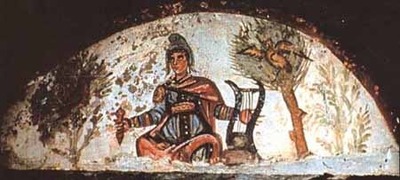 Pantocrator
Christ as Orpheus (Christ-Orpheus Arcosolium)
Photographic reproduction in the public domain (Wikimedia Commons). The underlying c. 4th-century catacomb fresco is in the public domain.
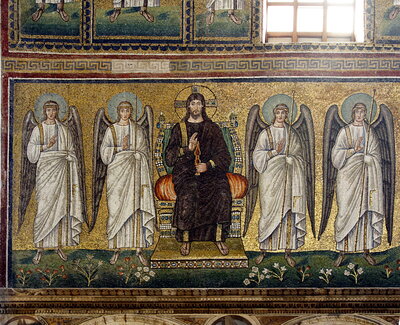 Pantocrator
Christ Enthroned with Angels
Photo by José Luiz Bernardes Ribeiro (2016). Wikimedia Commons. Released under Creative Commons Attribution-ShareAlike 4.0 International (CC BY-SA 4.0). The underlying 6th-century mosaic is in the public domain.
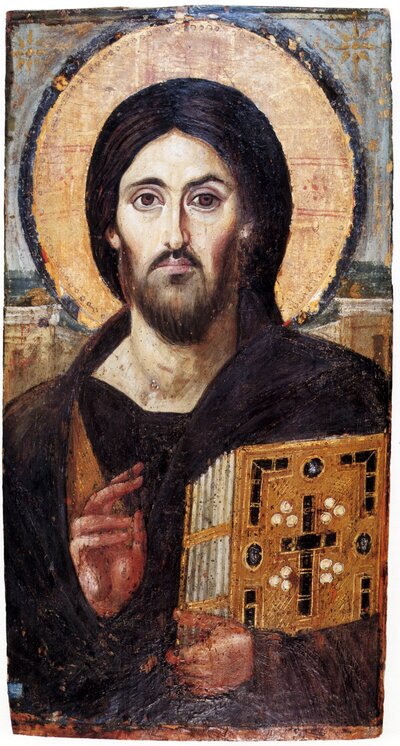 Pantocrator
Christ Pantocrator
Photographic reproduction in the public domain (Wikimedia Commons, file: Spas_vsederzhitel_sinay.jpg). The underlying 6th-century encaustic icon is in the public domain by age. Per Wikimedia policy, faithful 2D reproductions of public-domain works are themselves public domain.
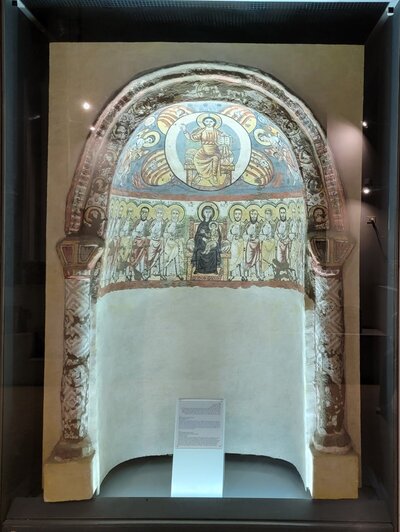 Pantocrator
Christ in the Mandorla
Photograph by Votpuske (2023). Wikimedia Commons. Released under Creative Commons Attribution-ShareAlike 4.0 International (CC BY-SA 4.0). The underlying 6th–7th-century Bawit niche painting (Coptic Museum, Cairo) is in the public domain.
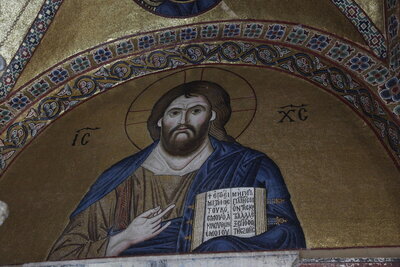 Pantocrator
Christ Pantocrator
Photo by Hans A. Rosbach (2009). Wikimedia Commons. Released under Creative Commons Attribution-ShareAlike 3.0 Unported (CC BY-SA 3.0). The underlying 11th-century mosaic is in the public domain.
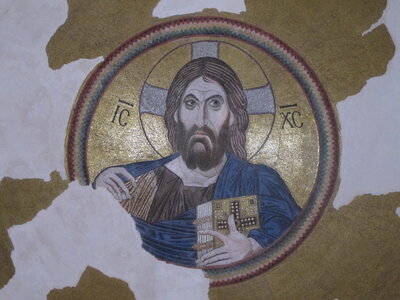 Pantocrator
Christ Pantocrator
Photo by Jacob Freeland (2023). Wikimedia Commons. Released under Creative Commons Attribution 4.0 International (CC BY 4.0). The underlying 11th-century mosaic is in the public domain.
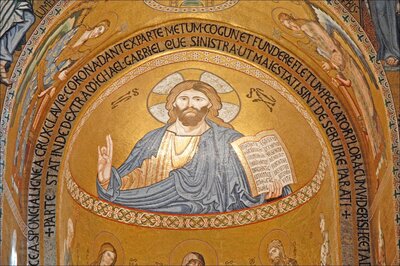 Pantocrator
Christ Pantocrator of the Apse
Photograph by Jean-Pierre Dalbéra (2012). Wikimedia Commons. Released under Creative Commons Attribution 2.0 Generic (CC BY 2.0). The underlying 12th-century mosaic is in the public domain.
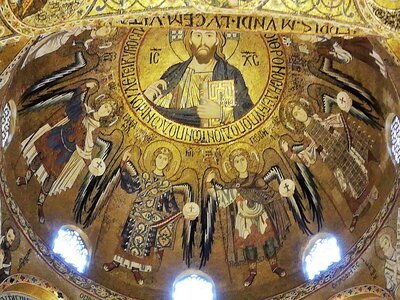 Pantocrator
Christ Pantocrator
Photo by Effems (2019). Wikimedia Commons. Released under Creative Commons Attribution-ShareAlike 4.0 International (CC BY-SA 4.0). The underlying 12th-century mosaic is in the public domain.
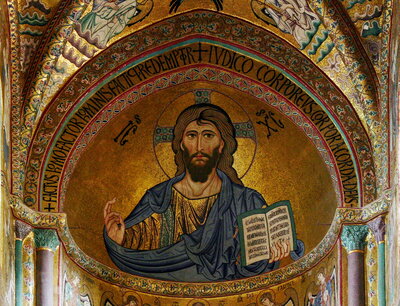 Pantocrator
Christ Pantocrator
Photo by José Luiz Bernardes Ribeiro (2015). Wikimedia Commons. Released under Creative Commons Attribution-ShareAlike 4.0 International (CC BY-SA 4.0). The underlying 12th-century mosaic is in the public domain.
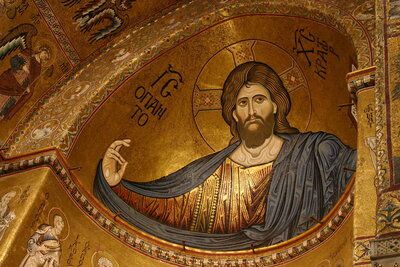 Pantocrator
Christ Pantocrator
Photo by José Luiz Bernardes Ribeiro (2015). Wikimedia Commons. Released under Creative Commons Attribution-ShareAlike 4.0 International (CC BY-SA 4.0). The underlying 12th-century mosaic is in the public domain.
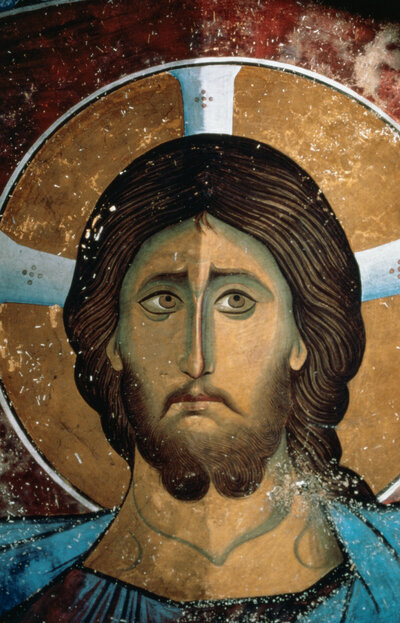 Pantocrator
Christ Pantocrator
Photo by David Winfield (1968–1973), MSBZ004_BF_S_1979_1913D, Image Collections and Fieldwork Archives, Dumbarton Oaks, Trustees for Harvard University, Washington DC. Released under Creative Commons CC0 1.0 Universal Public Domain Dedication. The underlying 12th-century fresco is in the public domain.
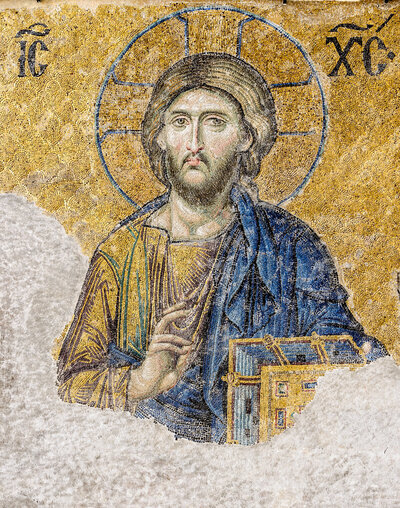 Pantocrator
Christ Pantocrator
Photo by Myrabella (2012). Wikimedia Commons. Released under Creative Commons CC0 1.0 Universal Public Domain Dedication. The underlying 13th-century mosaic is in the public domain.
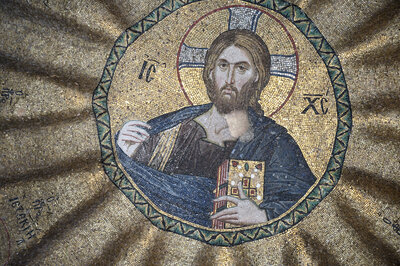 Pantocrator
Christ Pantocrator
Photo by Dick Osseman (Dosseman, 2010). Wikimedia Commons. Released under Creative Commons Attribution-ShareAlike 4.0 International (CC BY-SA 4.0). The underlying 14th-century mosaic is in the public domain.
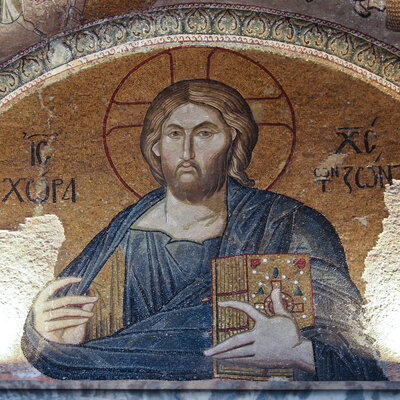 Pantocrator
Christ Pantocrator
Photo by Guillaume Piolle (2011). Wikimedia Commons. Released under Creative Commons Attribution 2.0 Generic (CC BY 2.0). The underlying 14th-century mosaic is in the public domain.
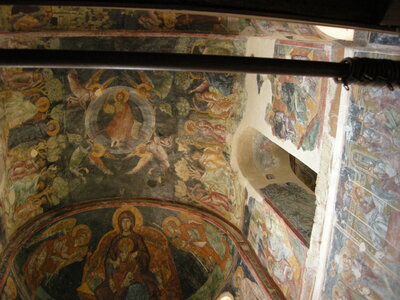 Pantocrator
Christ Pantocrator
Photo by Sailko (2008). Wikimedia Commons. Released under multiple licenses (GFDL 1.2+ / CC BY-SA 3.0 / CC BY 2.5); attributed here under CC BY-SA 3.0. The underlying 15th-century fresco is in the public domain.
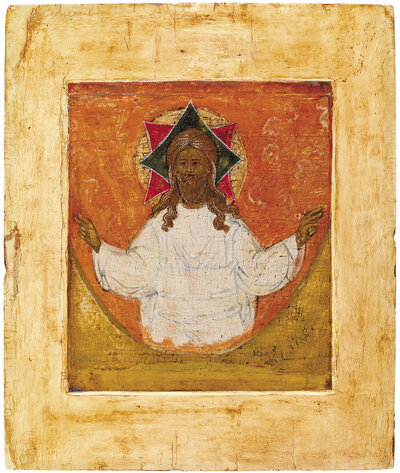 Pantocrator
The Lord Sabaoth
Photographic reproduction in the public domain (Wikimedia Commons; faithful reproduction of a public-domain icon). The underlying mid-17th-century Russian icon (private collection, Old Believer provenance) is in the public domain.
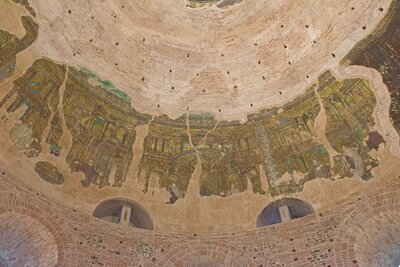 Saints
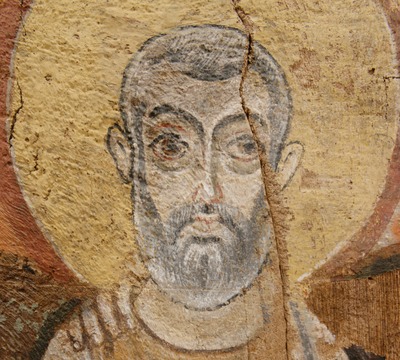
The Cloud of Witnesses
Photograph by Wikimedia Commons user Ymblanter (2021). Released under Creative Commons Attribution-ShareAlike 4.0 International (CC BY-SA 4.0). The underlying late-4th / early-5th-century mosaic is in the public domain.
 Saints
Christ and Saint Menas (the Bawit Icon)
Photograph: Musée du Louvre, Paris (Acc. E 11565). Wikimedia Commons. The underlying c. 6th–8th-century Coptic panel icon is in the public domain. Photographic reproduction in the public domain (CC0 / structured-data convention).
 Saints
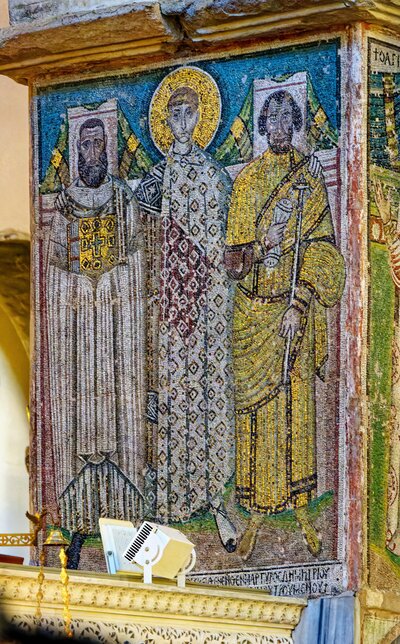
Saint Demetrios
Photo by Holger Uwe Schmitt (2022). Wikimedia Commons. Released under Creative Commons Attribution-ShareAlike 4.0 International (CC BY-SA 4.0). The underlying 6th–7th century mosaic is in the public domain.
 Saints
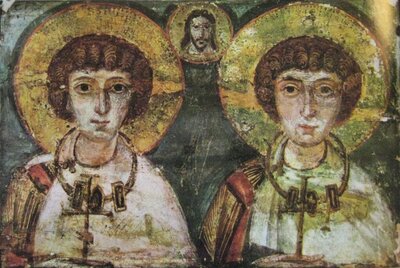
Saints Sergius and Bacchus
Photographic reproduction in the public domain (Wikimedia Commons, photographed by user Shakko, 2008). The underlying 6th–7th-century encaustic icon is in the public domain.
 Saints
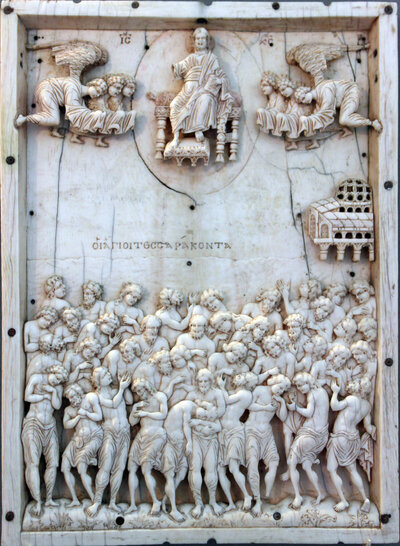
The Forty Martyrs of Sebaste
Photo by Anagoria (2013). Wikimedia Commons. Dual-licensed under GFDL 1.2+ and CC BY 3.0. The underlying 10th-century ivory plaque is in the public domain.
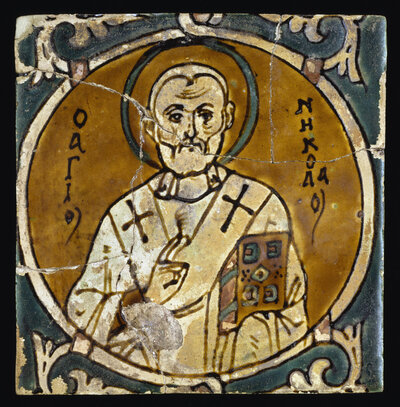 Saints
Saint Nicholas
Image courtesy of the Walters Art Museum, Baltimore (accession 48.2086.1). Released under Creative Commons Public Domain Mark 1.0. The underlying 10th-century ceramic tile is in the public domain.
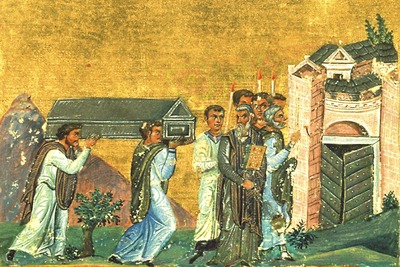 Saints
The Martyrdom of Ignatius of Antioch
Photographic reproduction in the public domain (Wikimedia Commons; faithful reproduction of a 10th-century manuscript folio). The underlying Menologion of Basil II is in the public domain.
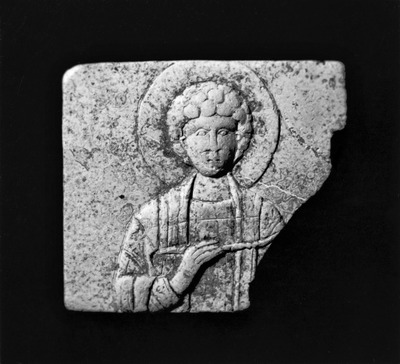 Saints
Saint Panteleimon
Walters Art Museum, Baltimore (Acc. 41.227). Released under Creative Commons Attribution-ShareAlike 3.0 (CC BY-SA 3.0) per the Walters' 2012 mass-release. The underlying 11th-century steatite is in the public domain.
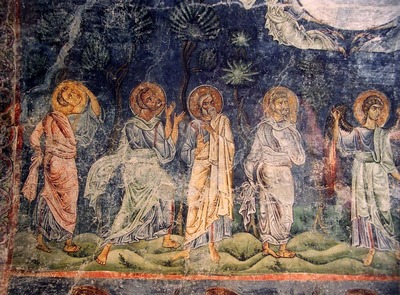 Saints
The Saint Sophia Ohrid Fresco Program
Photograph by Raso mk (2004). Wikimedia Commons. Public domain in North Macedonia and the United States. The underlying 11th-century frescoes are in the public domain.
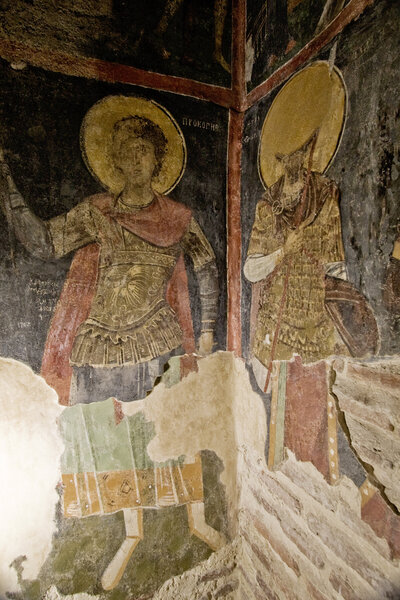 Saints
Saint Nicholas
Photograph by Ann Wuyts. Wikimedia Commons. Released under Creative Commons Attribution 2.0 Generic (CC BY 2.0). The underlying frescoes (11th c. and 1259) are in the public domain.
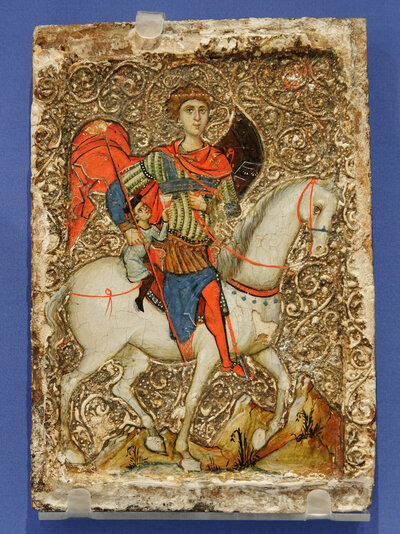 Saints
Saint George
Photo by Marie-Lan Nguyen (2012). Wikimedia Commons. Released under Creative Commons Attribution 2.5 Generic (CC BY 2.5). The underlying 13th-century icon is in the public domain. Held by the British Museum, London (accession 1984.0601.1).
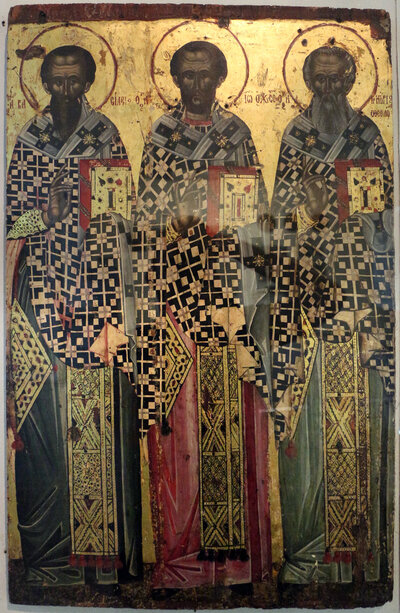 Saints
The Three Hierarchs
Photo by Sailko (2015). Wikimedia Commons. Released under Creative Commons Attribution-ShareAlike 4.0 International (CC BY-SA 4.0). The underlying 14th-century icon is in the public domain.
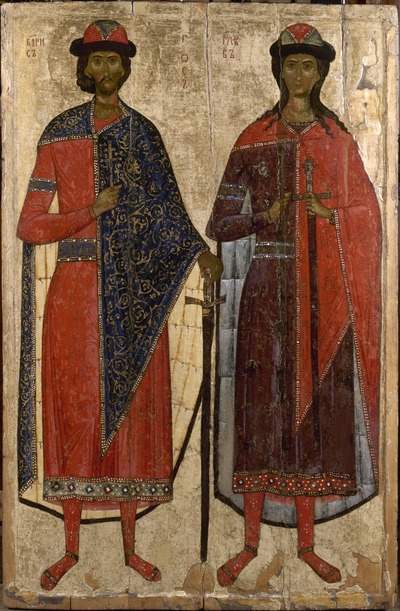 Saints
Saints Boris and Gleb
Google Art Project / Wikimedia Commons. The underlying mid-14th-century icon at the State Russian Museum is in the public domain. Photographic reproduction released under CC0/PD; structured metadata under CC BY-SA 4.0.
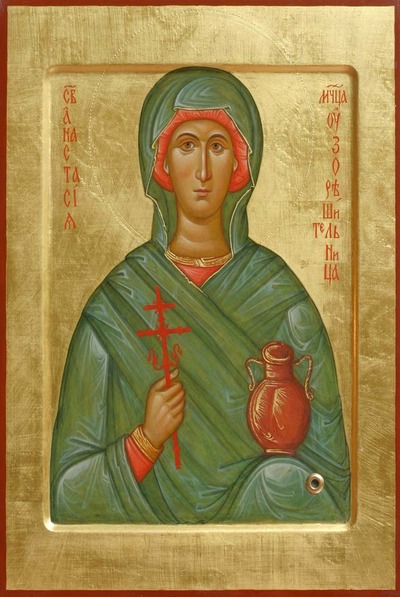 Saints
Saint Anastasia of Sirmium
Wikimedia Commons. Faithful photographic reproduction of a late-14th-century icon at the Hermitage. The underlying icon is in the public domain.
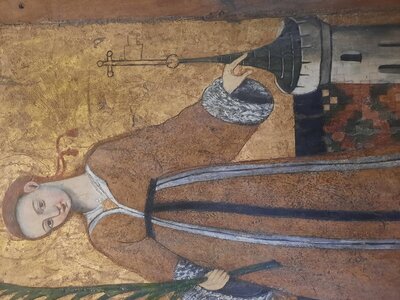 Saints
Saint Barbara
Photograph by أحمد ناجي / Ahmed Naji (2024). Wikimedia Commons. Released under Creative Commons Attribution-ShareAlike 4.0 International (CC BY-SA 4.0). The underlying 15th-century icon at the Coptic Museum, Cairo, is in the public domain.
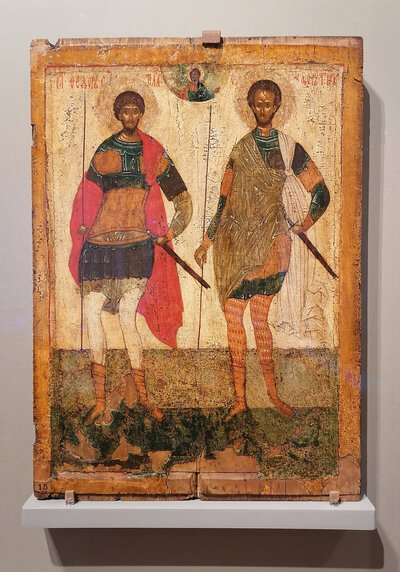 Saints
Saints Theodore Stratelates and Theodore Tyron
Photo by Netelo (2020). Wikimedia Commons. Released under Creative Commons Attribution-ShareAlike 4.0 International (CC BY-SA 4.0). The underlying 15th-century icon is in the public domain.
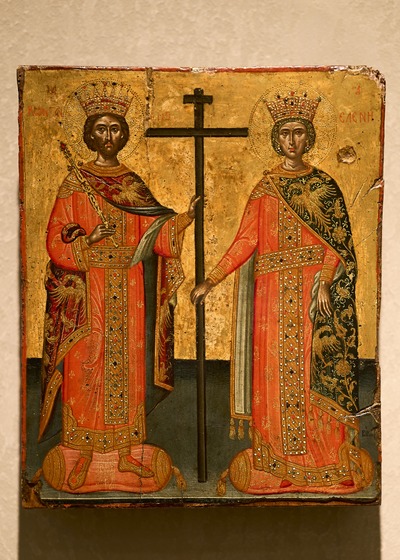 Saints
Saints Constantine and Helena with the True Cross
Wikimedia Commons. Faithful photographic reproduction of a post-Byzantine icon at the Byzantine and Christian Museum, Athens. The underlying icon is in the public domain.
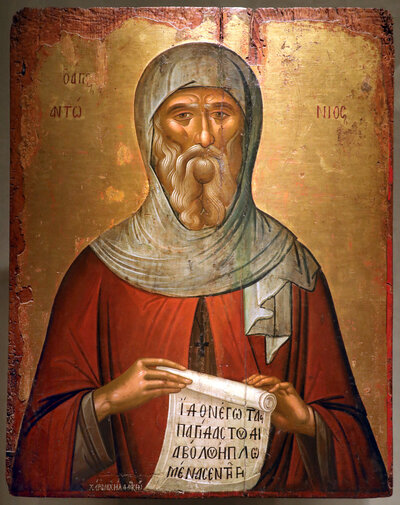 Saints
Saint Anthony of the Desert
Photo by Francesco Bini / Sailko (2023). Wikimedia Commons. Released under Creative Commons Attribution-ShareAlike 4.0 International (CC BY-SA 4.0). The underlying 16th-century icon by Michael Damaskenos is in the public domain.
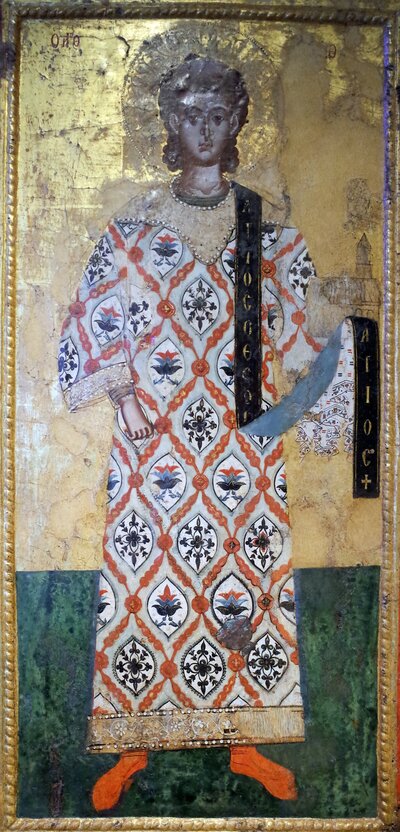 Saints
Saint Stephen the Protomartyr
Photograph in the public domain (Wikimedia Commons, file: St_Stephen.tif, photographed by user Racconish, 2016). The underlying 17th-century icon is in the public domain.
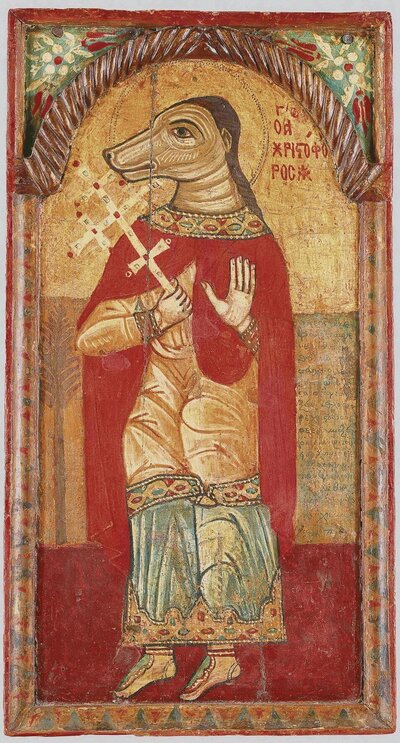 Saints
Saint Christopher Cynocephalus
Image courtesy of the Byzantine and Christian Museum, Athens (accession ΒΧΜ 01571), via the Wikimedia Commons. Public domain. The underlying 17th-century icon is in the public domain.
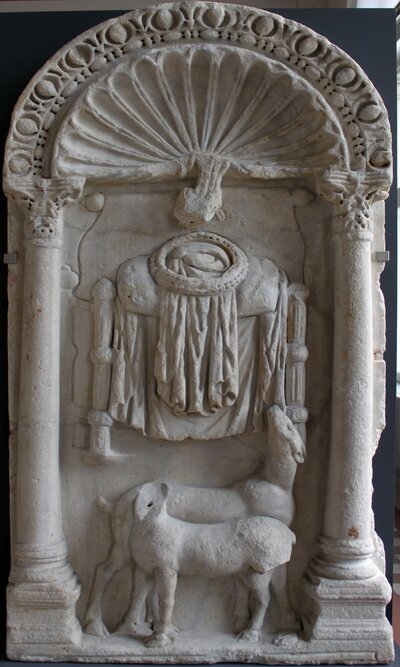 Second Coming
The Hetoimasia
Photograph by Anagoria (2013). Wikimedia Commons. Released under Creative Commons Attribution 3.0 Unported (CC BY 3.0). The underlying c. 400 Byzantine marble relief is in the public domain.
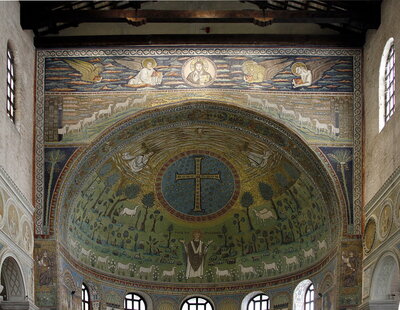 Second Coming
The Heavenly Jerusalem
Photo by José Luiz Bernardes Ribeiro (2016). Wikimedia Commons. Released under Creative Commons Attribution-ShareAlike 4.0 International (CC BY-SA 4.0). The underlying 6th–7th-century mosaic is in the public domain.
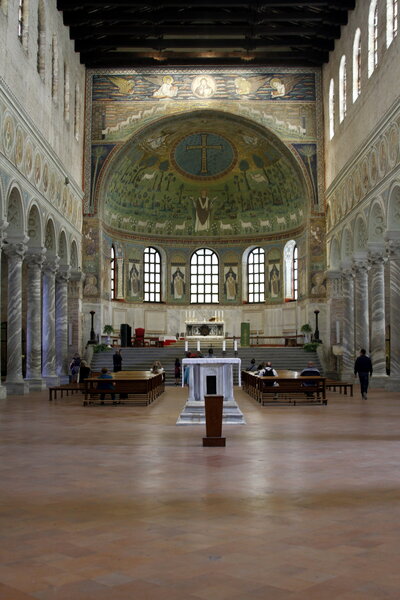 Second Coming
The Cosmic Cross
Photo by José Luiz Bernardes Ribeiro (2016). Wikimedia Commons. Released under Creative Commons Attribution-ShareAlike 4.0 International (CC BY-SA 4.0). The underlying 6th-century mosaic is in the public domain.
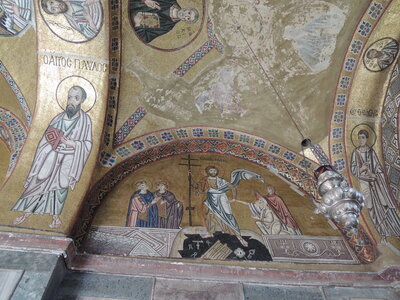 Second Coming
The Anastasis
Photo by Shakko (Sofia Bagdasarova, 2014). Wikimedia Commons. Released under Creative Commons Attribution-ShareAlike 4.0 International (CC BY-SA 4.0). The underlying 11th-century mosaic is in the public domain.
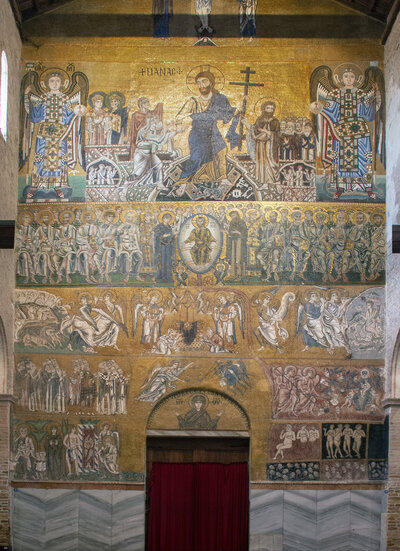 Second Coming
The Last Judgment
Photo by Ismoon (2013, uploaded 2019). Wikimedia Commons. Released under Creative Commons Attribution-ShareAlike 4.0 International (CC BY-SA 4.0). The underlying 12th–13th-century mosaic is in the public domain.
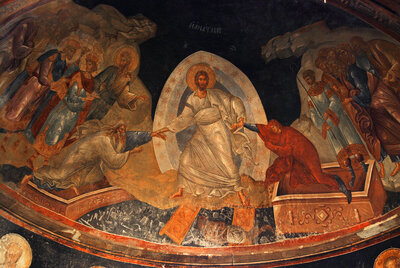 Second Coming
The Anastasis
Photo by Joseph Kranak (2009). Wikimedia Commons. Released under Creative Commons Attribution 2.0 Generic (CC BY 2.0). The underlying 14th-century fresco is in the public domain.
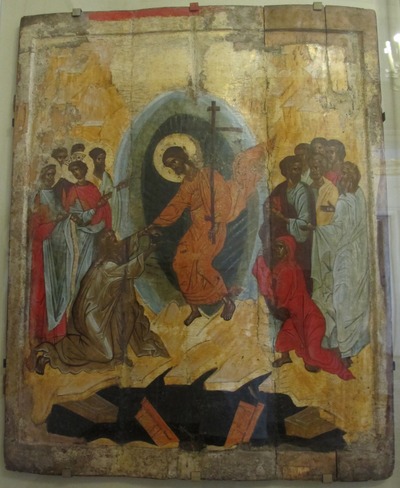 Second Coming
The Anastasis (Resurrection)
Photograph by Sailko (2011). Wikimedia Commons. Released under Creative Commons Attribution-ShareAlike 3.0 Unported (CC BY-SA 3.0) and GNU Free Documentation License 1.2+. The underlying late 15th-century Novgorod-school icon at the State Russian Museum is in the public domain.
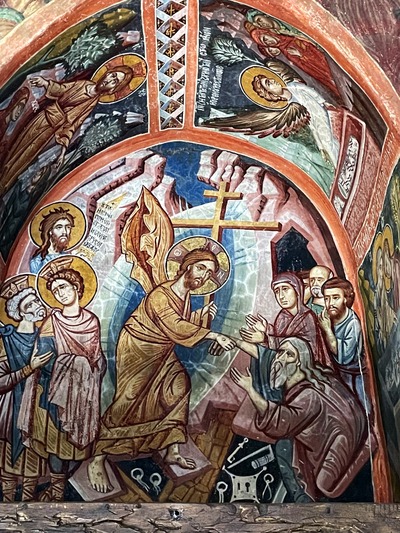 Second Coming
The Anastasis (Resurrection)
Photograph by Croquemort Nestor (2025). Wikimedia Commons. Released under Creative Commons CC0 1.0 Universal Public Domain Dedication. The underlying 1494 fresco is in the public domain.
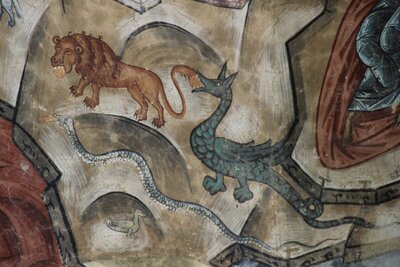 Second Coming
The Lion and the Dragon
Photograph by Gary Todd (2016). Wikimedia Commons. Released under Creative Commons CC0 1.0 Universal Public Domain Dedication. The underlying c. 1547 fresco at Voroneț Monastery is in the public domain.
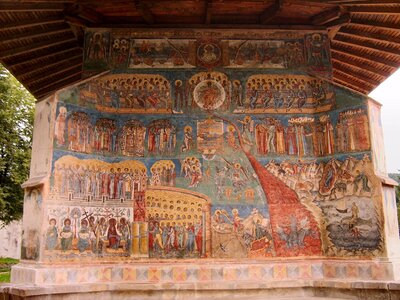 Second Coming
The Last Judgment
Photo by Alessio Damato (2006). Wikimedia Commons. Multi-licensed (GFDL 1.2+ / CC BY-SA 3.0). Cited under CC BY-SA 3.0. The underlying 16th-century fresco is in the public domain.
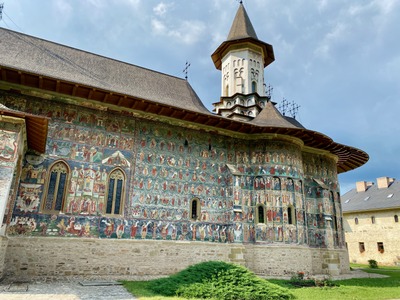 Second Coming
The Sucevița Fresco Program (Interior Wall View)
Photograph by Josep Renalias (2021). Wikimedia Commons. Released under Creative Commons Attribution 4.0 International (CC BY 4.0). The underlying c. 1602–1604 frescoes at Sucevița Monastery are in the public domain.
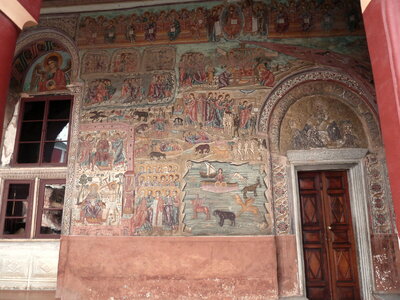 Second Coming
The Last Judgment
Photo by Aroche (2011). Wikimedia Commons. Released under Creative Commons Attribution-ShareAlike 3.0 Unported (CC BY-SA 3.0). The underlying 18th-century fresco is in the public domain.
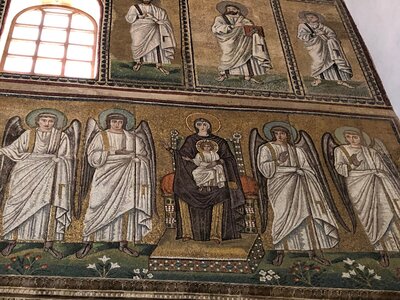 Theotokos
Theotokos Enthroned with the Magi
Photo by Marie Thérèse Hébert & Jean Robert Thibault (2019). Wikimedia Commons. Released under Creative Commons Attribution-ShareAlike 2.0 Generic (CC BY-SA 2.0). The underlying 6th-century mosaic is in the public domain.
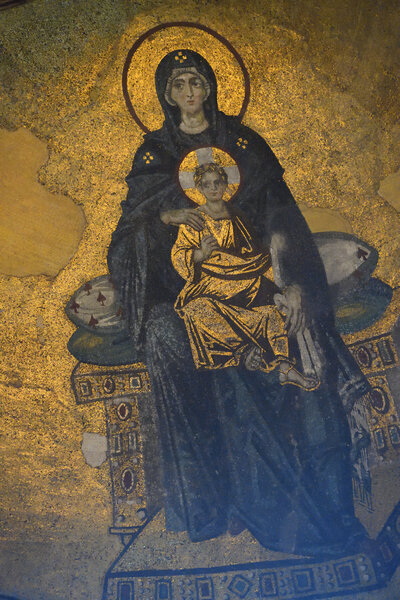 Theotokos
Theotokos of the Apse
Photo by Dick Osseman (Dosseman, 2019). Wikimedia Commons. Released under Creative Commons Attribution-ShareAlike 4.0 International (CC BY-SA 4.0). The underlying 9th-century mosaic is in the public domain.
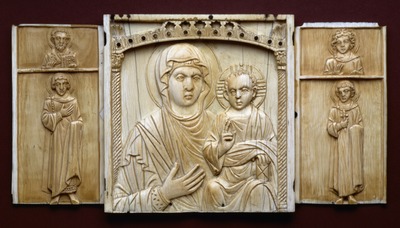 Theotokos
Triptych Icon of the Virgin and Child with Saints
Walters Art Museum, Baltimore (Acc. 71.158). Released under Creative Commons Attribution-ShareAlike 3.0 (CC BY-SA 3.0) per the Walters' 2012 mass-release of collection imagery to Wikimedia Commons. The underlying 10th-century ivory is in the public domain.
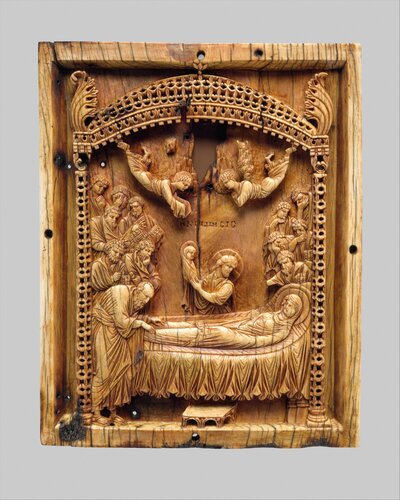 Theotokos
The Dormition of the Theotokos
Photographic reproduction in the public domain (Wikimedia Commons; Metropolitan Museum of Art Open Access). Released under Creative Commons CC0 1.0 Universal Public Domain Dedication. The underlying late-10th-century Byzantine ivory plaque (18.6 × 14.8 cm) is in the public domain.
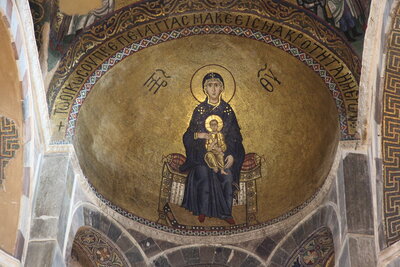 Theotokos
Theotokos of the Apse
Photo by Hans A. Rosbach (2009). Wikimedia Commons. Released under Creative Commons Attribution-ShareAlike 3.0 Unported (CC BY-SA 3.0). The underlying 11th-century mosaic is in the public domain.
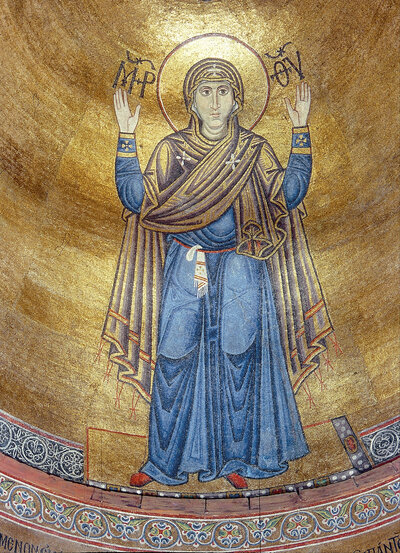 Theotokos
The Virgin Orans
Photographic reproduction in the public domain (Wikimedia Commons, file: Oranta-Kyiv.jpg, source Google Arts & Culture). The underlying 11th-century mosaic is in the public domain.
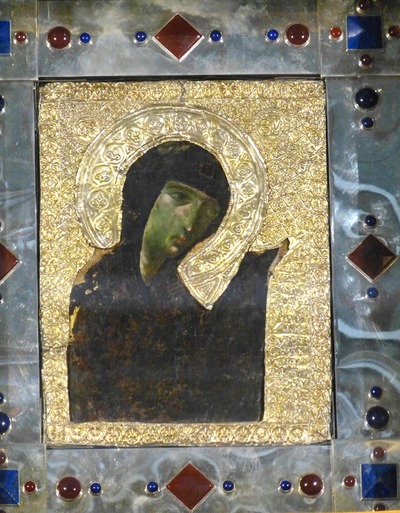 Theotokos
Theotokos Agiosoritissa
Photograph by Wolfgang Sauber (2017). Wikimedia Commons. Released under Creative Commons Attribution-ShareAlike 4.0 International (CC BY-SA 4.0). The underlying 11th–12th-century icon at Spoleto Cathedral is in the public domain.
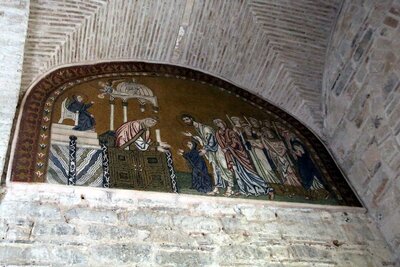 Theotokos
The Presentation of the Theotokos
Photo by Giovanni Dall'Orto (2025). Wikimedia Commons. Released under Creative Commons Attribution-Share Alike 2.5 Italy (CC BY-SA 2.5 IT). The underlying 11th-century mosaic is in the public domain.
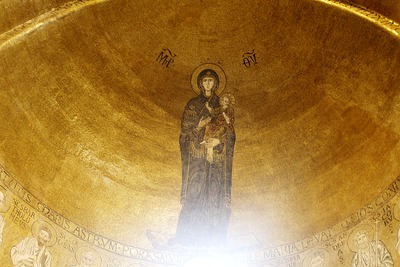 Theotokos
The Theotokos Hodegetria
Photograph by José Luiz Bernardes Ribeiro (2016). Wikimedia Commons. Released under Creative Commons Attribution-ShareAlike 4.0 International (CC BY-SA 4.0). The underlying 11th–12th century mosaic is in the public domain.
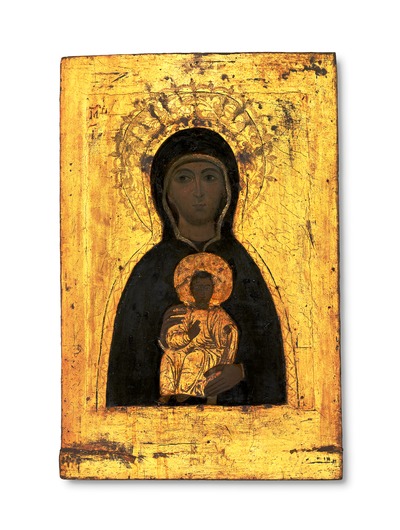 Theotokos
The Nicopeia (Theotokos Nikopoios — Virgin Bringer of Victory)
Wikimedia Commons (faithful photographic reproduction). Released under Creative Commons Attribution-ShareAlike 4.0 International (CC BY-SA 4.0). The underlying c. 1100–1120 Komnenian-era icon is in the public domain.
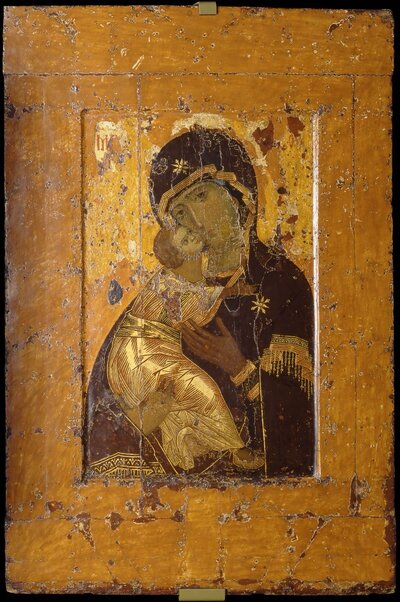 Theotokos
Theotokos of Vladimir
Photographic reproduction in the public domain (Wikimedia Commons, file: Vladimirskaja_ikona_Božiej_Materi.jpg). Source: Tretyakov Gallery CD-ROM (2004). The underlying 12th-century icon (104 × 69 cm, tempera on panel) is in the public domain.
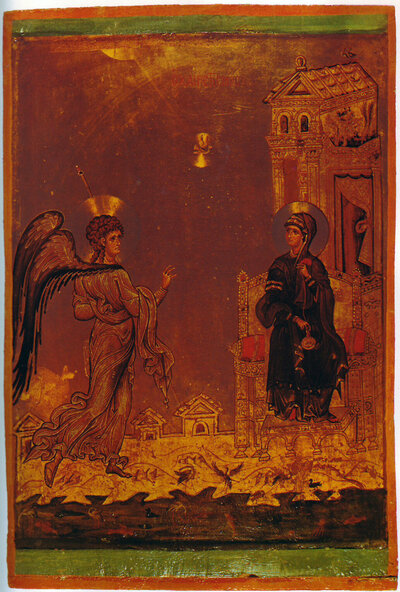 Theotokos
The Annunciation
Photographic reproduction in the public domain (Wikimedia Commons, file: Annunciation_Icon_Sinai_12th_century.jpg, scanned 2008). The underlying late-12th-century icon (61 × 42 cm, tempera on panel) is in the public domain.
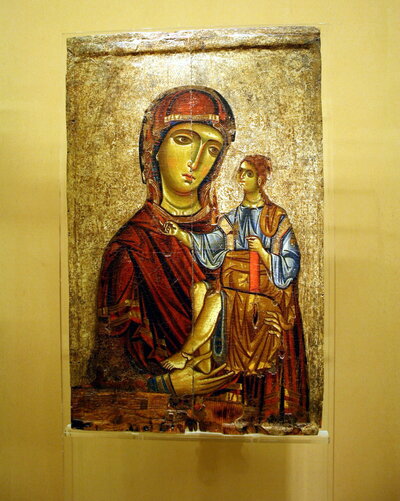 Theotokos
Theotokos Hodegetria
Photo by Giovanni Dall'Orto (2009), Byzantine and Christian Museum, Athens. Wikimedia Commons. Released under attribution-only license (cited per the photographer's terms). The underlying 13th-century icon is in the public domain.
 Theotokos
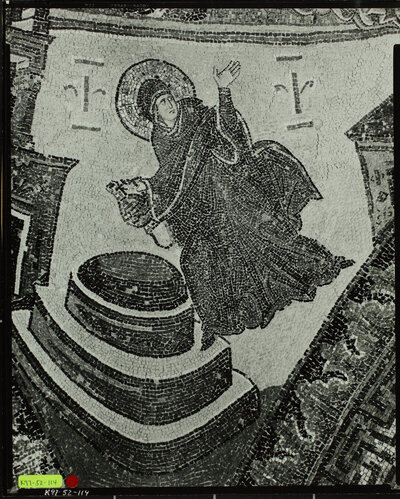
The Annunciation at the Well
Photo by Byzantine Institute staff (1952), MSBZ004-ICFA-KC-BIA-0366. Image Collections and Fieldwork Archives, Dumbarton Oaks, Trustees for Harvard University, Washington DC. Released under Creative Commons CC0 1.0 Universal Public Domain Dedication. The underlying 14th-century mosaic is in the public domain.
 Theotokos
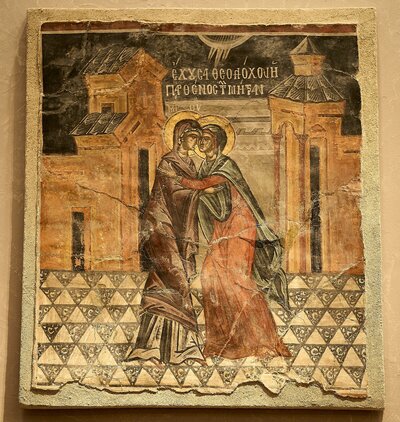
The Visitation
Photograph by George E. Koronaios (2023). Wikimedia Commons. Released under Creative Commons Attribution-ShareAlike 4.0 International (CC BY-SA 4.0). The underlying 1751 fresco is in the public domain.