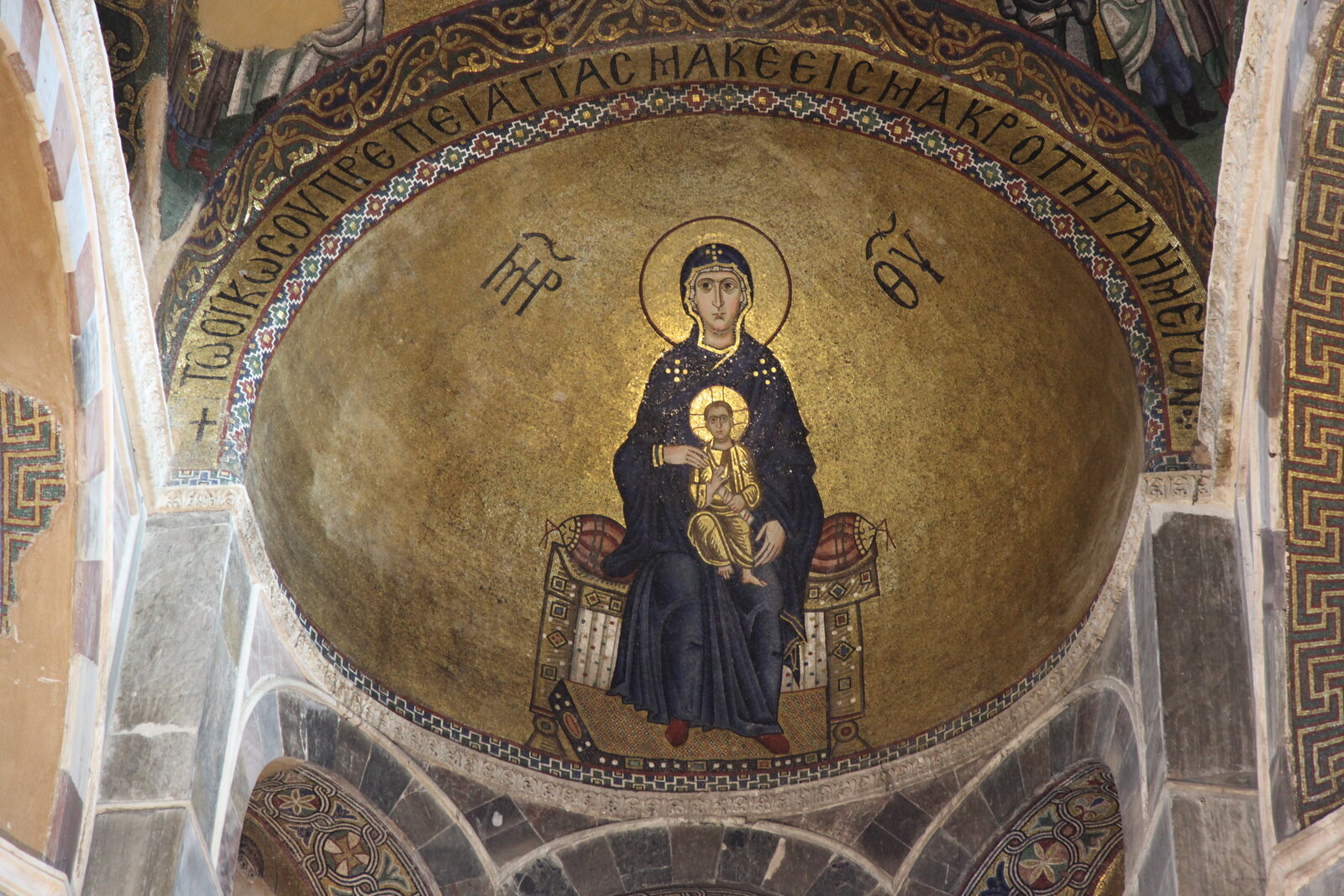
Theotokos of the Apse
Apse Conch Mosaic, Hosios Loukas
Doctrinal reflection
Look up. The mother and child are above the altar.
In the apse of the Hosios Loukas catholicon, in the conch directly over the high altar, the 11th-century mosaicists placed the Theotokos with the Christ-child on her lap. This is theological geometry. As the priest holds the bread and says "this is my body," the worshipper looks up and sees the body the bread refers to — held in his mother's arms, the same body, the real one.
Hebrews 10:5 puts it directly. The author quotes Psalm 40 as Christ's words at the incarnation: "a body hast thou prepared me." The body that was prepared was prepared inside this woman. The body that is remembered at the table is the same body. The body that will return at the parousia is the same body. There is one body, one incarnation, one Christ — and the Hosios Loukas apse stages all three locations of him.
GLM holds the memorial view. The bread and cup proclaim Christ's death until he comes (1 Cor 11:26), and the Spirit, not the elements, mediates his presence. We do not hold that the Eucharist contains Christ's body in the metaphysical sense the Byzantines and the Catholics do. But we agree with the apse mosaic on the deeper claim: the Christ born of Mary is the same Christ who said "this is my body," is the same Christ who is coming back. The incarnation was real. The communion table points to that real incarnation. The Theotokos icon over the altar confesses what every faithful communion service confesses: he had a body, he has it still, he is bringing it with him.
When you preach the incarnation, do not speak of it abstractly. The Word became flesh. The flesh was born. The flesh was held. The flesh died. The flesh rose. The flesh is coming.
The mother holding her child in this apse is a reminder, in eleven-hundred-year-old gold tesserae, that the body of Christ is not a metaphor.