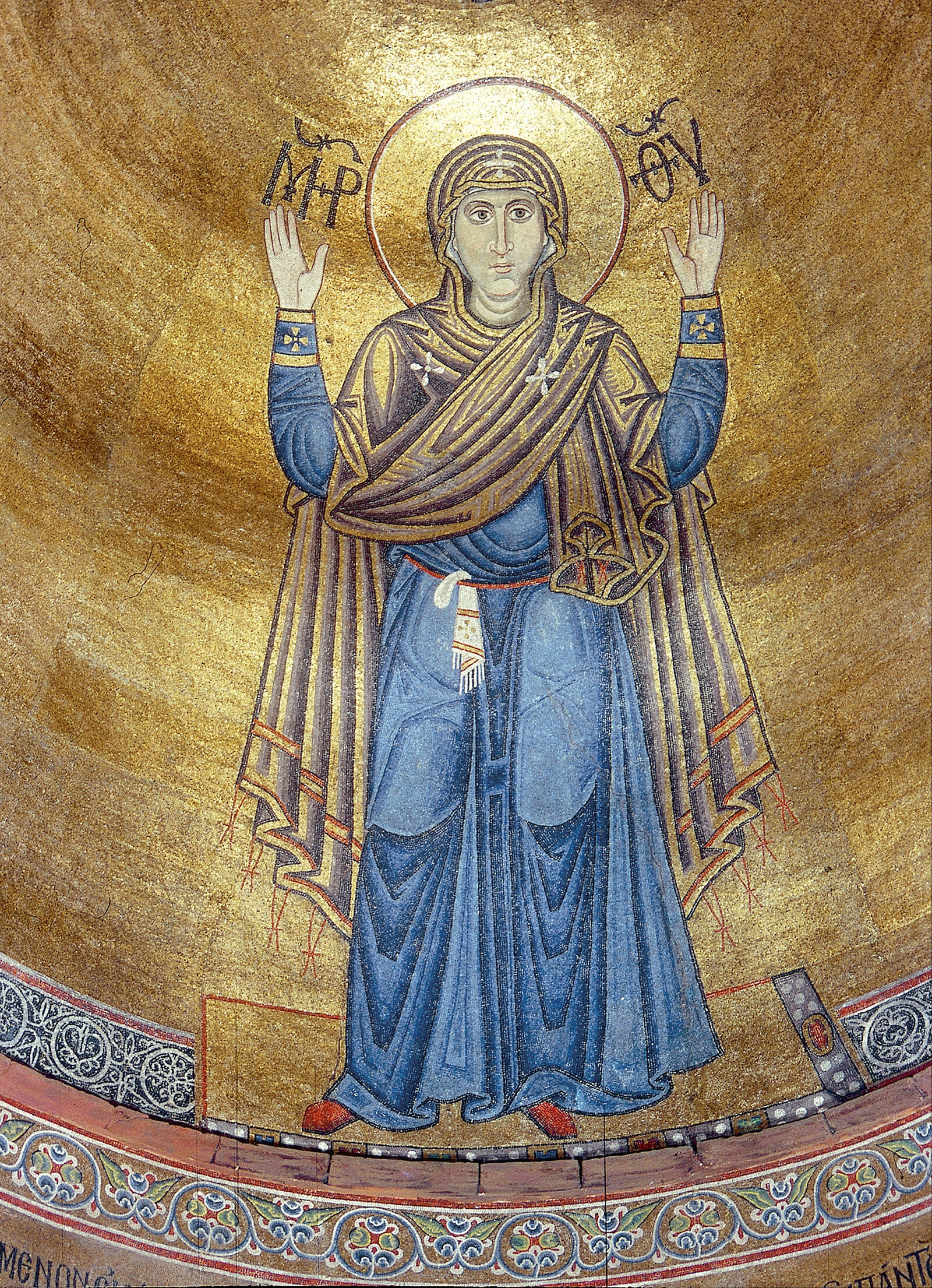
The Virgin Orans
Apse Mosaic, Saint Sophia Cathedral, Kyiv
Doctrinal reflection
Mary is praying, and she is praying about her son.
The Virgin Orans of Saint Sophia in Kyiv is a six-meter mosaic in the apse of the cathedral, made around 1050. The Theotokos stands frontally with her arms raised in the orans posture — palms outward, elbows bent — the early Christian gesture of prayer. There is no Christ-child on her arm or chest. She is alone, but she is not silent. The icon shows her praying.
Ukrainian Orthodox tradition calls this mosaic the Indestructible Wall and teaches that as long as the Virgin's arms are raised, Kyiv stands. The cathedral has survived nine centuries of plunder, fire, and now war, while the icon remains. Pious Ukrainians take this as proof that Mary is protecting the city.
We will read the icon differently. The icon does not protect Kyiv. Mary's prayer protects no one in any independent sense; that would be magic, not Christianity. What the icon shows is a woman in the canonical posture of prayer — and what scripture records of that woman's prayer is Luke 1:46–55, the Magnificat, which is entirely about her son.
Read the Magnificat. Mary does not pray for personal exaltation. She prays praise: "My soul doth magnify the Lord, and my spirit hath rejoiced in God my Saviour... He hath put down the mighty from their seats, and exalted them of low degree... He hath holpen his servant Israel, in remembrance of his mercy." The prayer's subject is God's saving acts. The pronouns are about him. Mary in prayer is the woman whose prayer is about Christ.
This is the Orans icon's actual theological content. Not a city-protector. Not a sky-goddess with raised arms. A woman in prayer, whose prayer was recorded in the gospel and was exhaustively Christological. The right response to this icon is not to ask Mary to keep the walls standing. It is to imitate her posture and direct your prayer where she directed hers.
When you preach the believer's life of prayer, point at her hands. Then point at what she was praying about. The Lord her son. The Lord our Savior. The same Lord.