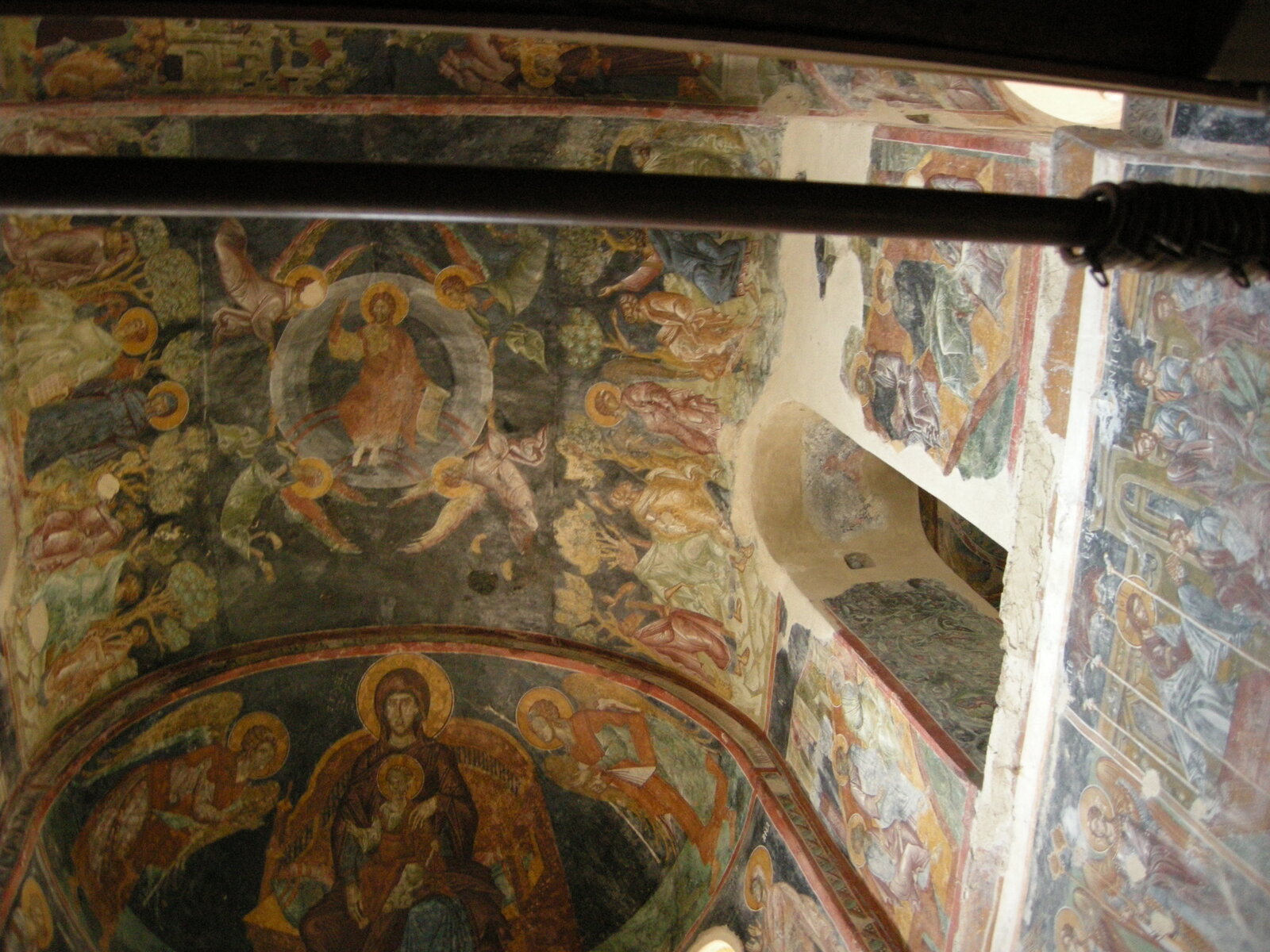
Christ Pantocrator
Pantanassa Monastery, Mistra
Doctrinal reflection
This is the last Pantocrator of the empire.
The Pantanassa Monastery at Mistra was built in 1428 by a minister of the Despotate of the Morea — the last meaningful Byzantine territory left after centuries of Ottoman pressure. The frescoes were painted shortly after. By the time the paint dried, Constantinople had less than twenty years left. The men who painted this Christ knew their world was dying.
What did they paint? The same Christ. The blessing hand, the gospel book, the gaze. The painters at Pantanassa experimented with new techniques — landscape, depth, light — that paralleled what Italian painters were doing across the Adriatic. But the figure of Christ they did not change. The Empire was dissolving; the Pantocrator was not.
Hebrews 12:27–28 says, "This word, Yet once more, signifieth the removing of those things that are shaken... that those things which cannot be shaken may remain. Wherefore we receiving a kingdom which cannot be moved, let us have grace." Things will be shaken. Some will be removed. Christ's kingdom will not be among them.
The Pantanassa fresco was made in a shaken world. The men who paid for it and the men who painted it were watching their kingdom fall. They put on the wall the King who outlasts kingdoms.
Daniel saw it earlier: "In the days of these kings shall the God of heaven set up a kingdom, which shall never be destroyed... it shall stand for ever" (Daniel 2:44).
When you preach Christ to a generation watching its certainties collapse — political, cultural, ecclesial — preach this Christ. The painters at Mistra were leaving a witness for whoever came next: this is the Lord who does not fall.
Be Obedient. Be Bold.