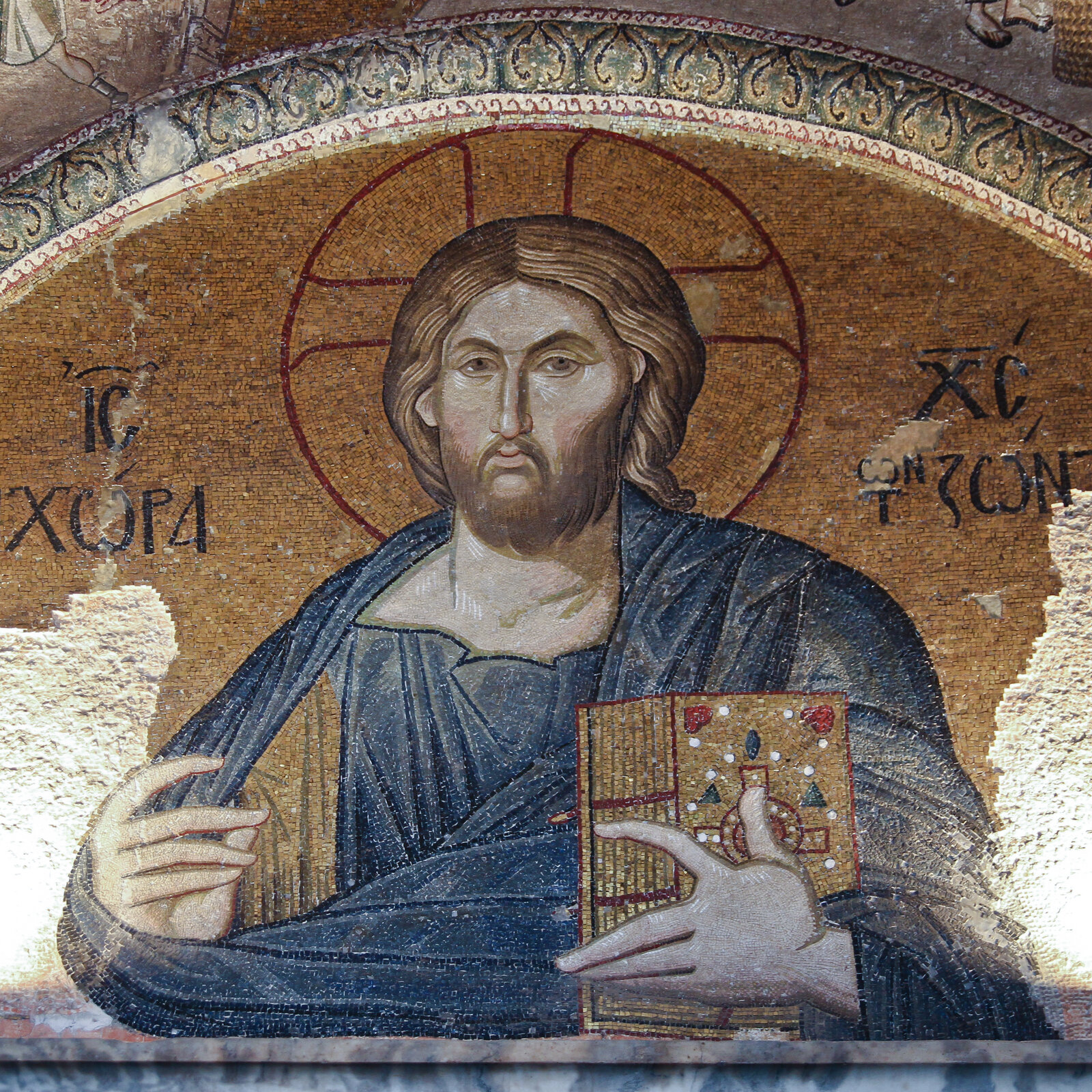
Christ Pantocrator
The Land of the Living — Chora Church
Doctrinal reflection
The inscription is a pun, and the pun is gospel.
Above the entrance to the inner narthex of the Chora Church, the Greek letters read: ΙC ΧC Η ΧΩΡΑ ΤΩΝ ΖΩΝΤΩΝ. Jesus Christ, the chora of the living. The same word, chora, that names the church.
The Chora was originally called "in Chora" because it was built outside the walls of Constantinople — chora means countryside, the unwalled place beyond the city. By the 14th century the city had grown around it, and the name was now an irony. Theodore Metochites, the patron who restored the church under emperor Andronicus II in the 1310s, did not erase the irony. He doubled it. He had the Pantocrator inscribed with a new claim: Christ is the Chora. The countryside. The expanse. The land in which the living live.
This is biblical. The Psalmist says, "I had fainted, unless I had believed to see the goodness of the LORD in the land of the living" (Psalm 27:13). And again, "I will walk before the LORD in the land of the living" (Psalm 116:9). The land of the living is not the present world. The Psalmist is on his way to it. He is walking toward it through this mortal life.
The Chora mosaic identifies that land. It is not a place. It is a person. Christ himself is the chora — the unwalled, unfinished, expansive place where the living dwell. Jesus says it bluntly in John 14:2: "In my Father's house are many mansions... I go to prepare a place for you, that where I am, there ye may be also."
When you preach the hope of the believer, do not name a real estate. Name a Christ. The land of the living is not a destination. It is the One who has been with you all along.