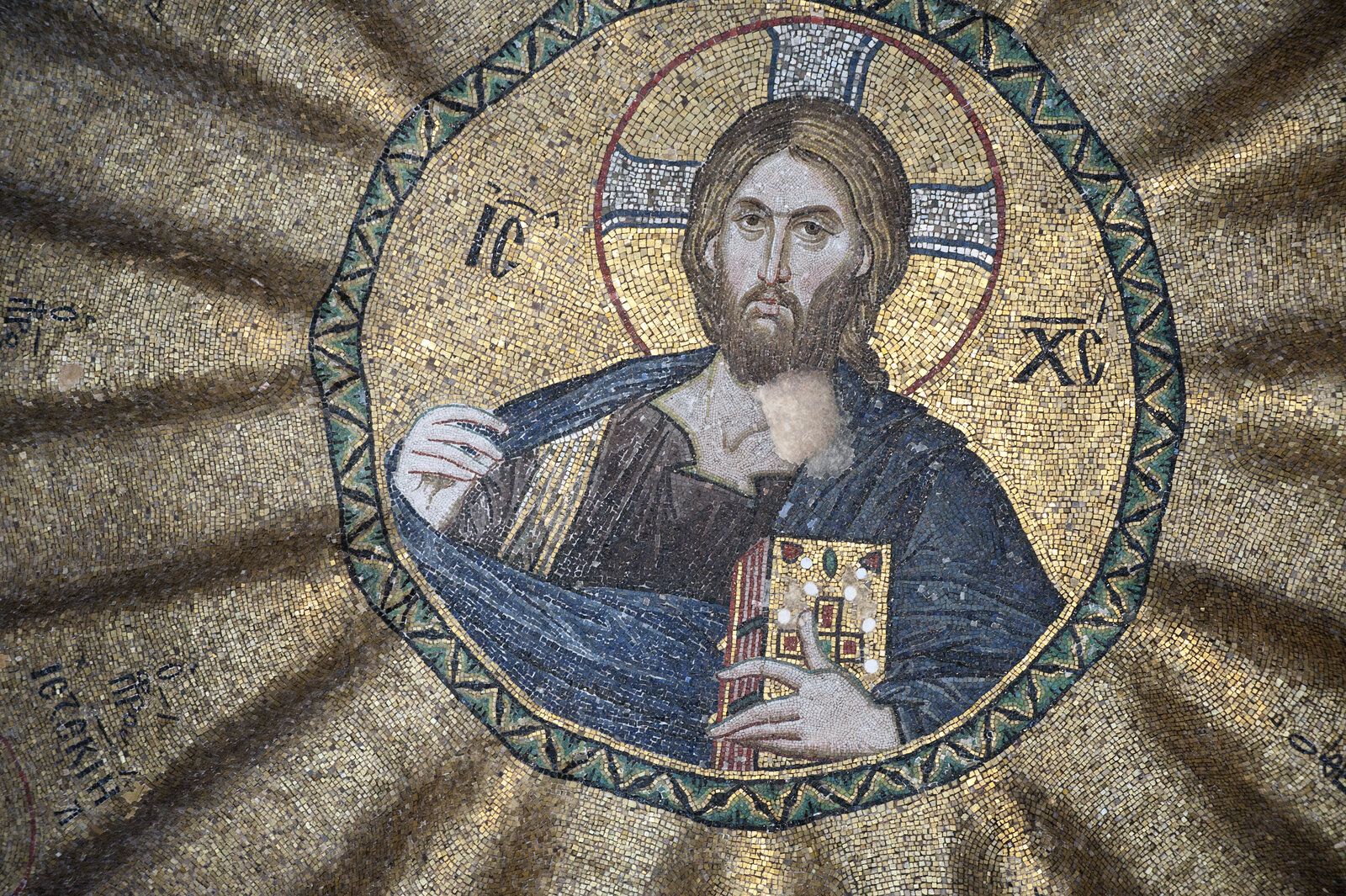
Christ Pantocrator
Parekklesion Dome, Pammakaristos Church
Doctrinal reflection
This Pantocrator was made for a funeral.
The parekklesion of the Pammakaristos was built around 1304 by a Byzantine noblewoman named Maria Doukaina Komnene Branaina, as a chapel to bury her husband. She wanted a place where she could pray over his grave and look up. What she put above her is this Christ — Palaeologan, late, beautiful — surrounded by twelve Old Testament prophets. He is in the dome. The dead man was below.
That is the entire theology of the chapel: Christ is Lord of the dead.
Romans 14:9 says, "For to this end Christ both died, and rose, and revived, that he might be Lord both of the dead and living." The grieving widow who commissioned this knew that. Her husband was dead. He was not beyond Christ's reach. The Pantocrator above her did not lose authority at the threshold of the grave — he carries authority into it.
Notice the prophets ringing the dome. They are the same witnesses who appear at Daphni: the Old Testament voices that pointed forward to Christ. But here, in a tomb chapel, the witness changes character. The prophets are not just announcers of his coming — they are companions of the dead, men who "died in faith, not having received the promises" (Hebrews 11:13). They surround the corpse and they surround the grieving wife, and they all together look up to Christ.
Paul writes in 1 Corinthians 15:54–57: "Death is swallowed up in victory. O death, where is thy sting? O grave, where is thy victory?... But thanks be to God, which giveth us the victory through our Lord Jesus Christ."
When you stand at a grave, preach this Christ. The dome over the dead is occupied. The Lord is Lord on both sides of the threshold.