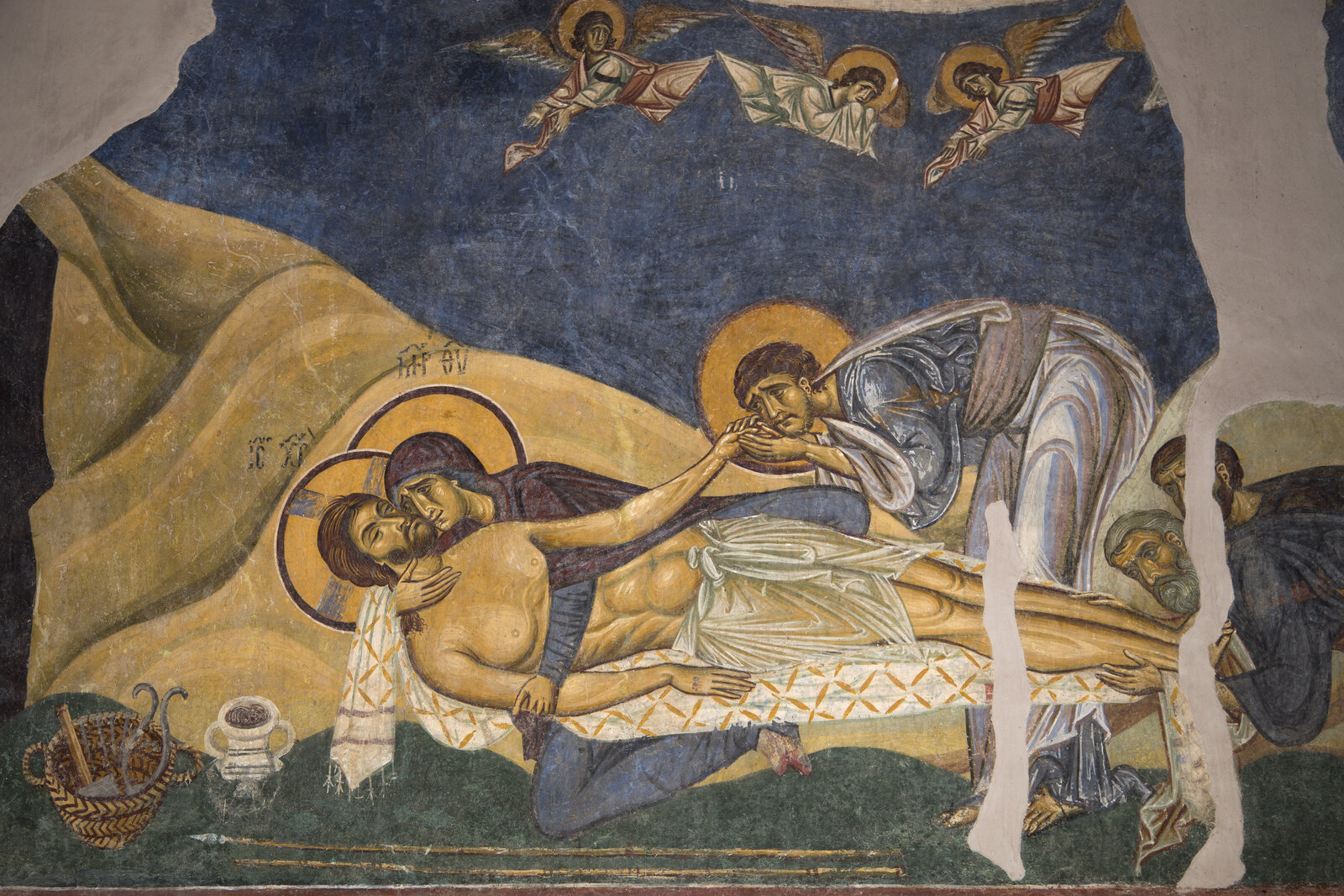
The Lamentation
Fresco, Saint Panteleimon Church, Nerezi
Doctrinal reflection
His mother is holding a corpse.
The Lamentation fresco at Saint Panteleimon in Nerezi was painted in 1164, and it changed Byzantine art. Older Byzantine compositions had treated the death of Christ with hieratic restraint — figures upright, gestures formal, faces composed. The Nerezi master broke that. He painted Mary on the ground, cradling the dead Christ between her legs, her face pressed against his lifeless face. John bends over Christ's hand, kissing it. Mary Magdalene throws her arms up in raw protest. Joseph of Arimathea waits with the linen cloth. The angels above tear at their robes. Everyone in the scene is grieving except the body.
This is the moment between the cross and the tomb. The body has come down. It has not yet been placed in the grave. The mosaicists at Daphni had shown the Crucifixion as classical and dignified (#33 in this archive). The Nerezi painter, fifty years later, showed what came next — the wailing.
Luke records Simeon's prophecy when Mary brought the infant Christ to the temple: "Yea, a sword shall pierce through thy own soul also" (Luke 2:35). Simeon told her at the beginning what she would suffer at the end. The Nerezi fresco shows the prophecy fulfilled. Mary's grief is not metaphor. The sword went all the way through.
Why paint this? Because Christ's death was witnessed by people who loved him, and they actually mourned. The body was actually carried down. The blood was actually wiped. The grave was actually filled. Without these unspectacular, agonizing physical realities, there is no resurrection. You cannot raise from the dead a Christ who never really died.
The modern church often skips from the cross directly to Easter morning. The Byzantines refused to skip. They painted the day in between. They forced you to look at the dead body in his mother's arms before you could rejoice over the empty tomb. That is honest preaching.
When you preach the resurrection, do not skip the corpse. The Christ who walked out of the tomb on Sunday morning is the same Christ his mother held on Friday night.