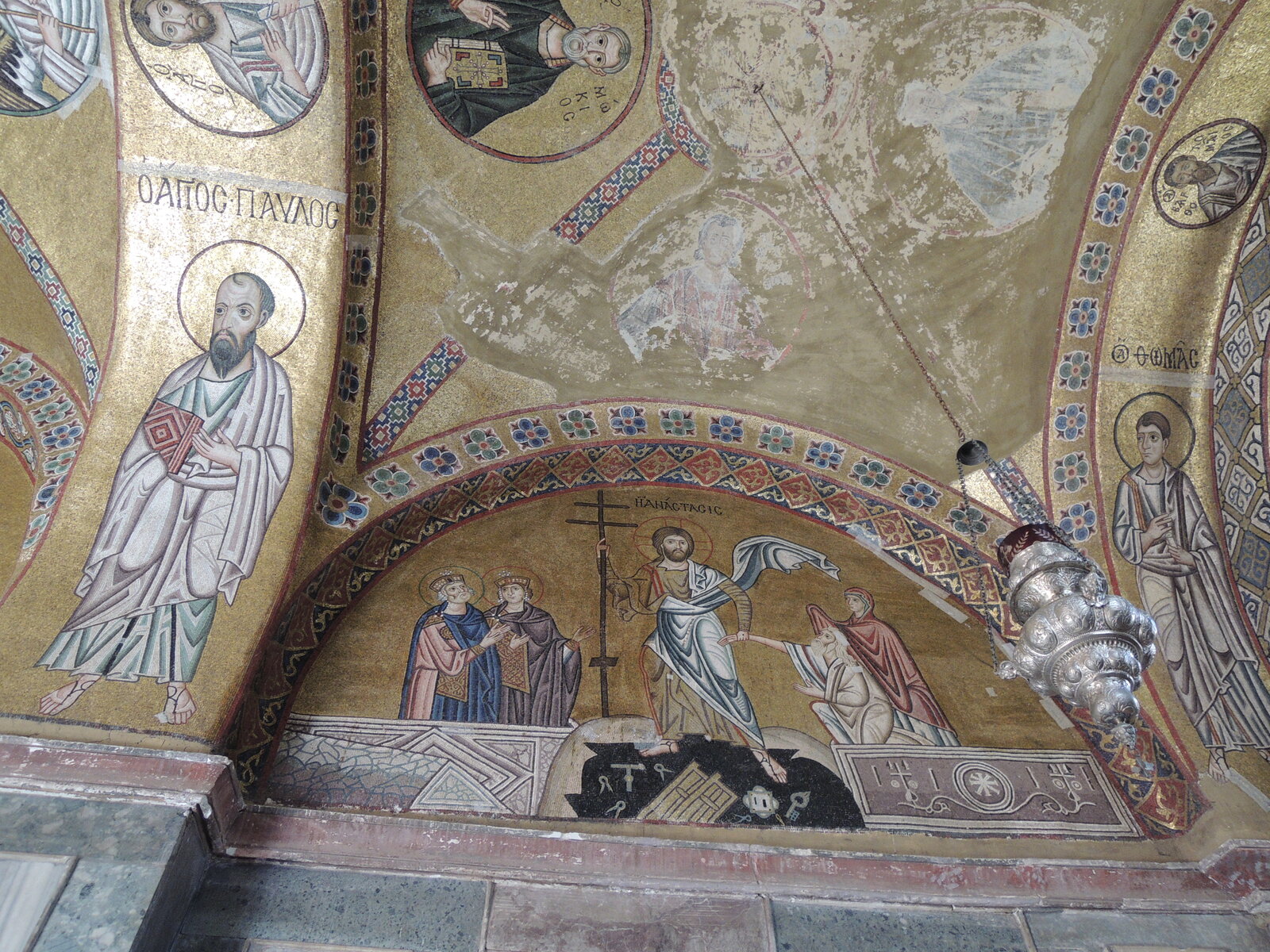
The Anastasis
Narthex Mosaic, Hosios Loukas
Doctrinal reflection
He breaks the gates with the cross.
In the right-side mosaic on the east wall of the narthex of Hosios Loukas, Christ stands on the broken gates of Hades, robes blown back from his motion, pulling Adam out of the tomb. Look at his right hand. He is not holding a sword. He is holding a cross. The cross-staff is angled like a battering ram. The instrument of his death is the weapon by which he conquered death.
This is what the Byzantine Anastasis tradition understands and what the modern church often misses. The cross is not a tragedy that the resurrection redeems. The cross is the resurrection's weapon. They are one act. "Through death he might destroy him that had power of death, that is, the devil" (Hebrews 2:14). Christ did not defeat death by escaping it. He defeated death by walking into it carrying the very instrument that should have ended him, and turning the instrument on the gates of the grave.
Paul says it more directly. Colossians 2:14–15: "Blotting out the handwriting of ordinances that was against us... nailing it to his cross; And having spoiled principalities and powers, he made a shew of them openly, triumphing over them in it." In it. In the cross. The triumph happens in the instrument of execution.
The mosaicists at Hosios Loukas understood. They put the cross-staff in his right hand because that is how they read Hebrews and Colossians. The cross was not where Christ lost. It was where he won — and what he carries now, into the grave and out of it.
When you preach the cross, do not preach it as defeat that was reversed. Preach it as the weapon that broke the gates. The same wood that killed him broke them. The Christ at Hosios Loukas is still carrying it.