James the Just
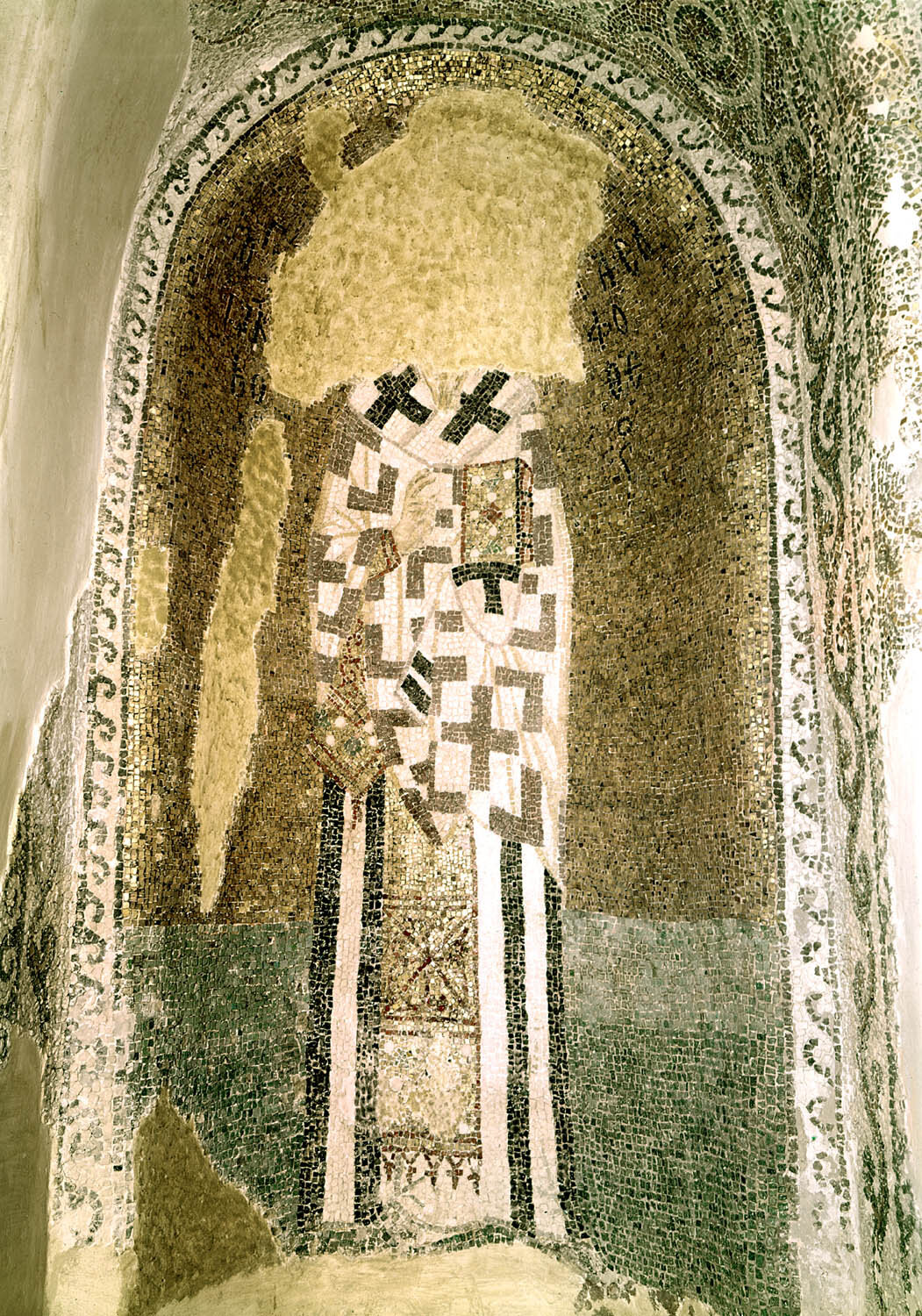
Apse Conch of the Parekklesion Prothesis — Pammakaristos (Fethiye Camii), Constantinople, c. 1310
Doctrinal reflection
James stands frontal in the apse conch, robed in the omophorion and sticharion of an Eastern bishop, right hand raised in blessing, left hand holding a closed gospel-book. The mosaic fills the half-dome of the prothesis — the small chamber on the north side of the sanctuary where the eucharistic bread and wine are prepared before being brought to the altar. Of all the iconographic positions a Byzantine artist could have given James the Brother of the Lord, this one is the most argumentative.
The Pammakaristos parekklesion was decorated c. 1310 by the widow Maria-Martha for her husband Michael Glabas Tarchaneiotes. The hierarch register places James alongside the great Eastern bishops — Basil, Gregory the Theologian, John Chrysostom — visually constituting a chain of episcopal succession from the apostolic age into the 14th-century church. The Liturgy of St. James, the ancient Jerusalem-rite eucharist traditionally attributed to him, supplies the literary backdrop. The mosaic is an argument for apostolic succession.
The corpus reads James differently — from the Acts 15 text the iconography is built on top of.
James presided over the Jerusalem council of c. 49 AD because the church recognized his role — Lord's brother (Galatians 1:19, Iakōbon ton adelphon tou kyriou) and resurrection-witness (1 Cor 15:7). The question was hard: could Gentile believers enter eucharistic fellowship without circumcision? Peter spoke from his Cornelius experience (Acts 15:7–11); Paul and Barnabas from the mission field (15:12); James gave the verdict, citing Amos 9:11–12 (15:13–21); the assembly composed the letter with consent of the whole church (15:22), closing with the sentence that defines Acts 15's ecclesiology: "it seemed good to the Holy Ghost, and to us" (Acts 15:28).
That sentence is the doctrine. Episkopos in Acts 15 is a moderator-under-the-Spirit, not a sacerdotal office. James presides; the assembly decides; the Spirit confirms. No transmission of indelible character; no chain of hands carrying papal-or-patriarchal authority forward through history. The same Peter whom later iconography elevates to chief-shepherd is here speaking to the council, not deciding for it. The James whom Pammakaristos depicts as founder-of-a-succession is here a brother in the room, voicing the verdict the Spirit and the assembly together arrived at.
This is the fourth prong of the corpus's anti-apostolic-succession argument. #75 Ananias supplies the counter-example: the chain-of-touch fails on its own terms when a non-apostle commissions Paul. #77 Pentecost supplies the categorical refutation: the Spirit's coming on the gathered church was never structured as a chain. #78 Peter supplies the verbal-parallel-and-self-designation: Matthew 18:18 plural-keys plus 1 Peter 5:1 sympresbyteros. #81 James supplies the conciliar pattern: Acts 15 itself shows the church's authority living in gathered-apostolic-deliberation under the Spirit, not in personal-chain transmission. Take all four prongs together and the apostolic-succession-by-touch doctrine has no scriptural ground left to stand on.
**Marian cross-collection rule — the adelphos tou kyriou question.** Adelphos is brother. The Helvidian reading takes the gospels at their word: Mary and Joseph had children after Jesus (Matt 13:55–56, Mark 6:3, Matt 1:25 — Joseph knew her not till she had brought forth her firstborn son). The Hieronymian (cousins) and Epiphanian (sons of Joseph from a prior marriage) readings were built on top of the developing Marian-perpetual-virginity dogma the corpus does not affirm. The corpus reads James as named: the Lord's brother, raised in the same household, brought to faith after the resurrection (1 Cor 15:7; cf. John 7:5), given to the Jerusalem church as its first moderator. Brother of the Lord is honor enough.
When we read Pammakaristos's apse conch we honor the iconographer's care, the dignity of the figure, and the doctrinal weight of the placement. We decline the chain. James was a brother in the room when the Spirit and the church spoke together. Episkopos is a verb before it is an office.
We deliberate together. We listen for the Spirit. We say it seemed good to the Holy Ghost, and to us. That is the church.