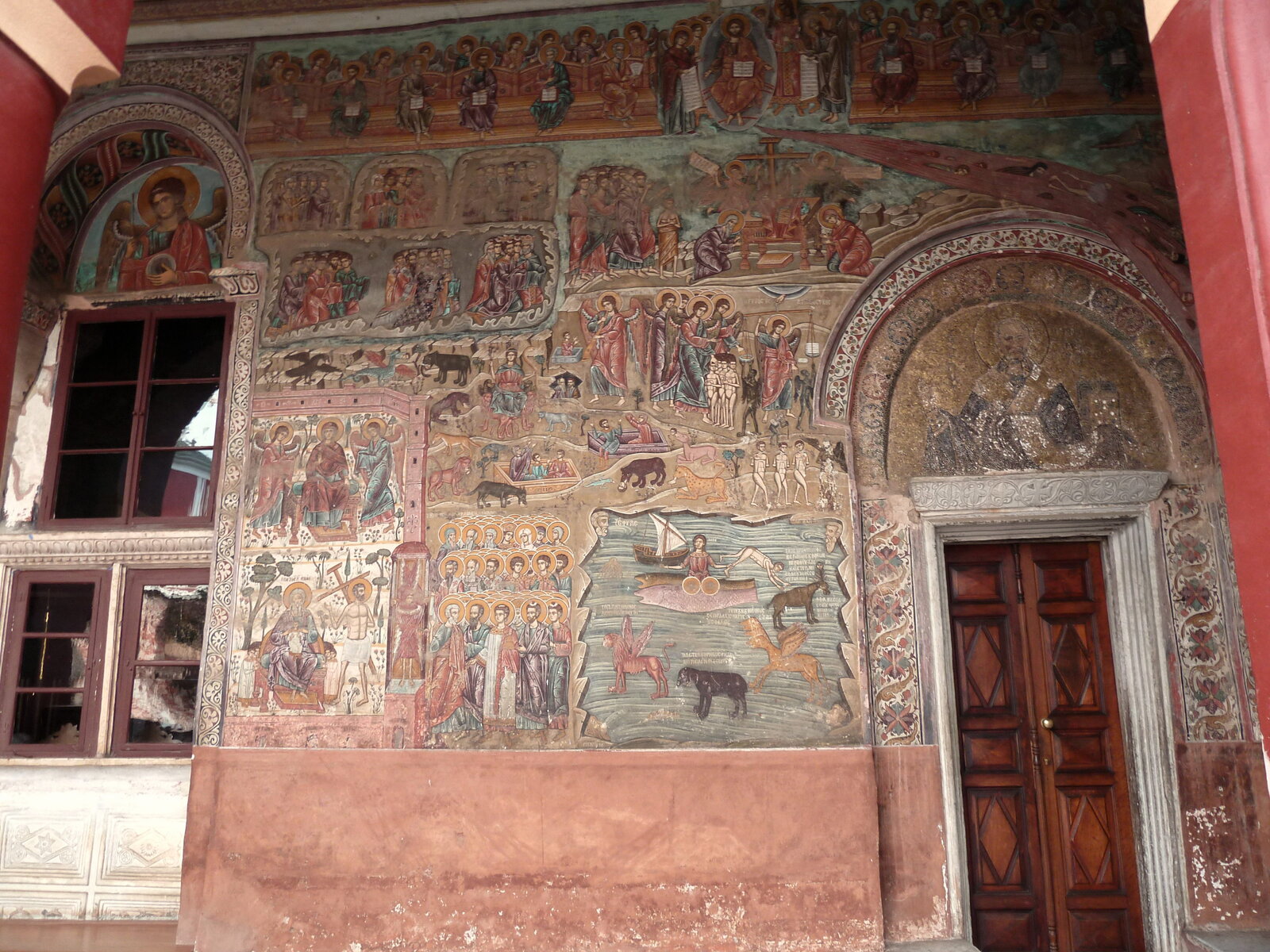
The Last Judgment
Outer Narthex Fresco, Vatopedi Monastery, Mount Athos
Doctrinal reflection
They wake up looking for him.
The Last Judgment fresco in the outer narthex of the Vatopedi katholikon was painted in the early 18th century on Mount Athos — the oldest continuously functioning monastic community in the world. The monks at Vatopedi have been chanting the daily office, fasting through the appointed seasons, and preparing themselves for the return of Christ since the 10th century. They do not preach the Last Judgment as theoretical eschatology. They live as men who expect the trumpet to sound during morning prayers.
Athos is the place that did not fall. When Constantinople burned in 1453, when the Byzantine state dissolved, when the Russian and Romanian and Bulgarian Orthodox empires came and went — Athos kept going. The Ottomans granted it a special autonomous status. The Greek state today still treats it as self-governing. The monks who painted this Last Judgment around 1700 belonged to a continuous chain of men who had been watching for the parousia for over seven hundred years before they touched their brushes to the plaster.
Matthew 25:13 says, "Watch therefore, for ye know neither the day nor the hour wherein the Son of man cometh." Most of the modern church reads that verse and nods. The Athonite monks read that verse and structure their entire lives around it. The fresco on the wall is a daily reminder — to themselves first, and to anyone who climbs the mountain to see them.
2 Peter 3:11–12 asks the question the monks at Vatopedi answer with their lives: "What manner of persons ought ye to be in all holy conversation and godliness, looking for and hasting unto the coming of the day of God?" The answer Athos gives — and that this fresco gives — is: men who watch.
When you preach the return of Christ, do not preach it from a calendar. Preach it from a watchtower. The monks at Vatopedi are still on theirs.